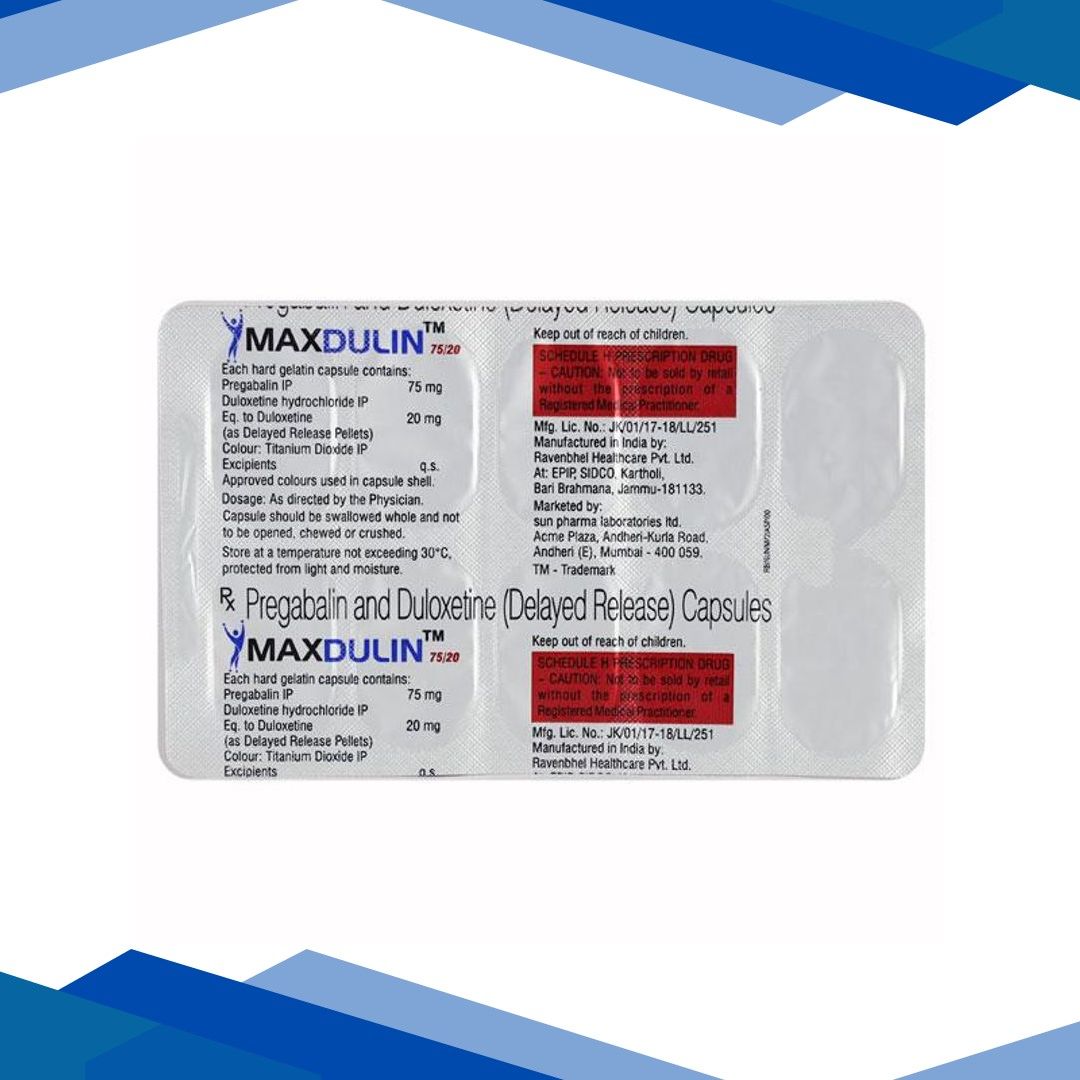
MAXDULIN 75/20 Capsule 10’s
MAXDULIN 75/20 Capsule is a combination medicine used to help relieve pain that has both inflammatory and nerve-related components. Aceclofenac is a non-steroidal anti-inflammatory medicine that reduces pain, swelling, and stiffness by blocking chemicals in the body that cause inflammation. Pregabalin works on overactive nerve signals, helping to calm nerve pain and improve discomfort caused by nerve irritation. Together, they are commonly used for conditions such as back pain, joint pain, neck pain, sciatica, and other painful musculoskeletal problems where simple pain relief may not be enough. This medicine should be used under medical supervision because it may cause side effects such as dizziness, sleepiness, or stomach upset in some people.
Description
MAXDULIN 75/20 Capsule is a combination medicine commonly used for pain conditions where inflammation and nerve-related pain may occur together. it brings together two well-known ingredients that work in different but complementary ways. aceclofenac is a non-steroidal anti-inflammatory drug, often called an nsaid, which helps reduce inflammation, swelling, and pain by blocking certain natural substances in the body called prostaglandins. pregabalin acts on the nervous system and helps calm overactive nerve signals that can cause burning, shooting, tingling, or persistent nerve pain. because of this dual action, the combination is often used when pain is difficult to control with a single type of medicine alone.
this medicine is generally prescribed for conditions such as musculoskeletal pain, back pain with nerve involvement, arthritis-related pain, sciatica, and other painful states where inflammation and neuropathic pain are both present. it may be useful for patients who experience stiffness, swelling, radiating pain, or discomfort that interferes with movement and daily activities. by addressing both inflammation and nerve sensitivity, MAXDULIN 75/20 Capsule may provide broader symptom relief than either ingredient alone in selected cases.
even though this combination can be effective, it should be used carefully and only when recommended by a healthcare professional. the medicine can cause stomach irritation, dizziness, sleepiness, and other side effects, and it may not be suitable for people with certain heart, kidney, liver, stomach, or breathing problems. it is important to understand that this medicine helps manage symptoms; it does not cure the underlying cause of all pain conditions. proper diagnosis and medical supervision are essential to ensure safe and effective use.
ingredients
- aceclofenac: aceclofenac is an anti-inflammatory pain-relieving ingredient that belongs to the nsaid group. it reduces the production of prostaglandins, which are chemicals involved in pain, swelling, fever, and inflammation. this helps relieve joint pain, muscle pain, and inflammatory discomfort, especially in conditions where swelling and stiffness are present. it may also improve mobility when pain is associated with inflammation.
- pregabalin: pregabalin is a nerve-pain medicine that works by reducing the release of pain-signaling chemicals in the nervous system. it is especially helpful for pain caused by irritated or damaged nerves, which often feels like burning, stabbing, tingling, or electric-shock-like pain. it may also reduce pain-related sleep disturbance and improve comfort in neuropathic conditions.
key uses
- neuropathic pain: this medicine may be used when pain is caused by nerve irritation or nerve damage, such as burning, tingling, or shooting pain. pregabalin helps calm abnormal nerve signals, while aceclofenac helps if inflammation is also contributing.
- low back pain with nerve involvement: in some cases of back pain, muscles, joints, and nerves are all affected. the combination may help reduce pain intensity, stiffness, and radiating discomfort that travels to the legs or buttocks.
- sciatica or radiating pain: when pain travels along the path of a nerve, the neuropathic component can be significant. pregabalin may ease the nerve pain, while aceclofenac may reduce associated inflammation around the irritated area.
- arthritic and musculoskeletal pain: it may be prescribed for painful conditions affecting joints, muscles, ligaments, or soft tissues, particularly when swelling and tenderness are part of the problem.
- mixed pain conditions: the medicine is useful in pain disorders where both inflammatory pain and nerve pain overlap, making treatment more difficult with a single medicine alone.
how to use
MAXDULIN 75/20 Capsule should be taken exactly as directed by a doctor or pharmacist. it is usually taken by mouth, and many people are advised to take it after food to reduce stomach upset caused by aceclofenac. the medicine should be swallowed whole with water unless a healthcare professional has given different instructions. do not crush, chew, or break the medicine if it is in a tablet or capsule form meant to be swallowed intact.
the timing and duration of use depend on the condition being treated, the severity of symptoms, and individual health factors such as age, kidney function, stomach history, and whether the patient is taking other medicines. it is important not to take more than recommended, even if pain relief is incomplete. increasing the dose on your own may raise the risk of serious side effects, especially drowsiness, dizziness, stomach bleeding, or kidney problems.
if this medicine causes drowsiness or dizziness, it may affect concentration and coordination. until you know how it affects you, avoid driving, operating machinery, or doing tasks that require full alertness. alcohol should generally be avoided because it can worsen sleepiness and increase the risk of side effects. if symptoms do not improve, worsen, or keep returning, medical review is necessary rather than simply continuing the medicine longer.
safety information
- warnings: aceclofenac may irritate the stomach lining and can increase the risk of ulcers, bleeding, or stomach discomfort, especially with long-term use or in people with a history of gastrointestinal problems. it may also affect kidney function, blood pressure, and, in some people, heart health. pregabalin can cause dizziness, sleepiness, blurred vision, swelling, weight gain, and balance problems. this medicine should be used with caution in older adults because the risk of falls and confusion may be higher.
- side effects: common side effects may include dizziness, drowsiness, tiredness, nausea, indigestion, abdominal pain, dry mouth, constipation, swelling of the legs or feet, and blurred vision. some people may also feel unsteady or have difficulty concentrating. serious side effects can include black stools, vomiting blood, severe stomach pain, allergic reactions, breathing difficulty, facial swelling, chest pain, reduced urine output, severe weakness, mood changes, depression, or suicidal thoughts. seek urgent medical help if any serious symptoms occur.
- precautions: avoid or use only under strict medical supervision if you have a history of stomach ulcer or bleeding, asthma triggered by painkillers, kidney disease, liver disease, heart disease, high blood pressure, fluid retention, seizure disorders, or severe depression. people who are elderly, dehydrated, or taking multiple medicines may need extra monitoring. do not stop pregabalin suddenly without medical advice, as this can lead to withdrawal symptoms in some patients.
- pregnancy/breastfeeding: this combination is generally not preferred during pregnancy unless a doctor decides the benefit outweighs the risk. aceclofenac, like other nsaids, may pose risks during pregnancy, especially in later stages, and pregabalin should also be used cautiously. during breastfeeding, both ingredients may pass into breast milk to some extent, so medical advice is needed before use. a healthcare professional should always be consulted if you are pregnant, planning pregnancy, or breastfeeding.
- interactions: this medicine may interact with alcohol, increasing drowsiness and dizziness. it may also interact with other painkillers, especially nsaids, increasing the risk of stomach bleeding and kidney strain. caution is needed with blood thinners, antiplatelet medicines, certain blood pressure medicines, diuretics, corticosteroids, some antidepressants, sedatives, sleep medicines, opioid pain medicines, and medicines that affect kidney function. because pregabalin can add to sedation, combining it with other central nervous system depressants may be unsafe unless supervised by a doctor.
additional information
- storage: store the medicine in its original container, tightly closed, and keep it in a cool, dry place away from direct sunlight, heat, and moisture. keep it out of reach of children and pets. do not store it in the bathroom unless the label specifically allows it, because humidity can damage the medicine.
- missed dose: if you miss a dose, take it as soon as you remember unless it is almost time for the next dose. if the next dose is near, skip the missed one and continue with the regular schedule. do not take two doses together to make up for a missed dose unless a doctor specifically instructs you to do so.
- overdose: an overdose may cause severe drowsiness, confusion, vomiting, dizziness, fainting, breathing problems, weakness, stomach bleeding, or impaired coordination. in serious cases, emergency medical attention is needed immediately. if an overdose is suspected, contact emergency services or a poison control center without delay, especially if the person is unresponsive, having trouble breathing, or has taken too much with alcohol or other sedating medicines.
- habit forming: pregabalin can be misused in some individuals and may lead to dependence or withdrawal symptoms if used incorrectly or stopped suddenly after prolonged use. aceclofenac is not habit forming. overall, the combination is not considered a classic addictive medicine, but it should still be used only as prescribed and not shared with others.
frequently asked questions
Q: what is MAXDULIN 75/20 Capsule used for?
A: it is commonly used for pain conditions that involve both inflammation and nerve-related pain, such as back pain with nerve irritation, sciatica, or mixed musculoskeletal pain. a doctor decides whether this combination is appropriate based on the symptoms and medical history.
Q: can MAXDULIN 75/20 Capsule make me sleepy?
A: yes. pregabalin can cause drowsiness, dizziness, and reduced alertness, especially when treatment begins or when the dose is changed. avoid driving, alcohol, and other sedating medicines until you know how the medicine affects you.
Q: should i take MAXDULIN 75/20 Capsule with food?
A: it is often recommended to take it after food or with food because aceclofenac may cause stomach upset. follow the instructions given by your healthcare professional, especially if you have a sensitive stomach.
Q: can this medicine be used for simple body pain or fever?
A: it is generally not intended for simple mild pain or fever. it is more suitable for specific pain conditions where nerve pain and inflammation overlap. for ordinary pain, a doctor may recommend a different treatment.
Q: is it safe to stop MAXDULIN 75/20 Capsule suddenly?
A: not always. aceclofenac may be stopped according to medical advice, but pregabalin should not usually be stopped abruptly without guidance, especially after regular use. sudden stopping can sometimes cause withdrawal symptoms or a return of pain.
Q: can i drink alcohol while taking this medicine?
A: alcohol is not recommended because it can increase dizziness, sleepiness, and the risk of poor coordination or falls. in some people, alcohol may also worsen stomach irritation caused by aceclofenac.
Q: does MAXDULIN 75/20 Capsule cause weight gain?
A: weight gain can occur in some people, mainly because pregabalin may increase appetite or cause fluid retention. not everyone experiences this, but it should be discussed with a healthcare professional if it becomes noticeable.
Q: can this medicine affect the stomach?
A: yes. aceclofenac may irritate the stomach and increase the risk of indigestion, ulcers, or bleeding, especially in people with a history of gastric problems or when taken with other nsaids or blood thinners.
Q: who should be extra careful with MAXDULIN 75/20 Capsule?
A: extra caution is needed in older adults, people with kidney disease, liver disease, heart disease, stomach ulcer history, breathing problems, depression, or those taking sedatives, opioids, or blood thinners. a doctor should evaluate the risks before use.
Q: can i take this medicine if i am pregnant?
A: pregnancy use should only happen if a doctor clearly says it is necessary. aceclofenac and pregabalin both require careful consideration during pregnancy, so medical supervision is essential.
Q: what should i do if i feel very dizzy after taking it?
A: sit or lie down until the dizziness passes, avoid sudden movements, and do not drive or operate machinery. if dizziness is severe, persistent, or associated with fainting, breathing issues, or confusion, seek medical help promptly.
Q: does this medicine help nerve pain quickly?
A: pregabalin may begin helping some symptoms relatively early, but the full benefit may take time and varies from person to person. it is important to use it consistently as directed and to speak with a healthcare professional if pain is not improving.
Q: can i take other painkillers with MAXDULIN 75/20 Capsule?
A: you should not combine it with other painkillers, especially other nsaids, unless a doctor advises it. taking multiple pain medicines together can increase the risk of stomach, kidney, or bleeding problems.
this information is for educational purposes only and should not be considered medical advice. always consult a qualified healthcare professional before use.
At Gem Pharmacy, we make every effort to provide accurate, expert-written, and thoroughly reviewed information related to medicines. However, this information should not be considered a substitute for professional medical advice, diagnosis, or treatment from a qualified doctor.
The purpose of this information is to educate users and improve communication between patients and healthcare professionals. It should not be used to diagnose or treat any condition.
Always consult a certified healthcare professional before taking any medication.


Related products