
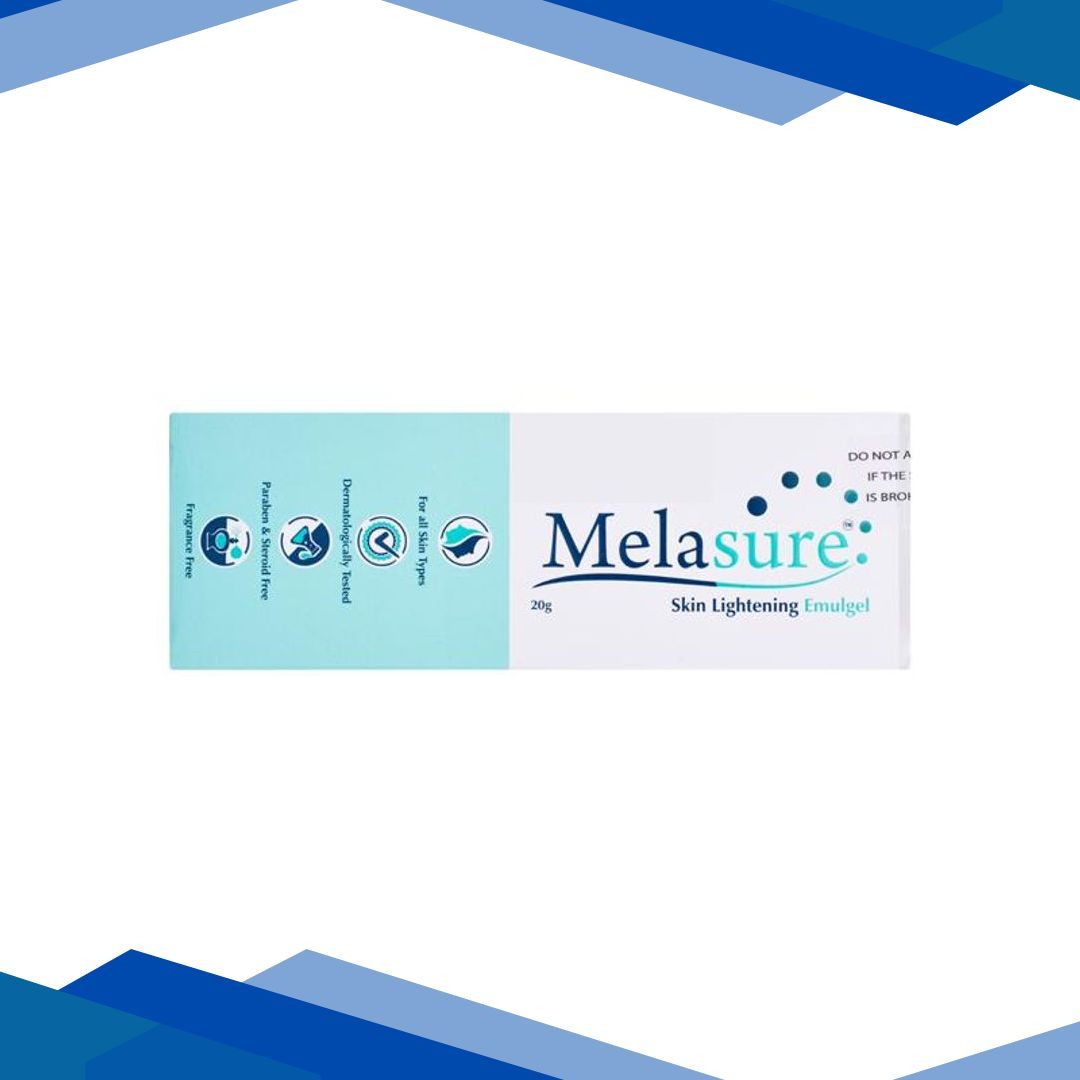
MELASURE SKIN LIGHTENING Emulgel 20gm
No Prescription yet? Don’t worry! Click Here to Get Online Consultation
Arbutin + Kojic Acid is a skin-lightening combination commonly used to treat hyperpigmentation, dark spots, melasma, and uneven skin tone. It works by inhibiting the enzyme tyrosinase, which reduces melanin production in the skin. This helps brighten the complexion and gradually fade discoloration for a more even skin tone.
Dimethicone
Dimethicone: The Versatile Barrier for Skin Care and Digestive Relief Dimethicone (polydimethylsiloxane) is a silicone-based polymer that is prized in the field for its barrier-building ability yet breathable in action. Its purpose varies from locking in moisture for good skin on the outside to easing abdominal gas from the inside, thus being an indispensable thing to both dermatological and gastrointestinal health.
Primary Therapeutic Uses
I. Advanced Skin Protection
Sacred lock Skin surface: The emollient theological property accelerates the imperceptible gap filling between skin cells, hence depriving dehydration and smoothing the skin surface.
Protective Barrier: Skin is shielded from irritants, weather, etc., and some types of friction.
Skin Conditions Management: Extremely effective for treating skin with xerosis, pruritus, or scaliness and for minor irritations, e.g., diaper rash & burn wounds from radiation.
II. Gastrolyceal Media
Stable grating: Dimethicone was put into antiflatulent oral use and it went with the antacids
Moonlight: A defoamer on the gastrointestinal tract, Dimethicone decreases the tension of bubbles, thus enabling elimination of the bloating feelings and letting the gas and air be expelled to lower enemy internal pressures.
Dimethicone Mode of Action
One central characteristic should be here: Impermeable Dimethicone does not pass into the bloodstream, but rather lies on the surface being treated as follows:
On the skin: it forms a non-greasy water-resistant film that reduces trans-epidermal water loss (TEWL).
In the gut: It does a mechanical impact on the joining of small gas bubbles thereby making them let out with ease in witness is from differing motility.
Experiments Done & Application Tips
If Skin is Dry: Apply a cream or lotion after a bath while it is still slightly damp to seal moisture in.
Using a Diaper Rash: Clean the affected area well and let it dry. Apply a thick layer of Dimethicone ointment.
For Oral Use: Most likely given in liquid drops or chewable tablets to comfort gas; take the dose shortly after mealtimes and/or at bedtime.
Shake Well-Hard: After closing the container, shake it well so that the active ingredient is evenly spread around if you're using a lotion or liquid suspension.
Dimethicone: FAQs
Q: Is Dimethicone safe on sensitive and acne-prone skin?
A: Yes. Dimethicone is non-stinging not liable to clog pores. It is highly recommended for sensitive skin and anesthetic qualities without an oily weight, which has been an excellent alternative to traditional products.
Q: Can I use Dimethicone on my hair?
A: Many hair serums and conditioners have dimethicone included to improve cuts, shine, and provide heat-styling. However, it is supposed to be removed regularly to avoid the buildup of any product.
Q: Does Dimethicone help with scars?
A: Mostly not in erasing a "scar," Dimethicone is a prime basic product in almost all professional scar-management gels. By gelling and keeping scar tissue moist and away from the regular air, healing is thus prompted and the ugly mark can be flattened as time goes on.
Q: Should I be aware of any potential harmful side effects if I have some oral medication for gas?
A: Oral dimethicone(dimethylsiloxane) is well tolerated as it is not absorbed through the mucous membrane. It might cause some slight nausea or very mild constipation in some cases, but this is infrequently observed.
Q: Can I use Dimethicone on an open wound?
A: No. It is fully advisable never to apply a Dimethicone cream over open sores, deep wounds, or animal bites or severe burns without getting professional advice, and it is best used on intact-but-irritated or dry skin visible.
Safety & Precaution
Feature
Details
Allergy Risk
Greatly minimal with adverse reactions; in extreme cases, one may experience facial swelling, severe itch, or a rash.
Pregnancy/Nursing
Use as innately as other topical drugs; The oral form should be a consultational choice.
Drug Interactions
None.
Driver's Specification
Keep Dimethicone or its vehicle between 15°C and 30°C, free from direct sunlight, in a room.
Kojic Acid
Kojic Acid (Dermatological Grade) with Kojic Acid being a nature-based chelation agent sourced from different fungi types such as Aspergillus oryzae, it has become a very essential skin-lightening agent of great repute practiced and instituted in the famous dermatological set. It works by inhibiting the production of free tyrosinase, an enzyme indispensable in the melanin synthesis process. Consequently, it reduces the melanin production pace and is proficient at treating various types of hyperpigmentation, melasma, and age spots. It is a perfect advocate for equalizing skin color and facial sheen.
Primary Benefits
Reduction of Hyperpigmentation: Discoloration, sun damage, and various forms of post-inflammatory hyperpigmentation caused by acne are toned down.
Treating Melasma: It is often recommended as a safe substitute for hydroquinone to manage inherently hormonal darkening of the skin.
Anti-Aging Effects: With respect to liver spots and age spots, the skin display will look young.
Skincare: It helps in preventing common skin infections because of its antibacterial properties while fighting against the trigger-causing bacteria that results in acne.
Formulation Specifications
Popular Forms: Cream, Serum, Soap, Concentrated Powder
Standard Concentration: Ranges at $1%$ to $4%$ typically for safety concerns for topical applications
Main Ingredients: Usually mixed with vitamin C or glycolic acid for better effect
Skin Compatibility: Suitable for most skin types, including oily and combination skin.
Application Guidelines
Cleanse: Cleanse your face with a mild cleanser and dry.
Apply: Apply pea-sized Kojic Acid cream or serum spot with pigmented darkened areas.
Absorption: Massage gently till skin completely delivers the product
Frequency: Begin by applying once per day to your face at night; if well accepted by the skin, apply twice daily.
Caution/Warnings
Sun Sensitivity: Kojic Acid makes skin particularly vulnerable to UV damage. It is mandatory to apply a broad-spectrum sunscreen (SPF 30 or more) during the day patch test.
A patch test should be performed on the inner forearm for 24 hours before full facial application to exclude irritation.
Avoid Using Broken Skin: Do not apply to open wounds, active rashes, or severely irritated skin.
Contact Dermatitis: If you experience persistent redness, itching, or a burning sensation, stop using and consult a dermatologist.
Frequently Asked Questions (FAQs)
Q: How long does it take to see results from Kojic Acid? Visible lightening of dark spots may take 4 to 6 weeks of consistent daily use. For deeper pigmentation like melasma, it may be 3 months before substantial improvement appears.
Q: Can I use Kojic Acid with Vitamin C? Yes, they can be combined because Kojic Acid and Vitamin C are much stronger and very good together for brightening the skin and for protection against oxidative stress. Many high-end serums mix them for better results.
Q: Is Kojic Acid a bleach? Kojic Acid does not bleach at all. Unlike the harsh chemical bleaches that destroy the melanocytes, Kojic Acid simply decreases the enzyme that produces melanin, thereby proving much safer for long-term use.
Q: Can I use Kojic Acid soap on my body? Kojic Acid soaps are effective in instructing for use on the body to help even out skin tone in areas like darkened underarms or inner thighs. However, ensure you follow with good moisturization after using these soaps to combat the drying effect.
Q: Is it safe to use during pregnancy? Kojic Acid is presumed to be safe as compared to using hydroquinone, however, speak with your dermatologist or OB-GYN prior to deploying any active skin-lightening product during pregnancy or breastfeeding to keep your babies well-protected.
Treatment SisQuombat Results
In order to inhibit the re-occurrence of dark spots, pair your Kojic Acid treatment with a moisturizer containing Niacinamide. The latter reinforces the skin barrier and stops the movement of pigment to the skin surface, making the perfect complement to Kojic Acid inhibition mechanism.
Disclaimer: The information shared here is for education only and should in no way substitute for the experience and guidance of a medical professional. Always consult a qualified dermatologist before solely hitting off a new skincare regimen.
Mulberry Extract
Niacinamide
Niacinamide belongs to the water-soluble vitamin B3 complex that the body cannot store by itself an essential cofactor for cellular energy production, either as an oral supplement or through clinical skincare mechanisms. The primary function of the compound is to offer a precursor to coenzymes involved in DNA repair and overall structural anchoring of the skin (NAD+ / NADP).
Clinical Research on Key Therapeutic Effects
A. Restoring the Skin Barrier: Since ceramides capture and retain moisture in the skin maintaining a protective shield against environmental pollution.
B. The Management of Acne and Enlarged Pores: Overproduction of sebum (oil) gives rise to pimples and enlarged skin pores. Niacinamide prevents the formation of these unsightly eruptions.
C. Fixing the Hyperpigmentation: Niacinamide blocks melanin transfer into their skin cell, and together it improves the look of dark spots to the point of reaching an even skin tone.
D. Righting the Shape of Action: It is anti-oxidant, but it also reduces inflamed skin conditions like rosacea and inflamed acne.
E. Supporting The Body: Internally taken, niacinamide can beneficially help maintain healthy cholesterol and assist in metabolism of carbohydrates and proteins.
How It Works
Niacinamide is a "cell-communicating" ingredient: on contact, it communicates the directive for your skin cells to behave in a healthier way. Normally, it supports the pooling of nicotinamide adenine dinucleotide (NAD⁺) via which energy is delivered, supporting cellular repair and turnover. This vitamin, unlike its sister Niacin (nicotinic acid), does not cause much "flushing" when taken at high doses, which also results in redness for high-dose Niacin supplements.
Instruction For Usage
A. Topically (Serums/Creams) – Apply whenever needed a few drops to the skin on the face and neck on their own ideally before any richer moisturizers. It is a stable agent that can be effectively used in the morning as well as evening routines.
B. Orally (Tablets/Capsules): Take supplements while ingesting meals to maximize the absorption of niacinamide and avoid potential stomach upset.
C. Sun Protection: However, niacinamide has its antioxidant effects, ensure a broad-spectrum sunscreen is kept up during the day.
Precautions And Side Effects
Evening cleansing consciousness reality regarding most skin types including very irritable skin. Always consider the following:
Concentration Matters: While 5% is the clinical gold standard, some high-strength 10% or 20% serums may cause mild irritation or "purging" in very sensitive individuals.
Patch Test: Always, it is necessary to perform a patch test on the forearm before using on the face.
Vitamin C Interaction: Although modern formulations allow you to use both together, for those with severely irritable skin, consider using Vitamin C in the morning and niacinamide in the evening to avoid skin interferences.
FAQs
Q: Can I use Niacinamide daily?
A: Yes, Niacinamide is safe for everyday use. Consistency is always key, with visible improvement in skin texture and oil control appearing from weeks 4 to 8 after commencement of regular application.
Q: Can Niacinamide cure acne better than Salicylic acid?
A: They perform different roles. While salicylic acid (a BHA) exfoliates inside the pores to dislodge blockages, Niacinamide decreases the inflammation and oil production causing those blockages in the first place. They are often prescribed together for an all-around acne treatment.
Q: Will it make my skin peel?
A: No. Niacinamide does not act as an exfoliant, unlike retinoids. Instead, it is a strengthening agent that enhances the hydration level of the skin.
Q: Can I use Niacinamide during pregnancy?
Topical application of niacinamide is said to be safe enough during pregnancy and lactation. But if you are considering taking niacinamide supplements orally, you should always seek professional advice from your obstetrician-gynecologist so that it matches the rest of your prenatal vitamin regime.
Q: Does Niacinamide help with wrinkles?
Niacinamide can help reduce the appearance of fine lines by boosting collagen production and enhancing skin elasticity over time, often seen in tandem with peptides or retinol for more intense anti-aging effects.
Phenoxyethanol
Phenoxyethanol (BP/USP Grade)
Phenoxyethanol is an important, versatile pharmaceutical preservative and broad-spectrum antiseptic extensively employed in topical medications, vaccines, and modern dermatological care. It belongs to the glycol ether family and is often utilized as an important stabilizer that prevents the growth of bacteria, yeasts, and molds in water-based formulations. It is far safer at lower concentrations and is often used in preference to paraben and formaldehyde-releasing agents.
Offered Clinical Uses
Microbial Protection: Works as a potent preservative, ensuring that the therapeutic cream remains sterile throughout its shelf life.
Antiseptic for Topical Application: Used for minor wound treatment to diminish the chances of getting secondary infections.
Solvent Enhancer: Helps stabilize complicated chemical mixtures so that active medicinal ingredients will not separate when compounded into cream and lotion.
Making livelihood through perfume-making: Has been applied in fragrant oils and ointments for the proper fixation of scent and essential oils.
Product Profile
Chemical Class: Glycol Ether / Aromatic Alcohol.
Common Concentration: This is usually found at levels of 0.5% to 1% in finished pharmaceutical products.
Purity: 99.9% Pharmaceutical Grade (BP/USP).
Compatibility: Extremely stable across a wide pH range (3 to 10), recommending its use in various skin treatments.
How to Use & Safety Guidelines
Preparation Routes: Semisolid preparations may be prepared by using well-advised concentrations indicated in the Pharmacopoeias.
For Topical or Cutaneous Applications: Phenoxyethanol should be introduced as per the advice of a dermatologist. It is generally not irritating for most skin types.
Internal Use: Strictly for external use only. Do not ingest, taking care not to apply it near the eyes or mucous membranes if specifically formulated for such areas.
Information on Safety and Immediate Side Effects
Phenoxyethanol is generally recognized as safe for use by adults according to global regulatory bodies like the FDA and EMA. However, there are a few who may experience:
Mild Skin Sensitivity: Usually appears in the form of redness or a faint stinging sensation in sensitive individuals or those with eczema.
Allergic Contact Dermatitis: Rare but probable following prolonged exposure in predisposed individuals.
Babies safety: Infants should not use products with higher concentrations of Phenoxyethanol in those areas that pose a risk of accidental ingestion, like around the mouth.
Frequently Asked Questions (FAQs)
Q: Is phenoxyethanol a paraben?
No. Phenoxyethanol is a glycol ether and not a paraben. It is often used in products that claim to be detox of preservatives as a safer and more stable alternative to traditional preservatives.
Q: Is phenoxyethanol safe for acne-prone skin?
Yes. It's non-comedogenic, meaning it doesn't clog pores. In fact, its antibacterial properties promote good hygiene while used in creams for acne.
Q: Why is phenoxyethanol used in vaccines?
It goes into some vaccines as a preservative against bacterial contaminants that might be there during the manufacturing process or because the vial is needed for multidose use keeping the vaccine safe for administration.
Q: Can products with phenoxyethanol be used during pregnancy?
Yes. It is generally safe for consumer health products at below one percent. However, seek advice from your obstetrician before engaging in any new medicated skincare routines.
Q: Does Phenoxyethanol have a distinct odor?
In its pure form, Phenoxyethanol has a mild, rose-like odor. However, at such low concentrations, in finished drug formulations, it is rarely if ever noticed.
Storage
Keep in a cool and ventilated room away from direct heat with a tight seal. Protect from light. Keep out of reach of the kids.
At Gem Pharmacy, we make every effort to provide accurate, expert-written, and thoroughly reviewed information related to medicines. However, this information should not be considered a substitute for professional medical advice, diagnosis, or treatment from a qualified doctor.
The purpose of this information is to educate users and improve communication between patients and healthcare professionals. It should not be used to diagnose or treat any condition.
Always consult a certified healthcare professional before taking any medication.


Related products

DIGIGLO WITH ETHYL ASCORBIC ACID Cream 20g