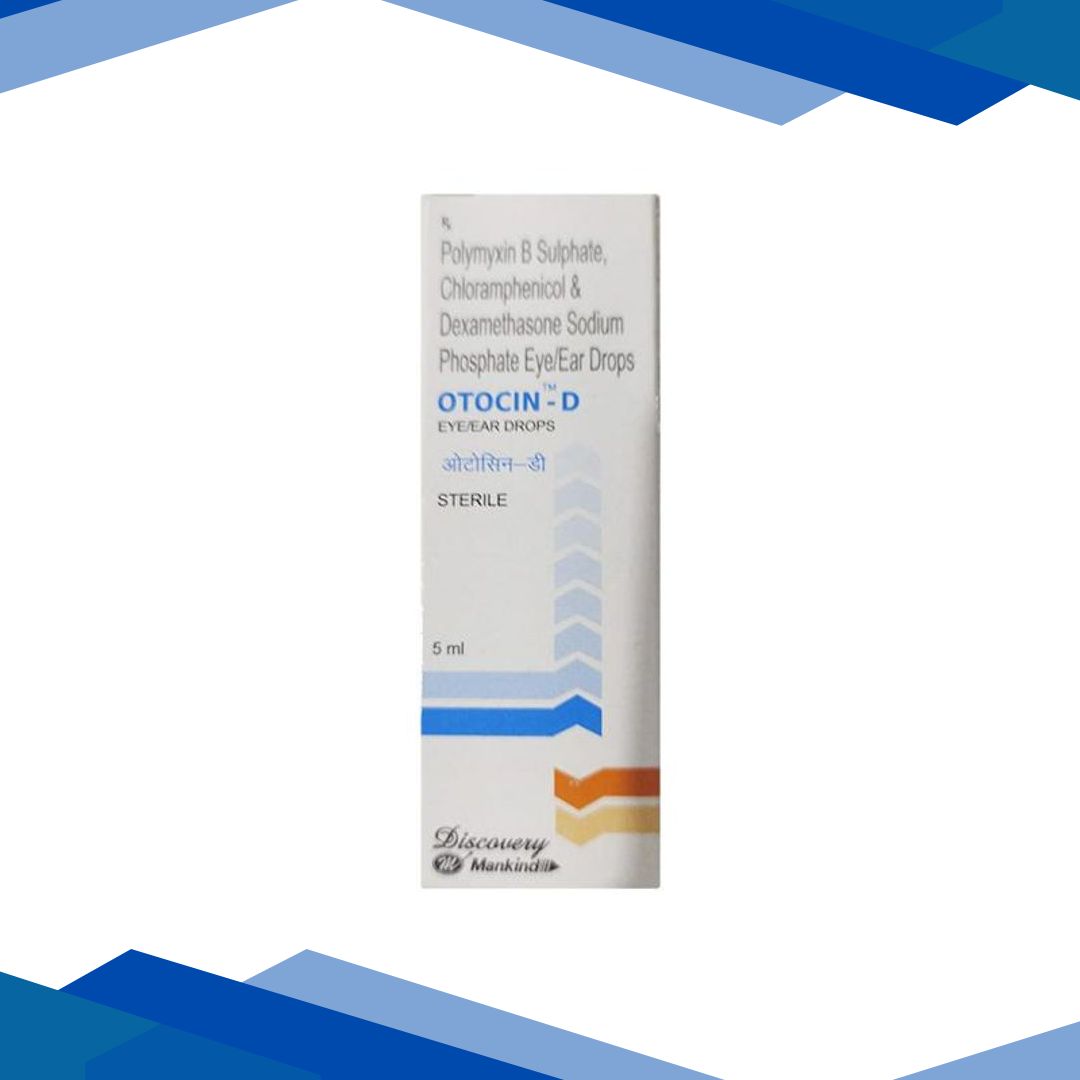
Otocin D Eye/Ear Drops 5ml
No Prescription yet? Don’t worry! Click Here to Get Online Consultation
Otocin D Eye/Ear Drops is a potent corticosteroid medicine used to reduce inflammation, suppress immune system activity, and relieve symptoms associated with allergic reactions, autoimmune disorders, respiratory conditions, skin diseases, and certain cancers. It works by blocking inflammatory substances in the body, helping decrease swelling, redness, pain, and immune-related damage. This medication is available in injectable, oral, and ophthalmic forms and is commonly used in hospitals and clinical settings for both acute and chronic inflammatory conditions. While highly effective, it should be used under medical supervision because prolonged or improper use may increase the risk of side effects such as infections, elevated blood sugar, bone weakness, mood changes, and adrenal suppression.
Description
Otocin D Eye/Ear Drops is a corticosteroid medicine widely used to reduce inflammation, suppress overactive immune responses, and manage a variety of medical conditions involving swelling, allergic reactions, autoimmune disorders, and certain hormonal abnormalities. it is a water-soluble form of dexamethasone that is commonly administered by injection, oral solution, or ophthalmic preparations depending on the condition being treated. this medication belongs to a class of drugs known as glucocorticoids, which mimic the effects of natural hormones produced by the adrenal glands. because of its potent anti-inflammatory and immunosuppressive properties, Otocin D Eye/Ear Drops is used in hospitals, clinics, and outpatient settings for both acute and chronic conditions.
the medicine works by inhibiting the release of substances in the body that trigger inflammation and immune system activity. when inflammation occurs, the body releases chemicals that cause redness, pain, swelling, and tissue damage. Otocin D Eye/Ear Drops blocks these inflammatory pathways and reduces the activity of immune cells responsible for allergic and autoimmune reactions. this makes it highly effective in conditions such as severe allergies, asthma attacks, arthritis, skin disorders, inflammatory bowel disease, cerebral edema, and certain cancers. in emergency medicine, it may also be used to treat severe inflammatory responses or life-threatening allergic conditions under medical supervision.
Otocin D Eye/Ear Drops is often prescribed for patients who require rapid relief from inflammation or immune-related symptoms. it may be given to adults and children depending on the condition and clinical judgment of the healthcare provider. in some cases, it is used as part of supportive care during chemotherapy to reduce nausea, allergic reactions, and swelling associated with cancer treatments. during respiratory illnesses associated with significant inflammation, corticosteroids such as dexamethasone may also be used in carefully selected patients to improve outcomes. the medicine should always be used under medical guidance because improper or prolonged use can lead to serious side effects and hormonal imbalances.
because Otocin D Eye/Ear Drops affects many systems within the body, its benefits and risks must be carefully balanced. short-term use is generally effective and well tolerated when monitored appropriately. however, long-term or high-dose use may suppress natural steroid production, weaken immunity, affect blood sugar levels, reduce bone density, and increase the risk of infections. healthcare professionals usually prescribe the lowest effective dose for the shortest duration possible to minimize complications. patients using corticosteroids for extended periods may require gradual dose reduction rather than sudden discontinuation to prevent withdrawal symptoms and adrenal insufficiency.
ingredients
- dexamethasone sodium phosphate: this is the active ingredient responsible for the therapeutic effects of the medicine. it is a synthetic corticosteroid with powerful anti-inflammatory and immunosuppressive actions. the phosphate form increases water solubility, allowing rapid absorption and effectiveness, especially in injectable formulations.
- sterile water for injection: commonly used in injectable preparations to dissolve and stabilize the medication for safe administration.
- sodium citrate or buffering agents: these ingredients help maintain the appropriate ph balance and stability of the formulation.
- sodium bisulfite or preservatives: some formulations contain preservatives to prevent contamination and extend shelf life. sensitive individuals may rarely experience allergic reactions to sulfite-containing products.
- edetate disodium: occasionally included to improve formulation stability and prevent degradation caused by metal ions.
- other inactive ingredients: depending on the manufacturer and dosage form, additional excipients may be present to maintain sterility, consistency, and product effectiveness.
key uses
- severe allergic reactions: used to reduce swelling, itching, breathing difficulty, and inflammation associated with serious allergic conditions.
- asthma and respiratory disorders: helps decrease airway inflammation in asthma attacks, chronic obstructive pulmonary disease flare-ups, and other respiratory conditions.
- autoimmune diseases: commonly prescribed in conditions such as lupus, rheumatoid arthritis, and autoimmune skin disorders to suppress abnormal immune activity.
- cerebral edema: used to reduce swelling around the brain caused by tumors, injuries, or neurological conditions.
- inflammatory conditions: effective in reducing inflammation associated with joint disorders, tendon inflammation, and connective tissue diseases.
- cancer supportive care: frequently used during chemotherapy to manage nausea, inflammation, allergic reactions, and swelling related to cancer treatment.
- eye inflammation: ophthalmic preparations may be used to treat inflammatory eye disorders under specialist supervision.
- skin disorders: may help control severe eczema, dermatitis, psoriasis, and allergic skin reactions.
- inflammatory bowel disease: sometimes prescribed for ulcerative colitis or crohn’s disease flare-ups to reduce intestinal inflammation.
- hormonal disorders: used in certain endocrine conditions where corticosteroid replacement or suppression is necessary.
- severe infections with inflammatory complications: in selected situations, corticosteroids may be used alongside antimicrobial treatment to control excessive inflammation.
- post-surgical inflammation: helps minimize swelling and inflammatory responses after certain surgical procedures.
how to use
Otocin D Eye/Ear Drops should always be used exactly as prescribed by a qualified healthcare professional. the method of administration depends on the dosage form and the medical condition being treated. injectable forms are usually administered by doctors or trained healthcare providers in hospitals or clinics. oral forms should typically be taken with food or milk to reduce stomach irritation unless otherwise directed. eye or ear preparations should only be applied to the affected area using proper hygiene techniques.
patients should follow the prescribed schedule carefully and avoid changing the dose without medical advice. corticosteroids are powerful medicines, and improper use can increase the risk of side effects or reduce treatment effectiveness. if the medication is used for several days or longer, abrupt discontinuation should generally be avoided because the body’s natural steroid production may become temporarily suppressed. healthcare providers may gradually reduce the dose to allow the adrenal glands to recover normal hormone production.
regular medical monitoring may be necessary during treatment, especially for individuals using the medicine long term. blood pressure, blood sugar levels, eye health, bone density, and signs of infection may need periodic evaluation. patients should inform healthcare providers about all current medications and medical conditions before starting therapy.
safety information
- warnings: Otocin D Eye/Ear Drops may weaken the immune system and increase susceptibility to infections. patients should avoid close contact with individuals who have contagious illnesses such as chickenpox or measles. long-term use can cause adrenal suppression, osteoporosis, cataracts, glaucoma, mood changes, and metabolic disturbances. use cautiously in patients with diabetes, hypertension, liver disease, kidney disease, stomach ulcers, heart disease, or psychiatric conditions.
- side effects: common side effects may include increased appetite, weight gain, stomach discomfort, mood changes, insomnia, elevated blood sugar levels, fluid retention, and facial puffiness. serious side effects may include severe infections, vision changes, muscle weakness, gastrointestinal bleeding, severe allergic reactions, irregular heartbeat, adrenal insufficiency, or mental health disturbances such as depression or confusion. immediate medical attention is necessary if severe symptoms occur.
- precautions: patients with fungal infections, untreated bacterial infections, or known hypersensitivity to corticosteroids should use this medicine only if specifically advised by a healthcare professional. elderly individuals may be more vulnerable to bone thinning and muscle weakness. children receiving long-term therapy should be monitored for growth suppression. vaccinations may need adjustment during corticosteroid treatment because immune responses can be reduced.
- pregnancy/breastfeeding: Otocin D Eye/Ear Drops should only be used during pregnancy if clearly needed and prescribed by a healthcare professional. corticosteroids can cross the placenta and may affect fetal development when used excessively or for prolonged periods. small amounts may pass into breast milk. nursing mothers should consult their healthcare provider before using this medication.
- interactions: this medicine may interact with anticoagulants, diabetes medications, nonsteroidal anti-inflammatory drugs (nsaids), vaccines, antifungal agents, certain antibiotics, anticonvulsants, and immunosuppressive therapies. alcohol consumption may increase the risk of stomach irritation and gastrointestinal bleeding. patients should provide a complete medication history to avoid harmful interactions.
additional information
- storage: store the medicine according to the manufacturer’s instructions. most formulations should be kept at controlled room temperature away from excessive heat, moisture, and direct sunlight. injectable products should remain sterile and should not be frozen unless specified by the manufacturer.
- missed dose: if a dose is missed, it should generally be taken as soon as remembered unless it is close to the next scheduled dose. double dosing should usually be avoided. patients should follow professional medical advice regarding missed doses.
- overdose: excessive use may lead to serious complications such as severe electrolyte imbalance, elevated blood sugar, high blood pressure, fluid retention, muscle weakness, or adrenal suppression. in suspected overdose cases, immediate medical attention or emergency assistance is recommended.
- habit forming: Otocin D Eye/Ear Drops is not considered habit forming or addictive. however, long-term use can cause physical dependence because the body may reduce its natural corticosteroid production. abrupt discontinuation after prolonged therapy can result in withdrawal symptoms and adrenal insufficiency.
- monitoring: patients receiving extended treatment may require regular blood tests, eye examinations, bone density evaluations, and monitoring for infection or hormonal imbalances.
- dietary considerations: some patients may be advised to reduce sodium intake and increase calcium or vitamin d consumption to help reduce fluid retention and protect bone health during long-term therapy.
frequently asked questions
Q: what is Otocin D Eye/Ear Drops used for?
A: Otocin D Eye/Ear Drops is primarily used to reduce inflammation and suppress overactive immune responses in conditions such as allergies, asthma, autoimmune diseases, brain swelling, and certain cancers.
Q: how does Otocin D Eye/Ear Drops work?
A: it works by blocking inflammatory chemicals and suppressing immune system activity, thereby reducing swelling, redness, pain, and allergic reactions.
Q: can Otocin D Eye/Ear Drops weaken the immune system?
A: yes, corticosteroids can suppress immune function, making patients more susceptible to infections, especially with long-term or high-dose use.
Q: is Otocin D Eye/Ear Drops safe for long-term use?
A: long-term use may be necessary in some conditions, but it increases the risk of side effects such as osteoporosis, adrenal suppression, high blood sugar, and infections. regular medical monitoring is important.
Q: can this medicine increase blood sugar levels?
A: yes, corticosteroids can raise blood glucose levels, particularly in patients with diabetes or those at risk for diabetes.
Q: should Otocin D Eye/Ear Drops be stopped suddenly?
A: no, sudden discontinuation after prolonged use may cause withdrawal symptoms and adrenal insufficiency. healthcare providers usually recommend gradual dose reduction.
Q: can children use Otocin D Eye/Ear Drops?
A: yes, it may be prescribed in children for specific conditions under strict medical supervision. growth and development may require monitoring during long-term treatment.
Q: what are the common side effects of this medicine?
A: common side effects include increased appetite, weight gain, insomnia, mood changes, fluid retention, stomach upset, and elevated blood sugar.
Q: can Otocin D Eye/Ear Drops be used during pregnancy?
A: it should only be used during pregnancy when clearly needed and prescribed by a healthcare professional after evaluating potential risks and benefits.
Q: does alcohol interact with Otocin D Eye/Ear Drops?
A: alcohol may increase the risk of stomach irritation and gastrointestinal bleeding, especially when combined with corticosteroids.
Q: can this medicine cause mood changes?
A: yes, some individuals may experience mood swings, anxiety, irritability, depression, or sleep disturbances while using corticosteroids.
Q: is Otocin D Eye/Ear Drops an antibiotic?
A: no, it is a corticosteroid medication and does not directly kill bacteria or viruses.
Q: can patients receive vaccines while taking this medicine?
A: certain vaccines may not work properly during corticosteroid therapy, and live vaccines may be unsuitable in some cases. medical advice should always be obtained before vaccination.
Q: how should injectable Otocin D Eye/Ear Drops be administered?
A: injectable forms should be administered only by trained healthcare professionals in appropriate medical settings.
Q: what should patients do if they experience severe side effects?
A: patients should seek immediate medical attention if they develop serious symptoms such as breathing difficulty, severe infection, vision changes, black stools, or severe allergic reactions.
this information is for educational purposes only and should not be considered medical advice. always consult a qualified healthcare professional before use.
At Gem Pharmacy, we make every effort to provide accurate, expert-written, and thoroughly reviewed information related to medicines. However, this information should not be considered a substitute for professional medical advice, diagnosis, or treatment from a qualified doctor.
The purpose of this information is to educate users and improve communication between patients and healthcare professionals. It should not be used to diagnose or treat any condition.
Always consult a certified healthcare professional before taking any medication.


Related products