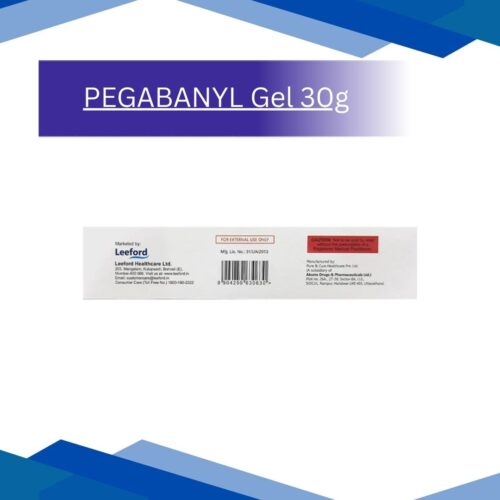
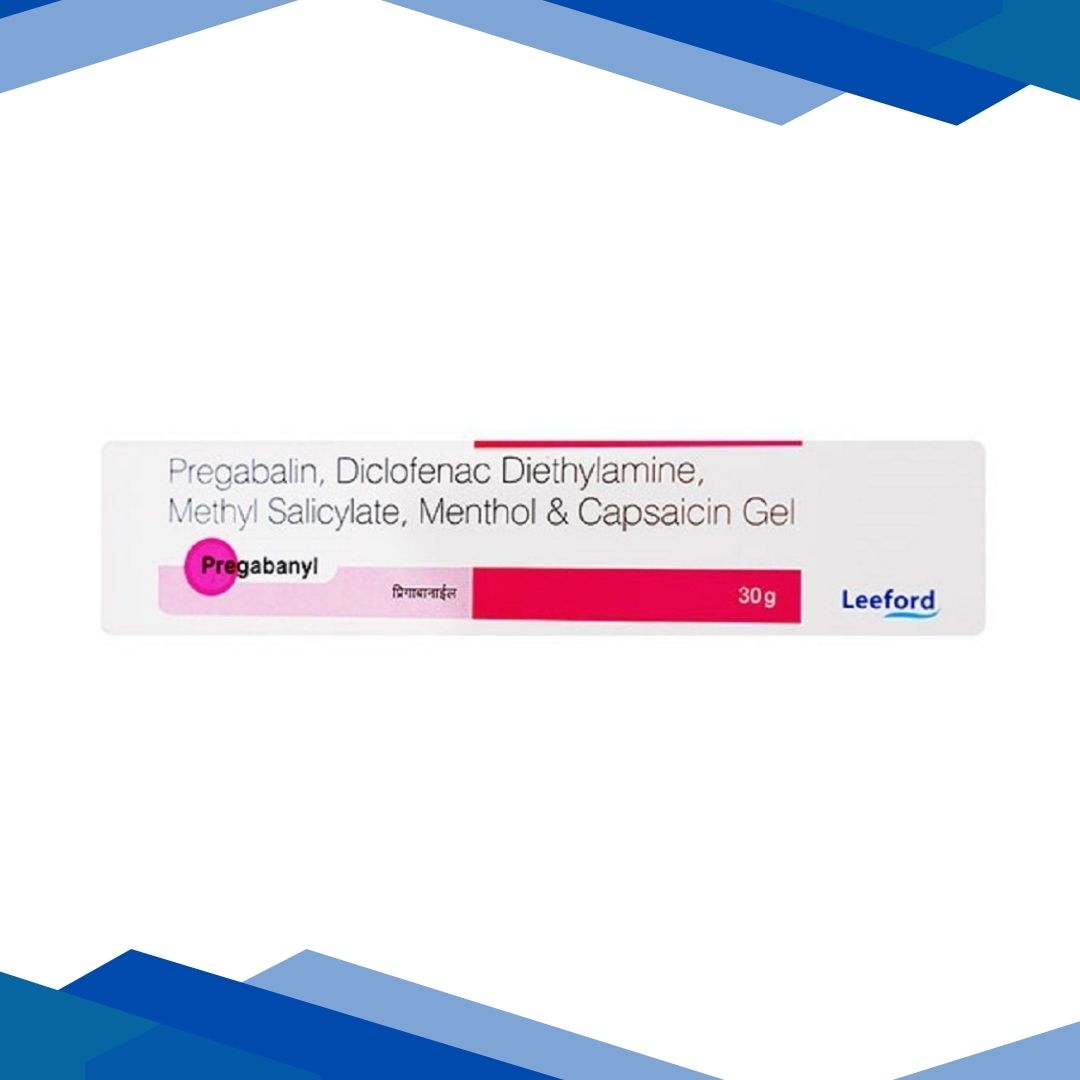
PREGABANYL Gel 30gm
No Prescription yet? Don’t worry! Click Here to Get Online Consultation
pregabaNYL Gel is used to treat neuropathic pain. It blocks the release of certain chemical messengers that cause pain and inflammation. It decreases the pain by modulating calcium channel activity.
Capsaicin Gel
Capsaicin Gel: Limited Nerve and Joint Pain Relief
Capsaicin Gel is a powerful topical analgesic derived from natural chili peppers (Capsicum annuum). A great enhancement over other gels because it works not through cooling but heat therapy, and employs heat to act at the molecular level. It has specific applications for targeted pain relief in arthritis, nerve damage (post-herpetic neuralgia), and musculoskeletal injuries. By specifically targeting pain messengers at the application site, Capsaicin Gel offers an exciting alternative for people who desire to get rid of pain without having side effects of oral painkillers.
Down to Therapeutic Uses & Benefits
Effectively decreasing joint stiffness and pain by dampening the local pain response in Osteoarthritis & Rheumatoid Arthritis.
Highly recommended for diabetic neuropathy and post-herpetic neuralgia for muscle soreness.
Technically provides deep penetrating warmth to soothe the strained muscles and backaches.
Local treatment: In the localized application, Capsaicin may be used as an okay treatment for specific tender points associated with chronic pain syndromes.
The Way Capsaicin Works (Mechanisms of Action)
Capsaicin is a Substance P depletor. Substance P is a chemomediator—a neuropeptide that transmits pain signals from the peripheral nervous system to the brain. Therefore, after an application, Capsaicin initially stimulates the release of Substance P (hence creating the sensation of warmth), but with repeated usage, the supply of the painful message dissipates. This will effectively end the signal of pain from that specific location long-term.
Safety Warnings and Practical Use Directions:
The heat factor: One should feel a temporary burning pain during early applications, which normally disappears within a day or two, as the nerves become less responsive.
1: Hand hygiene. Immediately after applying (Capsaicin Gel) except when treating your hands, make sure to wash them with soap properly. Try to avoid touching your eyes, nose, or mouth, for the gel can cause severe irritation to the mucosal membranes.
Avoid Hot Environment: Do not apply Capsaicin at once after or before taking a hot bath or while wearing any tight bandages-for the same reason already observed above.
Frequent Use: Capsaicin, unlike certain gel preparations, often needs three or four daily applications as long as two weeks before achieving any significant pain-relieving effect.
Questions and Answers:
2. Why does the gel sting right at the start?
It smells of Capsaicin-and that means it's acting to release Substance P from your nerve endings. As this transmitter will begin to disappear from your pain-sending nerves over several days of regular use, the burner will much burn less, and pain relief will gradually start to increase.
3. Could I use a heating pad on top of my Capsaicin Gel?
That can prove harmful: any heating pad or any external heat source. Please avoid exposing the area to Capasaicin-treated products because the skin's reaction could be severe to the extent of blisters. Leave the gel to give warmth within.
3. Can you use this over an extended period?
Yes, if you are under medical supervision, then this is so. It will not interfere with your stomach or kidneys due to various non-steroidal agents, ibuprofen, etc. The pharmacist should handle any acute increase in cutaneous irritation.
4. How should I clean the area if the burning is too intense?
If the burning pain persists, try not to remove it with lukewarm water, as it will worsen the effect. Instead, you might apply vegetable oil or cold cream to it and softly dab/blot it clean with a paper towel.
5. Can I use this gel alongside my oral arthritis medications?
Yes, in most cases; very few amounts of capsaicin gets absorbed systemically, so it rarely deals with oral medications. It is usually given as a "top-up" treatment for breakthrough pain.
Diclofenac Diethylamine
Diclofenac Diethylamine Topical Gel
Diclofenac Diethylamine, a potent non-steroidal anti-inflammatory drug, is specifically formulated for topical application. Unlike oral painkillers, which are developed for absorption into the bloodstream, the diethylamine salt is designed for penetrating the skin more thoroughly to allow the active drug to reach deeper into the target site in joints and muscles. By its structural impact on cyclo-oxygenases 1 and 2 to reduce the synthesis of prostaglandins, more specifically PGE2, DDEA inhibits the mechanisms relevant to the establishment of secondary hyperalgesia.
Therapeutic Uses
Joint Pain: Provides targeted relief for osteoarthritis of superficial joints like the knees, elbows, and fingers.
Muscle Strains & Sprains: Staunchly reduces swelling and pain following sports injuries or sudden physical exertion.
Back & Neck Pain: Gets deep down into the musculature to help the stiffness and acute aches present.
Soft Tissue Rheumatism: Useful for localized tendinitis and inflammatory conditions like bursitis.
Key Features
Enhanced Absorption: The diethylamine salt makes absorption via the skin faster and deeper than standard sodium salt formulations.
Localized Action: It keeps systemic absorption to a minimum, reducing the chances of general side effects associated with oral NSAIDs.
Non-Greasy Formula: Usually available as a hydro-alcoholic gel—non-greasy, cooling, and non-staining.
How to Apply
Cleanse: Clean the affected area using soap and water, then dry thoroughly.
Measure: Apply a small amount (about the size of a cherry or walnut depending on the area).
Massage: Gently massage the gel into the skin until absorbed. Avoid vigorous rubbing.
Hygiene: Wash hands after application unless treating the hands.
Frequency: Apply 3–4 times daily or as directed by your physician.
Safety Precautions & Warnings
External Use Only: Do not apply on open wounds, cuts, infected skin, or exfoliative dermatitis.
Sun Sensitivity: Avoid direct sunlight or artificial tanning on the treated area due to photosensitivity.
Avoid Occlusion: Do not use airtight bandages or heat therapy over the applied area.
Pregnancy Warning: Use with caution in the first two trimesters; avoid completely in the third trimester.
Asthma/Allergies: Avoid use if you have aspirin-induced asthma or hypersensitivity; consult a doctor.
Frequently Asked Questions (FAQs)
Q: What is the difference between Diclofenac Diethylamine and Diclofenac Sodium?
Diclofenac Diethylamine is more lipid-soluble, allowing better skin penetration, while Diclofenac Sodium is commonly used in oral formulations.
Q: How long does it take to work?
A cooling effect is felt immediately, while significant pain relief usually occurs within 30–60 minutes, improving further over 2–3 days.
Q: Can I use it with oral painkillers?
Consult your doctor before combining with oral NSAIDs like Ibuprofen or Naproxen, as it may increase side effects.
Q: What if I develop a rash?
Mild irritation may occur. Discontinue use and seek medical advice if severe rash, swelling, or blistering develops.
Q: Does it cure the condition?
It reduces inflammation and pain but does not cure underlying conditions like osteoarthritis.
Storage
Store in a cool, dry place below 30°C. Do not freeze. Keep the tube tightly closed.
Index
This content is for informational purposes only and should not replace professional medical advice. Always read the product label and consult your healthcare provider before use.
Menthol
Menthol (Topical Analgesic)
Menthol is natural ingredient that occurs organically and is extracted from peppermint and other mint oils. It has certain pharmacological properties due to the topical analgesic and counterirritant that is widely utilized in pharmaceutical applications. When applied to the skin, it binds to the cold-sensitive receptor termed TRPM8 nicotine, and thus generates a cooling sensation. It works by producing enough cooling sensation to distract the brain from underlying pain signals, therefore providing some relief, deceiving the skin's pain receptors and authors. It is commonly used in muscle-recovery products and patches to mitigate joint pain.
Primary Indications
Muscle & Joint Relief: Temporary relief of minor aches and pains, caused by arthritis, simple backaches, strains, and sprains.
Counterirritant Action: Provides a cooling, slightly warming sensation with benefits of desensitization of pain nerve endings.
Itch & Irritation Control: Effectively don't entertain the itching from insect bites, sunburn, or minor skin rashes.
Respiratory comfort: Often used in chest rubs to emotionally relieve symptoms of feeling clear airways during common colds.
Post-Workout Recovery: Helps reduce the perception of soreness in overworked muscles and tendons.
The Product Specifications
Drugs Group: Topical Analgesic/ Counterirritant.
Formulations: Gels, sprays creams, ointments, medicated patches are available.
Concentration: Ranges generally from 1% and 16% as per the strength.
Appearance: Clear liquid or white crystalline material, characteristic of a minty aroma.
Instructions of Use
For Pain Relief: Clean and dry the affected area. Then apply a thin layer of gel or cream to the area 3-4 times daily.
Sprays: Spray on the skin evenly from 4" to 6" distance. Do not rub unless otherwise specified.
Patches: Stick one patch to the painful area and leave it for as long as 8 hours. Don't use more than one patch that has formed into a mass.
Hygiene: Wash your hands thoroughly with soap after application to avoid any accidental contact with the eyes and mucosa.
Safety Precautions & Warnings
For external use only: Do not ingest menthol-based topical products.
Avoid Over Broken Skin: Never apply to an open wound, damaged skin, or any irritated rashes.
No Heat therapy: Whether using a heating pad, hot water bottle, or tight bandage applied to the area, do not apply heat either. This will increase permeation and cause severe skin burns.
Flammability: Some menthol sprays and gels are flammable. Keep away from open flames or high heat until the product has completely dried on the skin.
Children: Consult a pediatrician before using on children under 12.
Frequently Asked Questions (FAQs)
Q: How does Menthol actually stop pain?
Menthol does not "numb" the pain as a local anesthetic does, but rather acts as a counterirritant. As the compound creates an intense cold sensation, it blocks the pain signals headed to the brain, effectively turning down the volume on discomfort.
Q: Can Menthol be used with a heating pad?
No. This is a major danger. Menthol causes the blood flow to the skin to increase, and the application of heat tends to make the medication be absorbed too quickly or cause some very bad burns and blisters.
Q: Why do I instantly feel cold but end up feeling warm?
This is essentially because of the 'counterirritant effect.' The menthol first activates the cold receptors, offering initial cooling effects. Then the local circulation is elevated when it is rubbed in, and the now-warm sensation is relaxing tight muscles.
Q: Can Menthol be used with an oral pain medication?
Yes, in practice, no! Since menthol is only used topically, so very little of it penetrates your bloodstream. However, let your doc know if you're on blood thinners, say, on Warfarin, because some of the topical formulations can have methyl salicylate, which can interact with them.
Q: Will the Menthol smell "stick"?
The very minty smell is the strongest during application and then dissipates as the product dries down. I would suggest many "vanishing scent gels" for a more subtle application, if the user prefers it that way.
Methyl Salicylate
Pregabalin
The 75 mg capsule of pregabalin
Pregabalin is a potent medication that belongs to the group of gabapentinoids and which is increasingly used for epilepsy and neuropathic pain management. You will find its administration in the treatment of chronic neurogenous pain syndromes such as diabetic neuropathic pain, post-herpetic neuralgia (pain related to shingles), and fibromyalgia. This drug is also served as an add-on therapy in adult patients with certain types of seizures or to manage Generalized Anxiety Disorder (GAD).
Therapeutical Use
Neuropathic Pain: Cures long-term nerve pain from diabetic neuropathy, shingles, or spinal-cord injury. Nuromusculoskel-
Fibromylagia: Straightens out widespread muscle pain, tenderness, and joint pain from this chronic condition.
Epilepsy: Works by modifying other drugs and controlling one part of the partially partial seizures by balancing the firing of brain cells.
Anxiety: Alleviates obsessions, restlessness, and tension in Generalized Anxiety Disorder.
Mode of Action
Pregabalin works by modulating the calcium channels within the central nervous system. By joining the specific subunits of these channels, pregabalin serves to diminish excitation of several neurotransmitters (for example glutamate and substance P). In a sense, it helps in "calming" overactive or damaged nerves, which in turn slows the transmission of the pain signal to the brain and prevents the occurrence of unnecessary abnormal electric discharges which cause seizures.
Brief Specification
Active Ingredient: Pregabalin (USP/IP)
Drug Classification: Anticonvulsant / Gabapentinoid
Common Strengths: 25mg, 50mg, 75mg, 150mg, 300mg
Prescription Category: Schedule H (Prescription-Required)
Administration and Dosages
Method: Preferably swallow the capsule whole with water. Do not open, chew, or crush a capsule.
Food: pregabalin may be taken with or without food. If it tends to cause stomach upset, one may take medication with or after a meal.
Consistency: So as to get the best results, take your dose at the same time(s) each day so that a consistent concentration of medicine can be maintained in your bloodstream.
Side Effects
Most side effects caused by Pregabalin are mild and should gradually wane as your body gets used to them. These may include:
Dizziness and sleepiness
Dry mouth
Blurred vision
Weight gain (increased appetite)
Swelling in hands or feet (edema)
Inability to concentrate and memory lapses
If you have a serious mood change (depression), thoughts of suicide, or an allergic reaction suddenly becomes severe (face/tongue swelling), call for emergency medical help (call) immediately.
Precautions
Alcohol: Avoiding alcohol is suggested while taking Pregabalin because it can be particularly dangerous as it increases drowsiness and interferes with coordination.
Driving: You do not drive or operate heavy machinery until you know will not make you dizzy or drowsy.
Kidney Health: Dose adjustments should be made for patients who have renal impairment, and your doctor should be well- informed about your kidney status.
Discontinue: Pregabalin should never be stopped suddenly. If the patient abruptly stops pregabalin, symptoms of withdrawal, such as insomnia, nausea, and an increase in seizure numbers, can occur. The dose will be tapered down by the doctor gradually over at least one week.
Mental Health: Monitor for development of any unusual changes in mood or behavior, particularly at the outset of treatment.
Frequently Asked Questions (FAQs)
Q: How long does it take for Pregabalin to start to work?
Some patients may start feeling pain reduction within the first week. It may, however, take 2-4 weeks of reasonably regular usage to obtain the full benefits from taking pregabalin.
Q: Is Pregabalin for normal back pain?
It is quite specific for nerve pain and not your everyday muscular strain or typical headaches treatment; therefore, Pregabalin applies to chronic back pain only with the nerve's involvement confirmed by a doctor.(for example, sciatica)
Q: Is Pregabalin addictive?
Pregabalin has a potential for misuse and habituation if taken in higher amounts or for longer than prescribed. Always follow your doctor’s instructions explicitly and never share this medicine with anyone else.
Q: If I miss a dose, what should I do?
Administer the missed dose as soon as you remember. If, in case, it is very near to the scheduled dose, just skip that accidentally missed dose. Do not ever take a double dose for extra benefit.
Q: Will this drug affect fertility?
Data on Pregabalin and human fertility are scarce. If pregnant or breastfeeding or planning to be pregnant, you should seek guidance from your healthcare provider given the potential for risk to the fetus outweighing benefits.
At Gem Pharmacy, we make every effort to provide accurate, expert-written, and thoroughly reviewed information related to medicines. However, this information should not be considered a substitute for professional medical advice, diagnosis, or treatment from a qualified doctor.
The purpose of this information is to educate users and improve communication between patients and healthcare professionals. It should not be used to diagnose or treat any condition.
Always consult a certified healthcare professional before taking any medication.


Related products

Hask Tea Tree Oil and Rosemary Invigorating Shampoo 355 ml