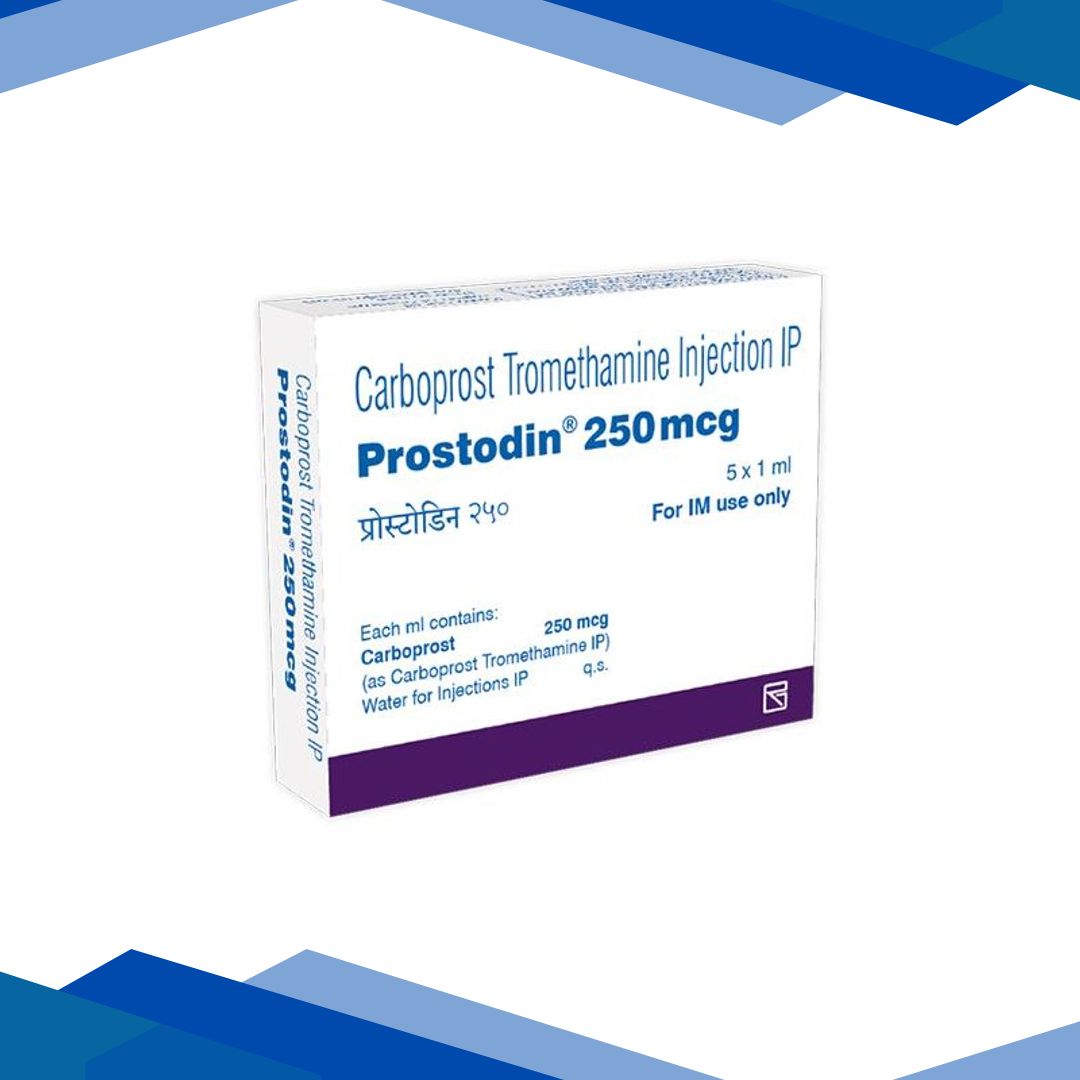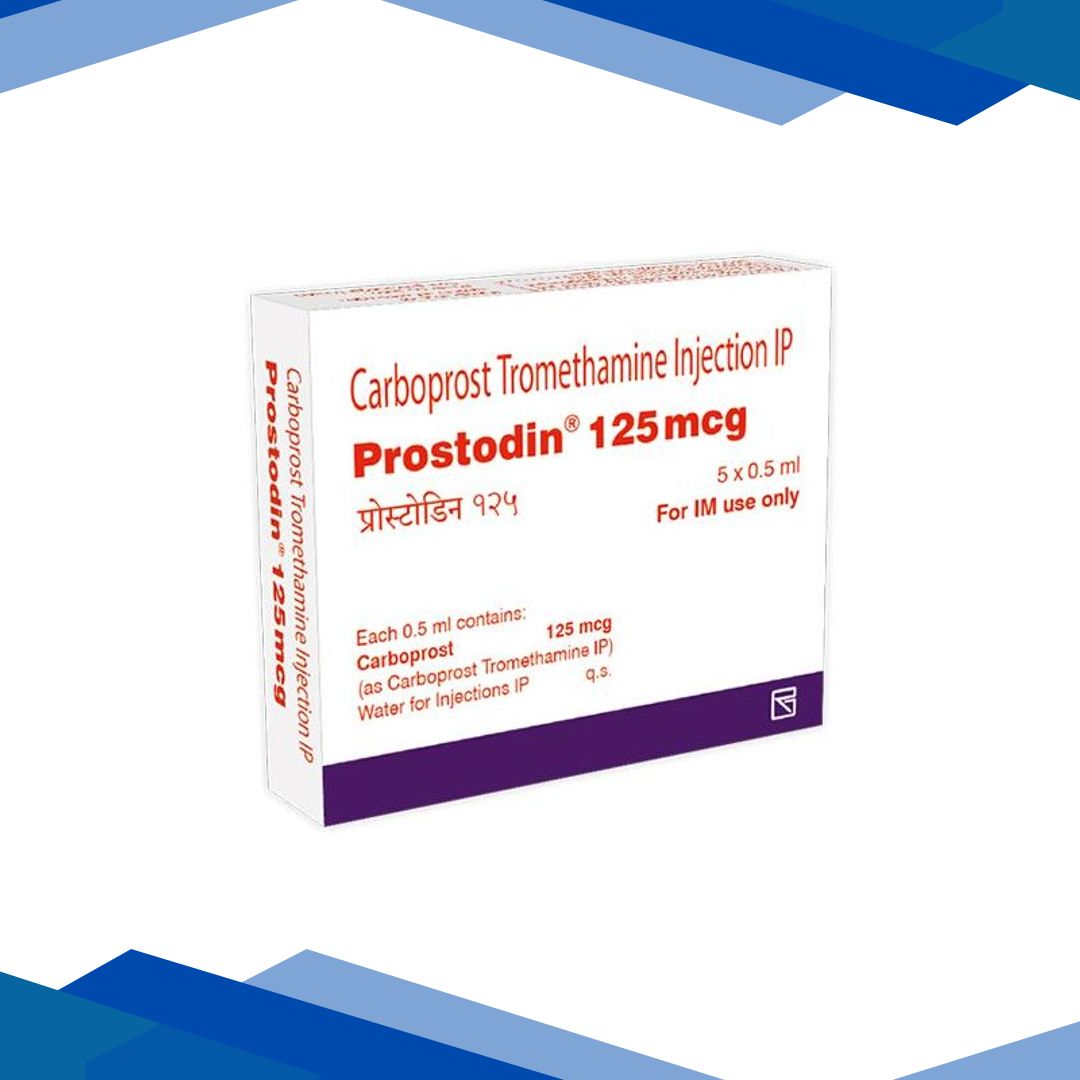
PROSTODIN 125 Injection 0.5ml
❌ Due to high demand, this product is currently out of stock. New stock will be available shortly.
👉 Click here to Buy Same Salt medicine
PROSTODIN 125 Injection is a medicine used in obstetric care to help the uterus contract strongly. It works by acting on prostaglandin receptors, which stimulates the muscle of the uterus to tighten and helps reduce bleeding after childbirth. Because of this effect, PROSTODIN 125 Injection is mainly used to control severe postpartum hemorrhage when the uterus does not contract well after delivery. It may also be used in certain medical situations to help the uterus empty after pregnancy-related complications, under close medical supervision. This medicine is given in hospital settings because its effects can be strong and it requires careful monitoring. PROSTODIN 125 Injection is an important emergency treatment that can help manage life-threatening bleeding and support recovery after childbirth.
Description
PROSTODIN 125 Injection is a medicine used in obstetric and gynecologic care to help the uterus contract strongly when it is medically necessary. it is a synthetic form of a natural body chemical called prostaglandin, which means it acts on smooth muscle tissue—especially the uterus—to stimulate powerful contractions. because of this action, PROSTODIN 125 Injection is typically used in urgent hospital settings rather than for routine or self-managed care. it is not a medicine for casual use at home, and it should only be given by trained healthcare professionals with appropriate monitoring.
one of the most important roles of PROSTODIN 125 Injection is helping control severe bleeding after childbirth when the uterus does not contract well enough on its own, a condition often referred to as uterine atony. by making the uterus tighten, the medicine helps compress blood vessels and reduce blood loss. it may also be used in some cases to assist with the management of certain pregnancy-related situations where the uterus needs to empty under medical supervision. because it can cause strong uterine activity and other systemic effects, it is usually reserved for situations where the expected benefit is greater than the risk.
PROSTODIN 125 Injection works by binding to prostaglandin receptors in uterine muscle and other tissues. this can produce coordinated, forceful uterine contractions and also influence other smooth muscle structures in the body. its action is useful in emergencies, but it can also lead to side effects such as nausea, vomiting, diarrhea, flushing, and temporary changes in blood pressure or breathing. for this reason, patients receiving PROSTODIN 125 Injection are generally monitored closely, especially if they have a history of asthma, cardiovascular disease, or other medical conditions that could increase risk.
because PROSTODIN 125 Injection is a high-potency medicine with important safety considerations, it should be used only when prescribed and administered by healthcare professionals. the exact suitability of the medicine depends on the patient’s condition, medical history, and the reason for treatment. if there is any uncertainty about whether PROSTODIN 125 Injection is appropriate, a qualified clinician should make that decision.
ingredients
- PROSTODIN 125 Injection: this is the active medicinal ingredient. it is responsible for stimulating uterine contractions and helping the uterus respond in situations where strong contraction is needed, such as controlling significant postpartum bleeding. its main benefit is rapid action in urgent clinical settings, but it must be used carefully because its effects can also involve the lungs, digestive tract, and cardiovascular system.
- excipients / formulation ingredients: depending on the product presentation, PROSTODIN 125 Injection may be formulated with stabilizing or preserving substances that help maintain the medicine’s quality, sterility, and shelf life. these inactive components do not provide the therapeutic effect, but they are important for safe manufacturing and administration. the exact excipients can vary by manufacturer and dosage form, so the product label or package insert should always be checked.
key uses
- control of postpartum hemorrhage: PROSTODIN 125 Injection is commonly used when the uterus fails to contract adequately after delivery and bleeding is heavy or persistent. it helps the uterus tighten so that blood vessels are compressed and blood loss is reduced.
- treatment of uterine atony: when the uterus becomes “floppy” after childbirth and does not maintain tone, PROSTODIN 125 Injection can help restore muscle contraction. this is an important emergency measure in obstetric care.
- assistance in pregnancy-related uterine evacuation under medical supervision: in certain clinical situations, a healthcare professional may use PROSTODIN 125 Injection to help the uterus empty. this use is restricted to settings where careful monitoring is available and the risks have been assessed.
- support in cases where other measures are not enough: PROSTODIN 125 Injection may be considered when first-line methods are insufficient to control bleeding or achieve the desired uterine response. it is often part of a broader treatment plan rather than a standalone solution.
how to use
PROSTODIN 125 Injection should be used only under the direct supervision of a healthcare professional, usually in a hospital or emergency care setting. it is not intended for self-administration. the method of use depends on the clinical situation and the specific product form, and the medicine is given by a trained clinician who can monitor the patient’s response and manage side effects immediately if they occur.
before administration, the medical team typically reviews the patient’s history, especially any asthma, heart disease, high blood pressure, liver or kidney problems, allergy history, or previous reactions to prostaglandin medicines. during use, close observation is important because PROSTODIN 125 Injection can cause strong uterine contractions and may also trigger nausea, vomiting, diarrhea, flushing, or breathing difficulty in sensitive individuals. vital signs and bleeding status are often monitored repeatedly.
patients should not try to adjust the dose, repeat treatment, or use the medicine outside the instructions of the treating clinician. if the medicine is being considered for a pregnancy-related indication, the healthcare provider will decide whether it is appropriate based on the medical condition, gestational status, and safety profile. always follow the exact instructions given by the treatment team, and seek immediate medical help if concerning symptoms appear.
safety information
- warnings: PROSTODIN 125 Injection can cause strong uterine contractions and may lead to significant side effects. it should be used only in settings with emergency support available. it is especially important to use caution in patients with asthma because the medicine may cause bronchospasm or breathing difficulty. patients with cardiovascular disease, hypertension, or a history of seizures may also require extra caution and monitoring.
- side effects: common side effects include nausea, vomiting, diarrhea, abdominal cramping, pelvic pain, flushing, chills, headache, and transient fever. serious side effects can include severe bronchospasm, chest tightness, marked blood pressure changes, allergic reactions, excessive uterine activity, heavy bleeding, or signs of distress requiring urgent medical attention.
- precautions: PROSTODIN 125 Injection may not be suitable for people with asthma, chronic lung disease, significant heart disease, uncontrolled blood pressure, liver or kidney impairment, or a known allergy to prostaglandins. it should be used cautiously in patients who are medically fragile or who may not tolerate strong contractions or fluid shifts well.
- pregnancy/breastfeeding: PROSTODIN 125 Injection is generally used in pregnancy-related situations only when specifically intended by a healthcare professional. it should never be used casually during pregnancy because it can stimulate uterine activity and may affect the pregnancy outcome. breastfeeding considerations depend on the clinical context; a healthcare professional should advise whether temporary interruption or monitoring is needed.
- interactions: PROSTODIN 125 Injection may interact with other medicines that affect uterine activity, blood pressure, breathing, or gastrointestinal function. concurrent use with other uterotonic agents may increase the risk of excessive uterine contractions. alcohol is not usually a direct interaction concern in hospital use, but it can worsen dehydration, dizziness, or nausea in some people and is generally best avoided if the treating clinician advises caution.
additional information
- storage: store PROSTODIN 125 Injection according to the product label and pharmacy instructions, typically in a controlled environment away from excess heat, moisture, and direct light. if it is supplied as an injectable product, special temperature requirements may apply. keep it out of reach of children and never use a product that is expired, damaged, or improperly stored.
- missed dose: because PROSTODIN 125 Injection is usually administered by healthcare professionals in urgent clinical situations, missed doses are not handled in the usual home-medication way. if a scheduled administration is missed or delayed, the clinical team will decide whether it is still appropriate to give the medicine based on the patient’s current condition.
- overdose: too much PROSTODIN 125 Injection can lead to severe uterine contractions, intense gastrointestinal symptoms, breathing problems, excessive blood pressure changes, or other serious complications. overdose is a medical emergency and requires immediate evaluation and supportive treatment. if overdose is suspected, urgent medical help should be sought right away.
- habit forming: no. PROSTODIN 125 Injection is not considered habit forming or addictive. it is used for short-term, medically supervised situations rather than long-term routine therapy.
frequently asked questions
Q: what is PROSTODIN 125 Injection used for?
A: PROSTODIN 125 Injection is mainly used in emergency obstetric care, especially to help control severe bleeding after childbirth by making the uterus contract more effectively. in some medically supervised situations, it may also be used to assist with pregnancy-related uterine evacuation.
Q: can PROSTODIN 125 Injection be used at home?
A: no. PROSTODIN 125 Injection is not a home-use medicine. it should be administered only by trained healthcare professionals in a monitored medical setting because it can cause strong uterine effects and serious side effects.
Q: why is asthma a concern with PROSTODIN 125 Injection?
A: PROSTODIN 125 Injection can sometimes cause the airways to tighten, which may trigger wheezing or bronchospasm. people with asthma or other lung conditions may be at higher risk, so healthcare providers usually use extra caution or choose alternative treatments.
Q: what side effects are most common?
A: the most common side effects include nausea, vomiting, diarrhea, abdominal cramps, flushing, chills, headache, and temporary fever. these effects can be uncomfortable, which is why monitoring is important during treatment.
Q: does PROSTODIN 125 Injection stop bleeding immediately?
A: it can work quickly, but the response depends on the cause of bleeding and the individual patient. it is one part of emergency management and may be combined with other treatments if needed.
Q: is PROSTODIN 125 Injection safe in pregnancy?
A: PROSTODIN 125 Injection is used in pregnancy only when a clinician specifically determines that it is necessary and appropriate. it should not be used without medical supervision because it can strongly affect the uterus and pregnancy outcome.
Q: can PROSTODIN 125 Injection affect blood pressure?
A: yes. PROSTODIN 125 Injection may cause changes in blood pressure in some patients. because of this possibility, vital signs are often monitored during and after administration.
Q: how long do side effects last?
A: many side effects are temporary and improve after the medicine wears off, but the duration can vary. if symptoms are severe, persistent, or involve breathing difficulty, urgent medical assessment is needed.
Q: should i tell my doctor about my medical history before using PROSTODIN 125 Injection?
A: absolutely. your doctor needs to know about asthma, heart disease, high blood pressure, liver or kidney problems, allergies, and any previous reactions to similar medicines so the treatment can be chosen safely.
Q: what should i do if i feel short of breath after receiving PROSTODIN 125 Injection?
A: shortness of breath after PROSTODIN 125 Injection may be serious and needs immediate medical attention. notify the healthcare team right away or seek emergency care if you are outside a monitored setting.
Q: can PROSTODIN 125 Injection be taken with other medicines?
A: it can sometimes be used with other treatments in a hospital, but the medical team must review all medicines first. some combinations may increase side effects or change how the body responds to treatment.
Q: is PROSTODIN 125 Injection the same as routine pain medicine?
A: no. PROSTODIN 125 Injection is not a pain reliever. it is a prostaglandin medicine used for specific obstetric and gynecologic indications, especially where uterine contraction is needed.
Q: what makes PROSTODIN 125 Injection different from other uterotonic medicines?
A: PROSTODIN 125 Injection has a strong prostaglandin effect and is often used when other treatments have not been enough. it is effective but also associated with specific safety concerns, especially respiratory effects.
Q: can PROSTODIN 125 Injection cause fever?
A: yes, temporary fever or chills can occur. if the fever is high, persistent, or accompanied by other serious symptoms, it should be evaluated by a healthcare professional.
Q: what if i have a history of allergies?
A: tell the healthcare team about any prior allergies, especially to prostaglandin-type medicines or injection products. a history of severe allergic reactions may change whether PROSTODIN 125 Injection is appropriate for you.
Q: is PROSTODIN 125 Injection addictive?
A: no, PROSTODIN 125 Injection is not addictive and does not cause dependence. it is used short term in medically supervised situations.
Q: do i need monitoring after receiving PROSTODIN 125 Injection?
A: yes. monitoring is often needed to watch for bleeding control, uterine response, breathing changes, blood pressure changes, and other side effects so that treatment can be adjusted promptly if necessary.
[/faqs_dbm]
this information is for educational purposes only and should not be considered medical advice. always consult a qualified healthcare professional before use.
At Gem Pharmacy, we make every effort to provide accurate, expert-written, and thoroughly reviewed information related to medicines. However, this information should not be considered a substitute for professional medical advice, diagnosis, or treatment from a qualified doctor.
The purpose of this information is to educate users and improve communication between patients and healthcare professionals. It should not be used to diagnose or treat any condition.
Always consult a certified healthcare professional before taking any medication.


Related products