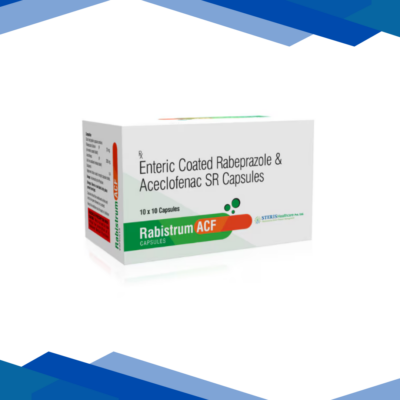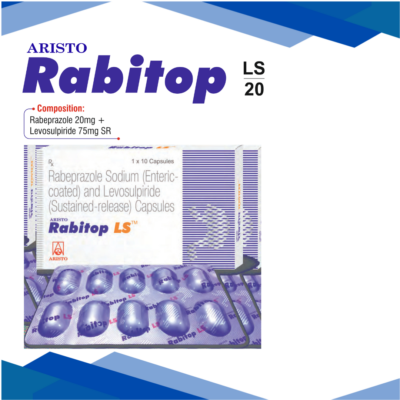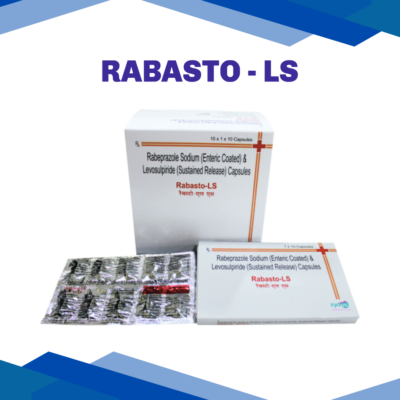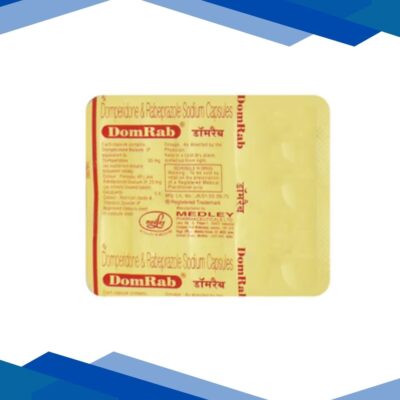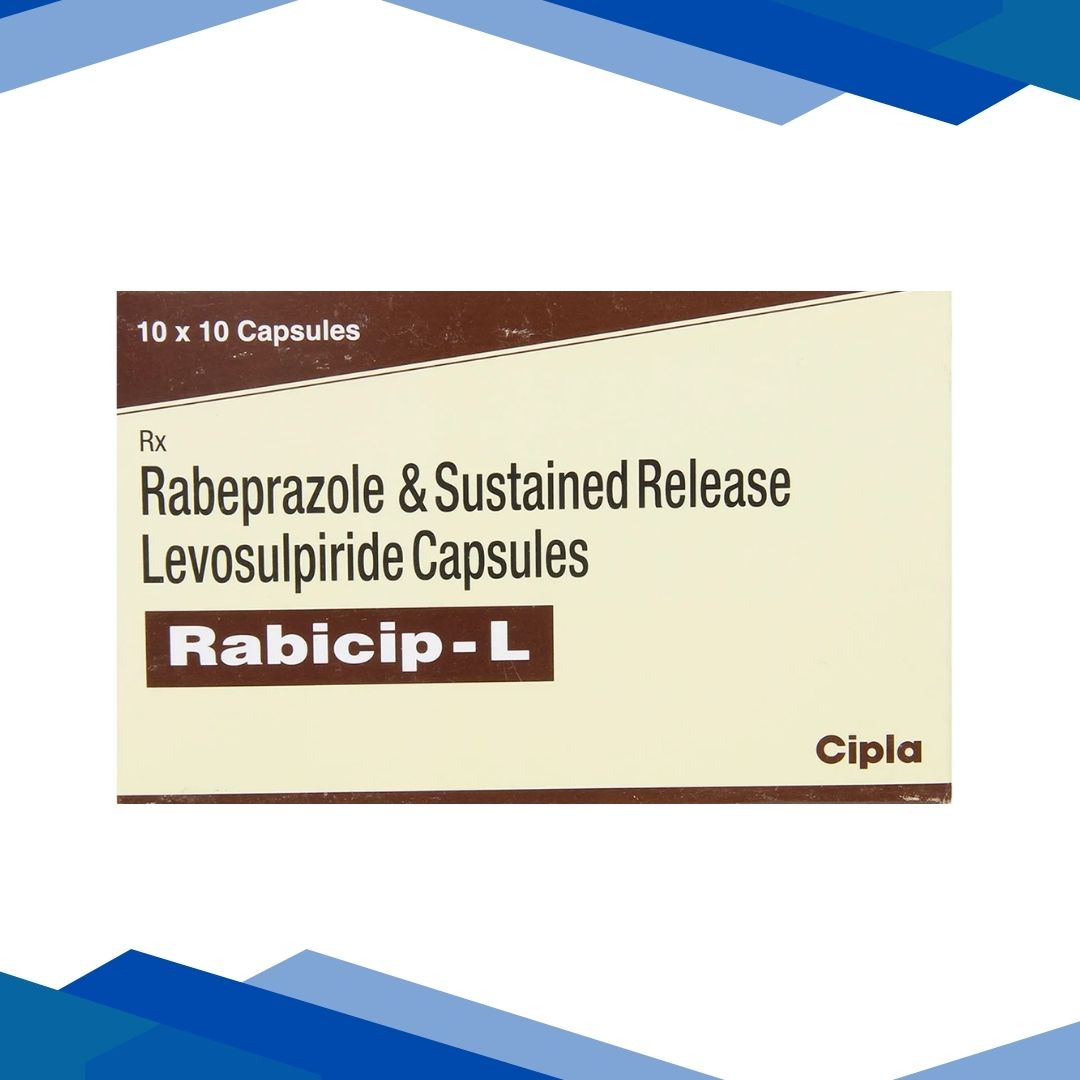
Rabicip-L
No Prescription yet? Don’t worry! Click Here to Get Online Consultation
Rabicip-L Capsule SR is a prescription medicine which is used in the treatment of gastroesophageal reflux disease (acid reflux), intestinal ulcers, and irritable bowel syndrome. It reduces excess acid production in the stomach and prevents the reflux of stomach acid into the food pipe. For more details kindly click on Medicines Salts Below:
Levosulpiride
Levosulpride: Dual Action for Digestive and Mental Health
Levosulpride falls under a niche drug class to be treated under atypical antipsychotics and potent prokinetic agents. Contrary to traditional medications that work on one arm, Levosulpride has a peculiar dual-action effect. It is hence commonly prescribed for augmented gut motility to regulate food movement through the gut and in controlling specific mental conditions by striking a balance in dopamine levels in the brain.
Therapeutic Uses & Advantages of Levosulpiride
Gastroesophageal Reflux Disease (GERD): It provides quick relief from severe and frequent heartburn and acid reflux episodes, thus avoiding acid reflux from spilling back into the esophagus.
Irritable Bowel Syndrome (IBS): Prevents frequent abdominal discomfort and bloating associated with edema of the abdomen in patients with an irregular bowel movement.
Functional Dyspepsia: Reduces the feeling of bloating or excessive fullness following meals in case of "slow digestion".
Mental Health Support: Used in specific clinical doses for the treatment of somatic symptom disorders and certain schizophrenic symptoms.
Emes Management: Effective against nausea and vomiting, be it due to different causes.
How It Works: Positive Effects on Levosulpiride
Levosulpiride elevates the level of acetylcholine, a naturally occurring chemical messenger that prompts your stomach and intestines' muscles to contract more strongly. This results in a faster "gastric emptying," i.e., food serviceability be compromised thereby moving efficiently through the gastrointestinal tract. Simultaneously, in the brain, levosulpiride blocks the more selective dopamine receptor and aids in stabilizing mood and thought patterns.
Patient Tips
Timing Is Key: For excellent results with an upset stomach matter of Levosulpiride, it should be given at a minimum of 30 min prior to any meal.
Consistency: Try to have it at the same time every day to maintain a stable level of the medicine in your bloodstream.
Watch Out: Light sedation can occur in some patients taking the drug. Do not drive or operate heavy machinery until your level of alertness is known.
Avoid Alcohol: Avoid alcohol as much as possible while taking Levosulpiride as it can greatly increase the risks of dizziness and sedation.
Levosulpiride: Frequently Asked Questions (FAQs)
Q: Is Levosulpiride an addictive substance?
A: No, studies have shown it's highly unlikely to result in addiction when what is prescribed is responsibly taken.
Q: Will Levosulpiride be an agent of relief for my simple stomachache?
A: Negative. It is indicated solely for disease conditions diagnosed as in GERD, IBS or dyspepsia. It is not a general analgesic for occasional cramping in the abdomen.
Q: Does Levosulpiride make me rend quickly?
A: When some individuals increase appetite and metabolic hormones owing to long-term administration, it can prompt weight gain in some patents. Regular total monitoring is necessary with levosulpiride therapy along with a balanced diet.
Q: How long does it take for Levosulpiride to take effect?
A: In several hours following the first couple of doses, patients can observe improvement in symptoms constituting bloating, heartburn, etc.; several days of consistent dosing are effective for psychiatric purposes.
Q: Can I take Levosulpiride during pregnancy?
A: It is generally not recommended during pregnancy or breastfeeding unless your doctor determines clear benefit outweighs harm to the baby.
Safety & Side Effects Summary
Side EffectCategoryRecommended Action
Drowsiness / FatigueCommonAvoid activities that require your undivided attention; get some rest.
Menstrual IrregularityOccasionalNotify your doctor that hormonal (prolactin) changes may be corroborated.
Increased SalivationOccasionalTypically very mild and wanes once you are adjusted to the drug.
Skin Rash / HivesRareSeek medical assistance immediately since this might be an allergic reaction.
Rabeprazole
Rabeprazole: Overview, Uses, and Side Effects
Rabeprazole Sodium is a high-potency, prescription gastrointestinal medication that belongs to a class of drugs called Proton Pump Inhibitors (PPIs). It is engineered to suppress the overproduction of gastric acid directly at its source.
Inside the lining of your stomach are millions of microscopic cellular structures known as "proton pumps" ($\text{H}^+/\text{K}^+$-$\text{ATPase}$ enzyme systems), which are responsible for secreting hydrochloric acid to help digest food. When these pumps become overactive, the excess acid can erode the stomach lining or flow backward into the esophagus, causing painful burning and structural tissue damage. Rabeprazole works by binding to and turning off these proton pumps, drastically lowering gastric acid levels to allow your digestive tract time to heal.
Key Benefits & Uses
Gastroenterologists and physicians prescribe Rabeprazole to treat and manage acid-induced disorders, including:
-
Gastroesophageal Reflux Disease (GERD): Providing rapid relief from chronic heartburn, acid regurgitation, and chest discomfort caused by acid backflow.
-
Healing Erosive Esophagitis: Treating and maintaining the healing of inflammation, ulcers, and tissue erosion in the esophagus caused by long-term acid exposure.
-
Gastric and Duodenal Ulcers: Accelerating the closure and healing of painful open sores that develop on the inner lining of the stomach or the upper part of the small intestine.
-
H. pylori Eradication: Paired alongside specific antibiotics (such as Amoxicillin and Clarithromycin) to eliminate Helicobacter pylori bacterial infections, a primary cause of recurrent stomach ulcers.
-
Zollinger-Ellison Syndrome: Managing rare, hypersecretory medical conditions where tumors cause the stomach to secrete extreme, dangerous amounts of acid.
How to Take Rabeprazole Correctly
-
The Morning Window: For maximum clinical efficacy, take Rabeprazole once a day in the morning, roughly 30 minutes before your first meal (breakfast). The presence of food activates your stomach's proton pumps, and having the medication already in your system allows it to block those pumps the moment they turn on.
-
Do Not Chew or Crush: Rabeprazole tablets are manufactured with a specialized enteric coating designed to protect the active medicine from being destroyed prematurely by harsh stomach acids. Swallow the tablet completely whole with a glass of water. Never break, split, chew, or crush it.
-
Consistency is Key: If prescribed for an active ulcer or severe GERD, continue taking the medication every single morning for the full duration prescribed by your doctor, even if your acid symptoms vanish within the first few days.
Safety Advice & Vital Precautions
| Category | Guidance |
| Nutrient Absorption | Long-Term Note. Gastric acid is required to absorb certain nutrients. Prolonged use of PPIs (typically over a year) can lower your body's absorption of Vitamin B12, Magnesium, and Calcium. |
| Bone Health Support | Daily high-dose PPI use over extended periods may slightly elevate the risk of bone fractures (hip, wrist, or spine), especially in older adults or those with existing osteoporosis. |
| Pregnancy & Lactation | Rabeprazole should only be utilized during pregnancy or while breastfeeding if explicitly evaluated and deemed necessary by your obstetrician. |
| Liver Monitoring | Rabeprazole is heavily processed by your liver. If you have severe liver impairment or cirrhosis, your physician will adjust your dosage or request periodic liver enzyme tests. |
Common Side Effects
Rabeprazole is highly targeted and generally very well-tolerated by the human body. Some individuals may experience mild, temporary systemic adjustments:
-
A mild headache or dizziness
-
Mild digestive fluctuations, including diarrhea, gas (flatulence), nausea, or constipation
-
An occasional dry mouth or mild sore throat
-
Temporary abdominal discomfort
When to seek immediate medical attention: Contact your doctor or seek emergency medical care immediately if you develop severe, watery diarrhea accompanied by a fever and intense stomach cramps (which could indicate a Clostridioides difficile bacterial overgrowth in your intestines). Also seek care if you experience sudden, unexplained joint pain, a butterfly-shaped skin rash across your cheeks and nose, or symptoms of a severe allergic reaction.
Frequently Asked Questions (FAQs)
Q: How fast does Rabeprazole start working compared to other PPIs?
Rabeprazole is widely recognized for having an exceptionally rapid onset of action. Many individuals experience significant acid reduction and heartburn relief within the very first day of starting treatment. While older PPIs can sometimes take a couple of days to reach their full chemical capacity, Rabeprazole's unique molecular structure allows it to begin blocking proton pumps quickly and efficiently from the first dose.
Q: Can I take an over-the-counter liquid antacid while taking Rabeprazole?
Yes. If you experience sudden, breakthrough heartburn during your first few days on Rabeprazole before the drug reaches its full, stable therapeutic effect, you can generally take a standard liquid antacid to neutralize the immediate acid layer. However, try to space them out: wait at least 1 to 2 hours between taking your Rabeprazole tablet and any liquid antacids to ensure there are no absorption conflicts.
Q: What should I do if I forget to take my daily morning tablet?
If you remember on the same day, take the missed tablet as soon as you remember before a meal. However, if it is already late in the evening or close to the time for your next scheduled morning dose, skip the missed one entirely and simply resume your regular routine the next morning. Never take a double dose to compensate for a forgotten day.
Q: Is it safe to take Rabeprazole every day for several years?
Rabeprazole is excellent for short-term healing (typically 4 to 8 weeks for GERD and ulcers). While some individuals with chronic conditions like severe erosive esophagitis or Zollinger-Ellison syndrome require long-term maintenance therapy, it should always be supervised by a physician. Your doctor will routinely review your symptoms to ensure you are taking the lowest effective dose for the shortest period necessary to minimize long-term nutrient absorption risks.
Disclaimer: The gastroenterological, pharmacological, and clinical insights provided on this page are intended strictly for general educational purposes. They cannot replace a personalized, professional medical consultation, diagnosis, or treatment plan from a certified gastroenterologist or physician. Always consult your doctor before beginning or altering any prescription medication routine.
At Gem Pharmacy, we make every effort to provide accurate, expert-written, and thoroughly reviewed information related to medicines. However, this information should not be considered a substitute for professional medical advice, diagnosis, or treatment from a qualified doctor.
The purpose of this information is to educate users and improve communication between patients and healthcare professionals. It should not be used to diagnose or treat any condition.
Always consult a certified healthcare professional before taking any medication.


Related products