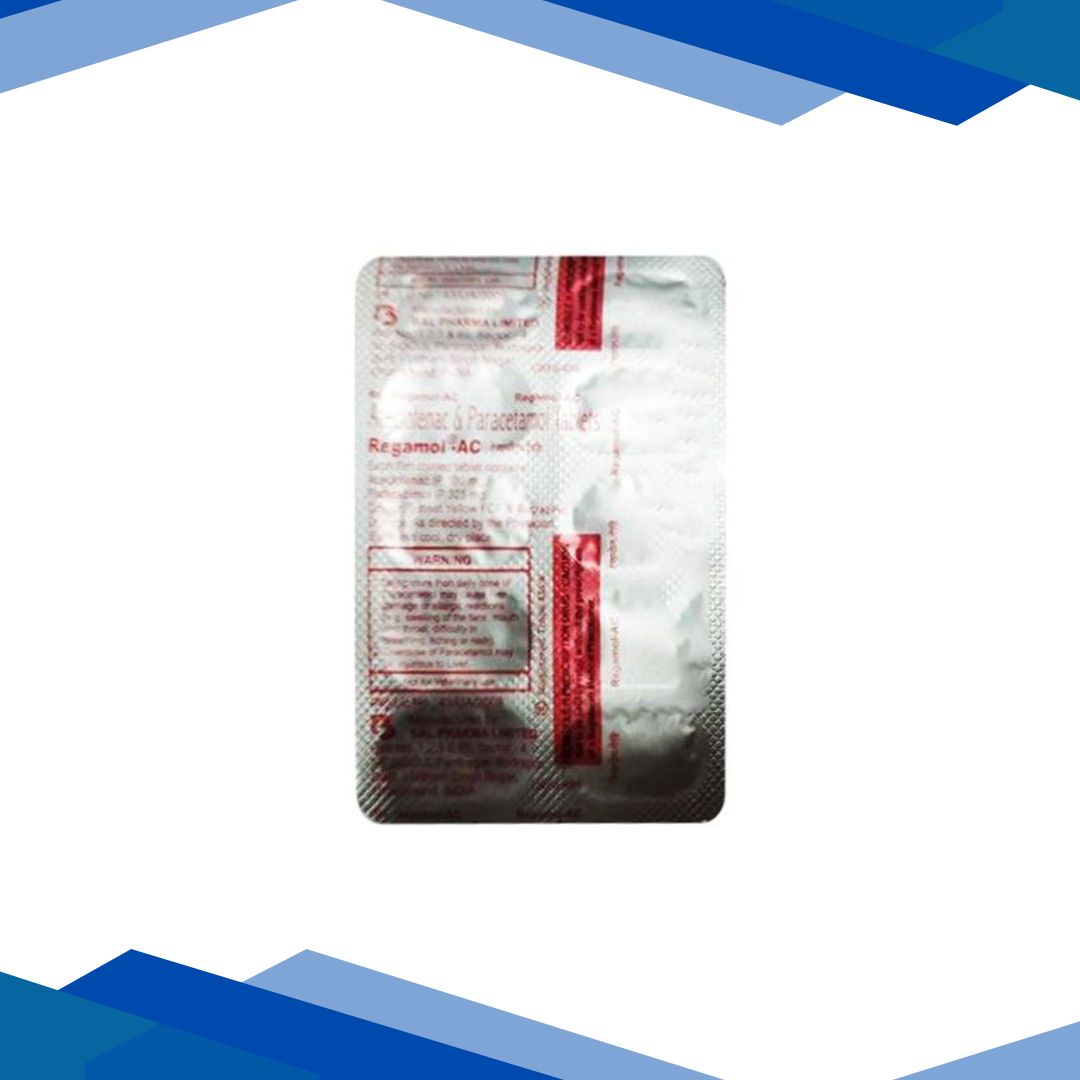
REGAMOL AC Tablet 10’s
REGAMOL AC Tablet is a combination medicine used to help relieve pain and reduce inflammation while also protecting the stomach. Aceclofenac is a non-steroidal anti-inflammatory drug (NSAID) that works by lowering the substances in the body that cause pain, swelling, and stiffness. Rabeprazole is a proton pump inhibitor that reduces acid production in the stomach, which helps lower the risk of acidity, irritation, and stomach ulcers that can occur with pain medicines. This combination is commonly used for conditions such as arthritis, joint pain, muscle pain, and other painful inflammatory problems, especially when stomach protection is needed. It should be used under medical advice, particularly in people with a history of stomach, kidney, or heart problems.
Description
REGAMOL AC Tablet is a combination medicine commonly used to help relieve pain and inflammation while also reducing the risk of stomach irritation caused by the pain-relieving component. it brings together two well-known medicines with different but complementary actions. aceclofenac belongs to the class of non-steroidal anti-inflammatory drugs, often called nsaids, and it works by reducing chemicals in the body that cause pain, swelling, and stiffness. rabeprazole belongs to a group of medicines called proton pump inhibitors, which reduce the amount of acid produced in the stomach. this combination is often chosen when a person needs an anti-inflammatory pain reliever but also has a higher chance of acidity, gastritis, or stomach upset.
the main purpose of REGAMOL AC Tablet is to provide symptomatic relief in conditions where inflammation is a major cause of discomfort, such as joint pain, musculoskeletal pain, or pain associated with arthritis. aceclofenac helps reduce the swelling and pain that can limit movement and daily activities. rabeprazole does not reduce pain directly, but it protects the stomach lining by lowering acid production, which can help minimize the risk of indigestion, burning sensation, or ulcer-related complications that may occur with nsaid therapy. this makes the combination useful for people who need anti-inflammatory treatment for longer periods or who have a sensitive stomach.
this medicine is not a cure for the underlying disease, but it can improve comfort, mobility, and quality of life when used appropriately. it should be taken only when recommended by a healthcare professional, because nsaids can have important side effects and are not suitable for everyone. the exact choice of REGAMOL AC Tablet depends on the patient’s age, medical history, risk of stomach problems, kidney and liver function, and whether other medicines are being taken. proper medical guidance is important to ensure safe and effective use.
ingredients
- aceclofenac: a pain-relieving and anti-inflammatory medicine that helps reduce swelling, stiffness, and discomfort in conditions involving inflammation. it works by blocking the production of prostaglandins, which are substances in the body that trigger pain and swelling. aceclofenac is especially useful for joint and muscle-related pain, but it should be used carefully because it can irritate the stomach, affect kidney function, and increase the risk of certain cardiovascular problems in some people.
- rabeprazole: a stomach-acid reducing medicine that protects the digestive tract from irritation caused by nsaids like aceclofenac. it works by blocking the proton pump in the stomach lining, which is responsible for acid secretion. by lowering acid levels, rabeprazole helps reduce symptoms such as heartburn, acidity, and indigestion, and it may lower the chance of acid-related stomach damage during nsaid use.
key uses
- relief of pain and inflammation: aceclofenac is used to ease pain, swelling, and stiffness associated with inflammatory conditions, helping patients move more comfortably and perform daily activities with less discomfort.
- management of arthritis-related symptoms: this combination may be prescribed for osteoarthritis, rheumatoid arthritis, or similar musculoskeletal conditions where inflammation contributes to joint pain and reduced mobility.
- protection against acidity and gastric irritation: rabeprazole helps reduce stomach acid, which can be important when an nsaid is needed, especially in people who are prone to heartburn, gastritis, or stomach upset.
- support for patients requiring nsaid therapy: in some patients, long-term or repeated use of anti-inflammatory medicines can raise the risk of stomach ulcers or irritation, and the acid-suppressing component helps lower that risk.
- symptom control in painful inflammatory disorders: it may be used when pain is related to inflammation in muscles, joints, or soft tissues, though the exact condition should always be assessed by a clinician.
how to use
REGAMOL AC Tablet should be taken exactly as advised by a healthcare professional. it is generally used by mouth and is often taken before food or as directed on the prescription, depending on the formulation and clinical advice. swallow the tablet or capsule whole with water unless a clinician or pharmacist specifically tells you otherwise. do not crush, chew, or break the medicine if it is designed for delayed release or gastro-resistant delivery, because that may affect how the medicine works and may increase stomach irritation.
it is important to use the medicine consistently in the manner recommended, because taking nsaids incorrectly can increase the chance of side effects. do not take more than advised, and do not combine it with other pain medicines containing similar anti-inflammatory ingredients unless a doctor approves it. if you are using other medicines for acidity, ulcers, blood pressure, diabetes, or blood thinning, inform your healthcare provider so that the treatment plan can be reviewed safely. if symptoms do not improve or if they worsen, medical evaluation is needed rather than continuing self-treatment.
safety information
- warnings: aceclofenac can irritate the stomach lining and may increase the risk of bleeding, ulcers, or perforation, especially in people with a history of stomach disease, older adults, or those taking certain other medicines. it may also affect kidney function, raise blood pressure, and increase cardiovascular risk in susceptible individuals. rabeprazole helps protect the stomach but does not remove all nsaid-related risks. seek immediate medical attention for black stools, vomiting blood, severe abdominal pain, chest pain, shortness of breath, facial swelling, or signs of a serious allergic reaction.
- side effects: common side effects may include stomach discomfort, nausea, indigestion, bloating, diarrhea, constipation, headache, dizziness, or mild abdominal pain. less common but more serious effects can include stomach ulcer, gastrointestinal bleeding, liver enzyme changes, kidney problems, fluid retention, high blood pressure, rash, wheezing, swelling, or severe skin reactions. any persistent or severe symptom should be evaluated by a doctor.
- precautions: use with caution in people with a history of peptic ulcer disease, acid reflux, bleeding disorders, asthma triggered by nsaids, high blood pressure, heart disease, kidney disease, liver disease, or dehydration. it should also be used carefully in older adults, who are more vulnerable to nsaid-related complications. people with known allergy to nsaids or proton pump inhibitors should avoid it unless specifically cleared by a specialist.
- pregnancy/breastfeeding: this medicine is generally not recommended during pregnancy unless clearly prescribed by a doctor. nsaids can be harmful, especially later in pregnancy, and may affect the baby or pregnancy outcomes. in breastfeeding, the medicine may be used only with medical advice after weighing benefits and risks. always consult a healthcare professional before use if you are pregnant, planning pregnancy, or nursing.
- interactions: REGAMOL AC Tablet may interact with blood thinners such as warfarin, antiplatelet drugs, other nsaids, corticosteroids, some blood pressure medicines, diuretics, lithium, methotrexate, and certain antidepressants that increase bleeding risk. rabeprazole may also affect absorption of some medicines that depend on stomach acid. alcohol can increase the risk of stomach irritation and bleeding when used with aceclofenac, so it is best to avoid or limit alcohol unless advised otherwise.
additional information
- storage: store in a cool, dry place away from direct sunlight, heat, and moisture. keep the medicine in its original packaging and out of reach of children and pets. do not use tablets or capsules that are damaged, expired, or showing signs of deterioration.
- missed dose: if a dose is missed, take it as soon as you remember unless it is almost time for the next scheduled dose. if it is nearly time for the next dose, skip the missed dose and return to the regular schedule. do not double the dose to make up for a missed one.
- overdose: taking too much may cause severe stomach pain, vomiting, drowsiness, dizziness, ringing in the ears, breathing difficulty, or signs of bleeding or kidney problems. in case of suspected overdose, seek emergency medical care immediately or contact a poison control center right away.
- habit forming: no. REGAMOL AC Tablet is not considered habit forming or addictive. however, it should still be used only as prescribed because misuse can lead to serious side effects rather than dependency.
frequently asked questions
Q: what is REGAMOL AC Tablet used for?
A: it is used to relieve pain and inflammation while also reducing stomach acid to help protect against acidity or gastric irritation caused by the anti-inflammatory component.
Q: why is rabeprazole combined with aceclofenac?
A: rabeprazole helps lower stomach acid, which may reduce the risk of stomach upset, gastritis, or ulcers that can occur with nsaid use such as aceclofenac.
Q: can REGAMOL AC Tablet be taken on an empty stomach?
A: it should be taken only as directed by a healthcare professional, because the timing may depend on the specific formulation and your medical condition.
Q: is REGAMOL AC Tablet safe for long-term use?
A: long-term use may be appropriate in some patients, but it needs medical supervision because nsaids can affect the stomach, kidneys, and heart, and regular review may be necessary.
Q: can this medicine cause acidity or stomach upset?
A: rabeprazole helps reduce acidity, but aceclofenac can still cause stomach-related side effects in some people. report persistent abdominal discomfort, black stools, or vomiting to a doctor immediately.
Q: does this medicine help with fever?
A: aceclofenac may reduce pain and inflammation, but this combination is not primarily intended for fever treatment. use it only as prescribed for the condition being treated.
Q: can i drink alcohol while taking REGAMOL AC Tablet?
A: alcohol may increase the risk of stomach irritation and bleeding, so it is best avoided or limited. speak to your doctor for personalized advice.
Q: what should i do if i get dizziness after taking it?
A: dizziness can occur in some people. avoid driving or operating machinery until you know how the medicine affects you, and seek medical advice if the symptom is severe or persistent.
Q: who should be extra careful with this medicine?
A: people with ulcer history, kidney disease, liver disease, heart disease, uncontrolled high blood pressure, asthma related to nsaids, or bleeding disorders should use it only under medical supervision.
Q: can i take other painkillers with this medicine?
A: do not add other nsaids or pain medicines without checking with a healthcare professional, because combining similar drugs can increase side effects and bleeding risk.
this information is for educational purposes only and should not be considered medical advice. always consult a qualified healthcare professional before use.
At Gem Pharmacy, we make every effort to provide accurate, expert-written, and thoroughly reviewed information related to medicines. However, this information should not be considered a substitute for professional medical advice, diagnosis, or treatment from a qualified doctor.
The purpose of this information is to educate users and improve communication between patients and healthcare professionals. It should not be used to diagnose or treat any condition.
Always consult a certified healthcare professional before taking any medication.


Related products