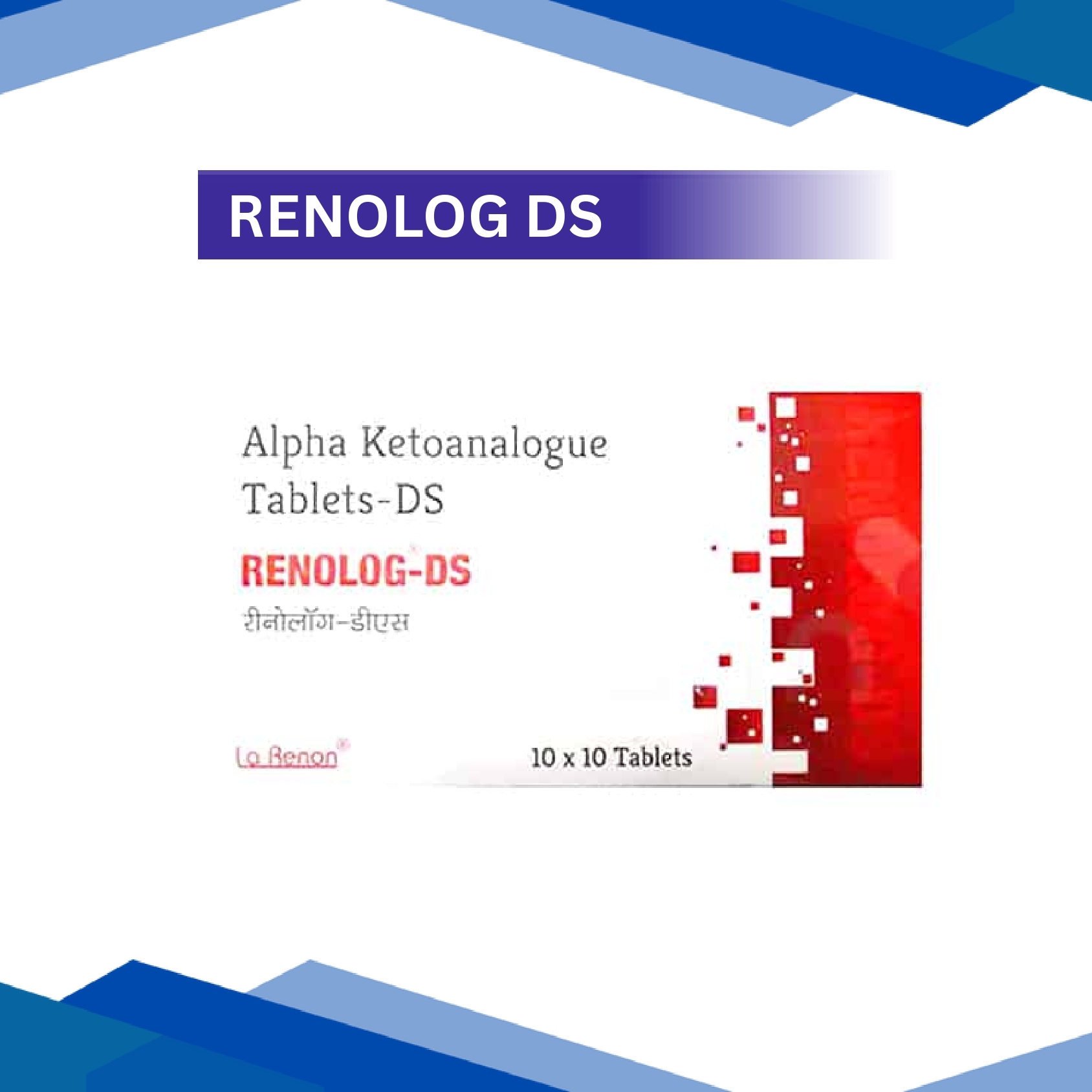
RENOLOG DS
No Prescription yet? Don’t worry! Click Here to Get Online Consultation
Renolog DS is a nutritional supplement containing alpha-ketoanalogues and essential amino acids. It’s used in the management of chronic kidney disease (CKD) to help reduce uremic symptoms and slow disease progression. For more details kindly click on Medicine Salts below:
Alpha Ketoanalogue
Alpha-ketoanalogue supports compromised renal functions typically having a profound influence on patients who have already reached a significantly diminished Glomerular Filtration Rate (GFR) of 25 ml per minute. It aims at hindering the progression of renal failure and delaying the time when dialysis readings are needed.
This provides the fundamental principle contrary to the standard dietary protein source by "anabolic use" (protein synthesis) of essential amino acids ("keto" or "hydroxy" forms), and hence the synthesis of toxic nitrogenous waste products (for example, urea) with respect to those kidneys that are unable to filter.
Main Points
· Preserves renal function: Reduces metabolic load upon kidneys and delays the onset of chronic kidney diseases upon them.
· Renal function helps reduce metabolic uremic toxins: This will help reduce the accumulation of uremic toxins and other nitrogenous waste products in the blood.
· Provides nutritional support: Prevents protein-energy malnutrition in patients on a strict low-protein diet.
*Delays Dialysis-*The clinical evidence suggests postponing the initiation of regular dialysis, thereby helping the management of nutrition.
Product Overview
The Alpha-Ketoanalogue belongs to the class of amino acid supplements used in urology. It traverses the metabolic pathways commonly associated with essential amino acids. Ketoanalogues combine with non-essential amino acids in the body to draw nitrogen from them and to imitate the essential amino acid. The particular "recycling" process is in full control of the nitrogenous wastes in the body while it provides the necessary protein blocks.
Therapeutic Content
Metabolic Balance: Corrects the deficiency in protein metabolism arising from the deteriorating kidney functions.
Relief from Symptoms: May help reduce the symptoms associated with uremia, such as fatigue, nausea, and loss of appetite.
Muscle Maintenance: Helps to build up and repair muscle tissue, thus preventing muscle wasting as commonly seen in patients with chronic disease.
It functions best with the following: a low-protein or very-low protein diet as described by the nephrologist.
Ingredients
Each film-coated tablet contains following amounts of ingredients:
Calcium Keto-Leucine
Calcium Keto-Isoleucine
Calcium Keto-Phenylalanine
Calcium Keto-Valine
Calcium Hydroxy-Methionine
Essential amino acids: Lysine, Threonine, Tryptophan, Histidine, and Tyrosine
Directions For Use
How to use: Tablets should be swallowed whole, if necessary, water, with or without meals. This timing will help them acquire better amino acids.
Standard Dosage: Dosage is generally calculated in four to five kg of body weight per tablet and three times daily.
Important Information: Always complete the recommended dosage, usually depending on your weight as per the prescription. Do not crush or chew.
Patient Safety And Precautions
Allergy: Do not use if you are allergic to any of the components.
Hypercalcemia: This supplement contains calcium salts. Hence, this is not advised for the people having high levels of blood calcium.
Monitoring: Regular routine blood-testing should be carried out by him about serum levels of calcium and phosphorus.
Drug Interactions: May interact with certain antibiotics (like tetracyclines or quinolones) and iron supplements. Keep at least a 2-hour gap between the regular consumption of one and the other.
Pregnancy/Nursing: Pregnant women must consult their physician. A woman planning a baby should also take this advice into consideration. And likewise for breastfeeding.
FAQs
Q: What is the main use of Alpha Ketoanalogue?
A: Nutritional therapy is essentially for the prevention and treatment of medical issues related to protein metabolism disorders among patients with chronic renal failure.
Q: Can I take this medicine with my regular diet?
A: Its intake with a low-protein diet will likely ensure the best results. This is the shape in which the drug ensures reduced nitrogenous burden on your kidneys.
Q: Will there be any side-effects that are not common?
A: The most common side effects are hypercalcemia. This is due to the increased amount of calcium in the blood. Some patients may also experience mild nausea or indigestion.
Q: How long do I have to take this supplement?
A: CKD is always a long-term disorder—you should just keep up the medication until your doctor advises stopping it. Do not immediately stop taking the treatment.
Q: Is this safe for diabetic patients?
A: Diabetic nephropathy patients are prescribed this supplement mainly to slow the progression of kidney damage. This should only be with medical caution.
L-Histidine
L-Histidine (Essential Amino Acid)
Unlike other amino acids, L-Histidine is crucial for protein production as well as for the synthesis of important compounds such as the neurotransmitter histamine. This neurotransmitter is involved in the immune response, digestion, and sleep–wake cycle, in addition to its role in allergic responses. L-Histidine supplementation is frequently used for joint health, cognitive support, and metabolic regulation.
Health Benefits & Clinical Significance
Hemoglobin Production: Plays a vital role in the production of red and white blood cells, supporting oxygen transport and immune function.
Myelin Sheath Maintenance: Supports the myelin sheath around nerve cells, enabling fast and efficient nerve signal transmission.
Joint & Bone Support: Exhibits anti-inflammatory properties, potentially supporting conditions like rheumatoid arthritis (as supportive therapy).
Urease Activity: Helps maintain balanced body pH and supports kidney function.
Suggested Use and Intake
Supplement Support: Common dosage ranges from 500–1000 mg per day.
Timing: Best taken on an empty stomach, about 30 minutes before meals or 2 hours after eating for optimal absorption.
Stacking: Often combined with Vitamin C or B-complex vitamins to support metabolic processes.
Safety Data
Consultation with Physician: May affect neurological balance, especially in individuals with bipolar disorder or liver/kidney conditions—medical supervision is advised.
Pregnancy & Nursing: Limited data on high-dose use; avoid unless prescribed by a healthcare provider.
Drug Interactions: Consult your doctor if taking medications for blood pressure or allergies.
Potential Side Effects
Generally well tolerated, but high doses (>4 g/day) may cause:
Mild gastrointestinal discomfort
Changes in appetite
Occasional confusion or drowsiness (in sensitive individuals)
Frequently Asked Questions (FAQs)
Q: Is L-Histidine safe for daily use?
A: Yes, within recommended limits (usually under 1000 mg/day). It is an essential nutrient required for daily repair and immune function.
Q: Can L-Histidine help with allergies?
A: It is a precursor to histamine, so its role is complex. While some studies suggest it may help regulate immune responses, it is not a substitute for antihistamine medications.
Q: Is L-Histidine vegan?
A: Yes, most supplements are produced via fermentation and are plant-based. However, check the capsule material (HPMC or gelatin) for dietary compatibility.
Q: How does L-Histidine support brain health?
A: It aids in the production of neurotransmitters and supports the myelin sheath, helping maintain mental clarity and protect against oxidative stress.
Q: Can I get enough L-Histidine from food?
A: It is found in meat, fish, dairy, and legumes. However, individuals with dietary restrictions or specific conditions may require supplementation to achieve therapeutic levels.
L-Tyrosine
L-Tyrosine 500mg Capsule
L-Tyrosine is a necessary amino acid and a precursor for critical brain neurotransmitters. Often termed an “antistress” nutrient, it helps produce dopamine and norepinephrine. L-Tyrosine supports alertness, focus, and mental performance by replenishing chemical messengers that are depleted during stress or sleep deprivation.
Significances
Cognitive Support Under Stress: Helps maintain mental clarity, attention, and multitasking ability during physical or environmental stress.
Mood & Motivation: Acts as a precursor to dopamine, supporting emotional balance and motivation (“feel-good” signaling).
Thyroid Function: Serves as a substrate for producing thyroxine (T4), helping regulate metabolic rate and energy expenditure.
Alertness Source: Useful for staying mentally sharp during long work hours or intense study sessions without relying heavily on stimulants.
DOSAGE
Duration: For best results, take L-Tyrosine 30–60 minutes before a stressful event or workout.
On an Empty Stomach: Ideally taken 30 minutes before meals, as protein-rich foods may reduce absorption due to amino acid competition.
Recommended Dosage: Clinical studies vary, but it is best to start with a low dose and adjust based on individual response.
WARNINGS
Professional Insight: Although naturally occurring, L-Tyrosine may interact with certain prescription medications—consult a doctor before use.
Thyroid Conditions: Should be avoided in hyperthyroidism or Graves’ disease, as it may increase thyroid hormone levels.
MAOIs Interaction: Should not be combined with MAOIs, as it may lead to dangerous spikes in blood pressure.
Use in Pregnancy and Nursing Mothers
Use during pregnancy or breastfeeding should only occur after medical consultation, as clinical safety data is limited.
Possible Side Effects
Generally well tolerated, but rare side effects may include:
Mild headache or migraine
Heartburn or nausea
Restlessness or “jittery” feeling (especially at high doses)
Frequently Asked Questions (FAQs)
Q: Is it advisable to consume L-Tyrosine every day?
A: Many individuals take it daily for cognitive support, but some experts recommend cycling (e.g., 5 days on, 2 days off) to prevent tolerance buildup.
Q: Is L-Tyrosine similar to caffeine?
A: No. Caffeine directly stimulates the central nervous system, whereas L-Tyrosine helps the body produce its own neurotransmitters. It typically does not cause a crash like caffeine.
Q: Can I take it with coffee?
A: Generally safe, and often used together to enhance focus. However, monitor for increased heart rate if sensitive to stimulants.
Q: How long does it take to work?
A: Effects on mental alertness may appear within 45–90 minutes. Metabolic or thyroid-related effects may take several weeks.
Q: Is L-Tyrosine good for weight loss?
A: Not a direct fat burner, but it may indirectly support metabolism by influencing thyroxine production and energy utilization.
At Gem Pharmacy, we make every effort to provide accurate, expert-written, and thoroughly reviewed information related to medicines. However, this information should not be considered a substitute for professional medical advice, diagnosis, or treatment from a qualified doctor.
The purpose of this information is to educate users and improve communication between patients and healthcare professionals. It should not be used to diagnose or treat any condition.
Always consult a certified healthcare professional before taking any medication.


Related products

HEALTH OK NEW MANGO FLAVOUR Drops 15ml