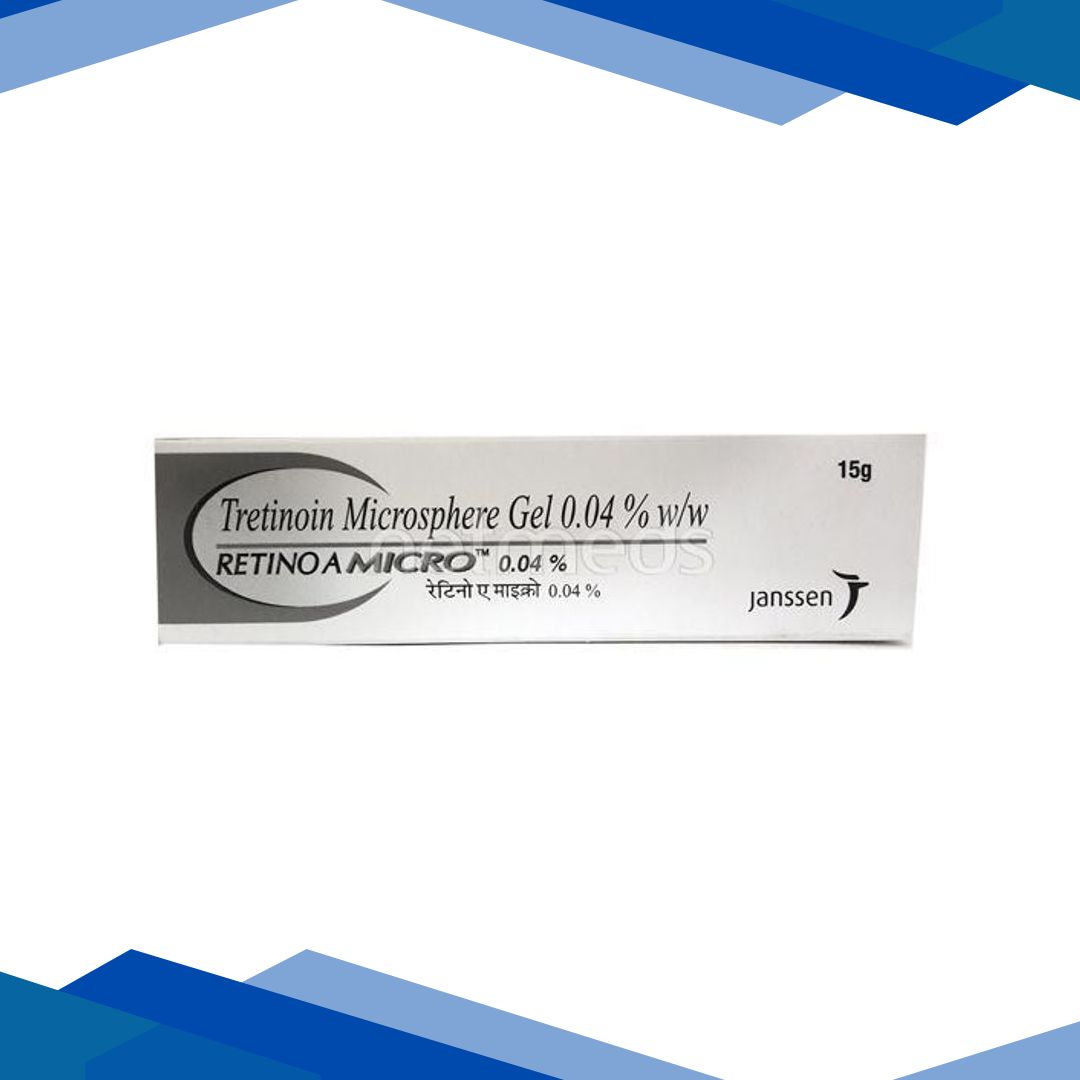
Retino A Micro 0.04% Gel 15gm
❌ Due to high demand, this product is currently out of stock. New stock will be available shortly.
👉 Click here to Buy Same Salt medicine
Retino A Micro 0.04% Gel is a topical medicine used to treat dark patches and uneven skin tone, especially in conditions like melasma and post-inflammatory hyperpigmentation. MEQUINOL helps reduce excess pigment formation by slowing the process that leads to darkening of the skin, while TRETINOIN helps speed up skin cell turnover so the outer layer of pigmented skin is shed more quickly. Together, they work to gradually fade discoloration and improve the appearance of the skin. This medicine is usually applied to affected areas under medical guidance, as it can cause skin irritation, redness, dryness, or mild peeling in some people. It is most effective when used consistently and with sun protection, since sunlight can worsen pigmentation and reduce treatment benefit.
Description
Retino A Micro 0.04% Gel is a topical skin medicine used mainly for the treatment of certain types of facial discoloration, especially melasma. it combines two active ingredients that work together in different but complementary ways to improve the appearance of dark patches on the skin. mequinol helps reduce the formation of excess skin pigment, while tretinoin promotes faster turnover of skin cells, allowing pigmented cells to shed more effectively and helping the skin look more even over time.
this combination is generally applied to the skin and is intended for localized areas of hyperpigmentation rather than widespread use over the entire body. it is typically used on areas of the face affected by dark patches, but only under guidance from a healthcare professional because the skin can become sensitive, irritated, or more prone to sun damage during treatment. since it works gradually, visible improvement usually takes consistent use over time rather than immediate results.
Retino A Micro 0.04% Gel is most often prescribed for adults who have skin discoloration that does not improve adequately with basic skin care and sun protection alone. it is not a general skin-lightening product for cosmetic use on normal skin, and it should not be used casually or in large amounts. because it can cause irritation and sensitivity, proper use, sun protection, and follow-up with a clinician are important to achieve the best outcome while minimizing side effects.
mechanistically, the combination targets both pigment production and skin cell renewal. mequinol interferes with melanogenesis, the process by which melanocytes produce melanin, the pigment responsible for dark color in the skin. tretinoin is a retinoid that speeds up the shedding and replacement of skin cells, which can help disperse existing pigment and improve overall skin texture. together, these actions make the medicine useful for reducing uneven pigmentation, but they also explain why dryness, redness, peeling, and irritation are common during treatment.
ingredients
- mequinol: mequinol is a depigmenting agent that helps lighten areas of excess pigmentation by reducing melanin formation. it is especially useful when dark patches are caused by overactive pigment production, and it works best when combined with careful sun protection. its role is to gradually fade discoloration rather than bleach the skin.
- tretinoin: tretinoin is a topical retinoid that increases skin cell turnover and helps remove pigmented surface cells more quickly. it also supports smoother skin texture and may enhance the overall effectiveness of the combination. because tretinoin can irritate the skin, it is often associated with dryness, peeling, and redness during early treatment.
key uses
- melasma: Retino A Micro 0.04% Gel is commonly used for melasma, a condition that causes brown or gray-brown patches on the face. it may help reduce the appearance of these patches when used consistently along with strong sun protection.
- localized hyperpigmentation: it may be used for certain other localized areas of excess pigment when a clinician believes the combination is appropriate. the goal is to improve skin tone in specific affected areas rather than to lighten normal skin.
- post-inflammatory discoloration support: in some cases, a healthcare professional may consider it for pigmentation that remains after inflammation or acne, although this depends on skin type, degree of irritation, and clinical judgment. it is not suitable for everyone with dark spots.
how to use
Retino A Micro 0.04% Gel is usually applied topically to clean, dry skin in a thin layer, exactly as directed by a healthcare professional. it is important to use only the amount recommended and to apply it only to the affected areas, not to healthy surrounding skin unless instructed. because tretinoin can irritate the skin, many people are advised to apply it carefully and avoid sensitive areas such as the eyes, lips, nostrils, and broken or sunburned skin.
the medicine is commonly used in a once-daily routine, often in the evening, because tretinoin can make the skin more sensitive to sunlight. before applying, wash your hands and gently cleanse the area with a mild cleanser. allow the skin to dry completely before application, since applying retinoids to damp skin can increase irritation. after application, wash your hands again unless the hands are the treated area.
results are typically gradual and require patience. regular use plus daily sun protection is essential, because ultraviolet light can worsen hyperpigmentation and reduce treatment benefit. broad-spectrum sunscreen, hats, and protective clothing are often recommended. if the skin becomes very irritated, excessively dry, or painful, use should be discussed with a clinician rather than increasing or decreasing the dose on your own.
safety information
- warnings: this medicine can cause irritation, redness, peeling, stinging, dryness, and increased sun sensitivity. avoid getting it in the eyes, mouth, or on mucous membranes. do not apply to broken, eczematous, or sunburned skin unless specifically instructed. because the product can increase photosensitivity, sun protection is essential every day.
- side effects: common side effects include mild to moderate redness, dryness, scaling, itching, burning, and temporary skin tightness. some people may notice worsening irritation early in treatment before improvement occurs. serious side effects are less common but can include severe rash, swelling, blistering, intense burning, or signs of allergic reaction such as hives, facial swelling, or trouble breathing. stop use and seek medical help if severe symptoms occur.
- precautions: people with very sensitive skin, eczema, rosacea, active dermatitis, or a history of strong reactions to retinoids should use caution. those using other irritating products, such as strong exfoliants, alcohol-based toners, abrasive scrubs, or multiple acne treatments, may experience more irritation. it should be used only under medical supervision if there is a history of pigment disorders or unusual skin reactions.
- pregnancy/breastfeeding: tretinoin is a retinoid, and retinoids are generally approached with caution in pregnancy. if you are pregnant, trying to conceive, or breastfeeding, speak with a healthcare professional before using this medicine. do not assume topical use is automatically safe; individualized medical advice is important.
- interactions: other topical products that irritate the skin may increase redness and peeling, including benzoyl peroxide, salicylic acid, alpha hydroxy acids, sulfur, resorcinol, and exfoliating cleansers. alcohol-containing cosmetics or aftershaves may also worsen dryness. excessive alcohol use does not directly interact with the cream in the body, but it can indirectly worsen skincare habits and inflammation in some individuals. always tell your clinician about all medicines, skincare products, and procedures you are using.
additional information
- storage: store Retino A Micro 0.04% Gel in a cool, dry place away from direct heat and sunlight. keep the container tightly closed and out of reach of children. do not freeze unless the product label specifically says it is safe to do so. avoid storing it in humid areas such as bathrooms if possible.
- missed dose: if you miss a dose, apply it when you remember unless it is almost time for the next application. do not apply extra medicine to make up for a missed dose, because that can increase irritation without improving results. resume the normal schedule the next day.
- overdose: using too much on the skin may cause marked redness, peeling, burning, discomfort, or swelling. an overdose on the skin is usually managed by stopping the medicine and contacting a healthcare professional for advice. if the product is accidentally swallowed, seek urgent medical help or contact poison control right away.
- habit forming: no. Retino A Micro 0.04% Gel is not habit forming and does not cause dependence. however, it should still be used exactly as directed because overuse can lead to irritation and treatment failure.
frequently asked questions
Q: what is Retino A Micro 0.04% Gel used for?
A: it is mainly used to treat melasma and certain other localized areas of hyperpigmentation. it works by reducing pigment production and increasing skin cell turnover, helping dark patches fade gradually over time.
Q: how long does it take to see results?
A: improvement is usually gradual and may take several weeks of consistent use. some people notice changes earlier, while others need longer treatment. sun protection is very important for best results.
Q: can i use it during the day?
A: it is often preferred at night because tretinoin can make the skin more sensitive to sunlight. if a clinician gives different instructions, follow those directions and use sunscreen during the day.
Q: why does my skin get red or peel after using it?
A: redness, dryness, peeling, and mild burning are common early effects because tretinoin speeds up skin turnover and can irritate the skin. if the irritation is severe or persistent, consult a healthcare professional.
Q: should i apply it to my whole face?
A: usually it should be applied only to the affected areas or exactly as directed by a clinician. applying it broadly to normal skin can increase irritation without added benefit.
Q: can i use makeup over it?
A: makeup may usually be used after the product has absorbed, but choose gentle, non-irritating cosmetics when possible. if your skin is very irritated, some products may sting or worsen dryness.
Q: do i still need sunscreen if i use this medicine?
A: yes. daily broad-spectrum sunscreen is essential because this medicine can increase sun sensitivity and sun exposure can worsen pigmentation problems. sun protection is one of the most important parts of treatment.
Q: can i use other acne or anti-aging products with it?
A: some products can increase irritation, especially exfoliants, acids, retinoids, and harsh cleansers. check with a healthcare professional before combining it with other active skincare treatments.
Q: is this medicine safe for all skin types?
A: not necessarily. people with sensitive skin or inflammatory skin conditions may be more prone to irritation. a healthcare professional can help decide whether it is appropriate for your skin type and condition.
Q: what should i do if i accidentally put it near my eyes?
A: rinse the area gently with plenty of water. if irritation persists, seek medical advice. avoid future application near the eyes, lips, and other sensitive areas.
Q: can i stop using it once my skin looks better?
A: do not stop or continue treatment without guidance if you were prescribed a specific course. melasma and other pigmentation problems can recur, especially with sun exposure, so ongoing skincare guidance is important.
Q: does it bleach normal skin?
A: no. it is intended to reduce excess pigmentation in affected areas, not to bleach normal skin. misuse can still irritate or discolor skin, so it should be used carefully.
Q: what signs mean i should stop using it and call a doctor?
A: stop and seek medical advice if you develop severe burning, swelling, blistering, a widespread rash, or signs of allergy such as hives or trouble breathing. also contact a clinician if irritation is worsening instead of improving.
Q: can this medicine help with acne?
A: tretinoin is used in acne treatment in other formulations, but Retino A Micro 0.04% Gel is primarily intended for pigmentation problems, not acne. do not use it for acne unless a healthcare professional specifically advises it.
Q: why is medical supervision important with this product?
A: because it can cause irritation, photosensitivity, and inappropriate use on the wrong type of pigmentation may be ineffective or worsen the condition. a clinician can confirm whether it is the right treatment and monitor for side effects.
this information is for educational purposes only and should not be considered medical advice. always consult a qualified healthcare professional before use.
At Gem Pharmacy, we make every effort to provide accurate, expert-written, and thoroughly reviewed information related to medicines. However, this information should not be considered a substitute for professional medical advice, diagnosis, or treatment from a qualified doctor.
The purpose of this information is to educate users and improve communication between patients and healthcare professionals. It should not be used to diagnose or treat any condition.
Always consult a certified healthcare professional before taking any medication.


Related products