
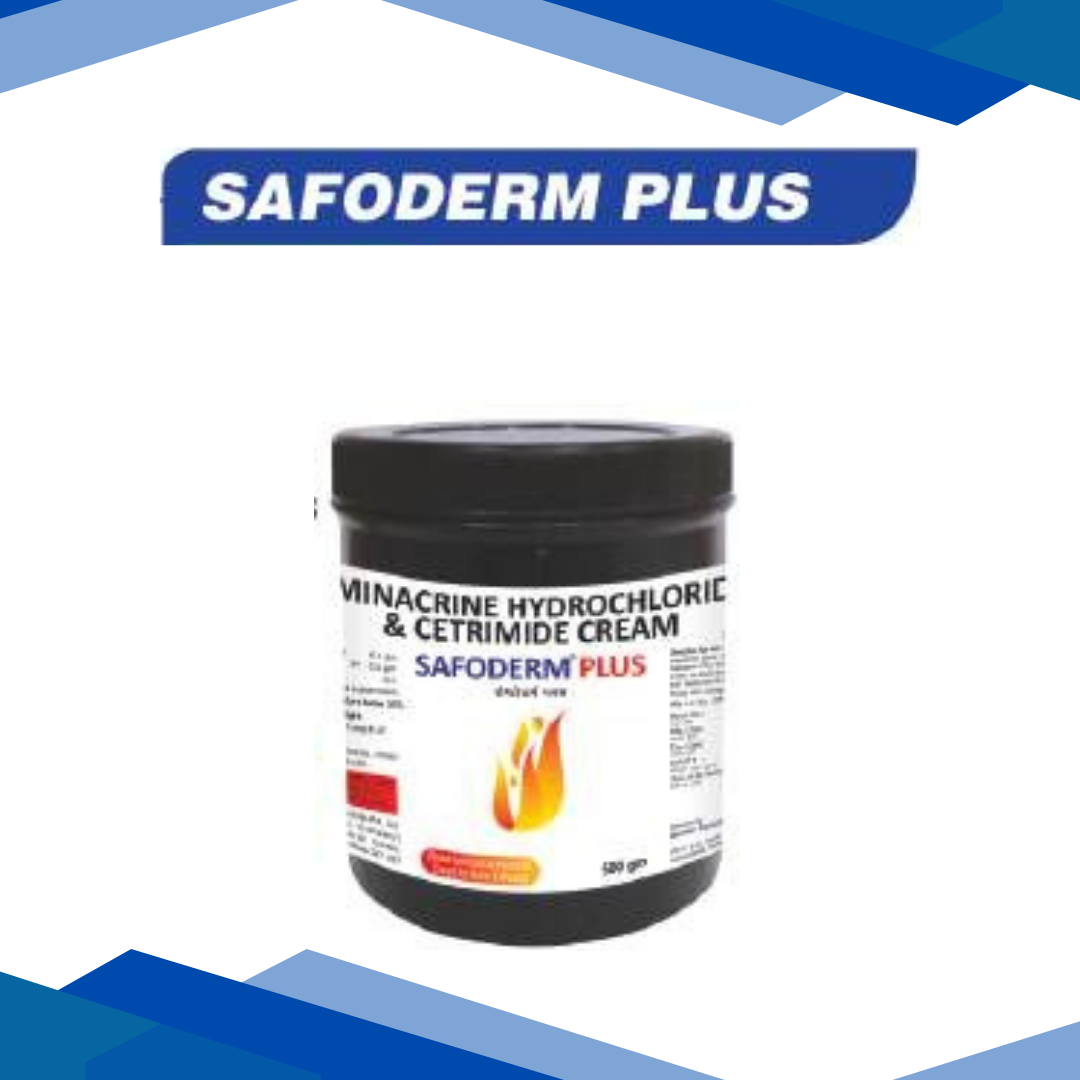
Safoderm Plus
No Prescription yet? Don’t worry! Click Here to Get Online Consultation
Safoderm Plus is a topical cream used to manage cuts, grazes, insect bits and stings. It is also used to manage minor burns, scalds and skin problems. For more details kindly click on Medicine Salts below:
Aminacrine Hydrochloride
Aminacrine Hydrochloride Topical Solution/Cream
Aminacrine Hydrochloride (also known as 9-Aminoacridine) comes under the classification of topical antiseptics and antimicrobials for an e-pharmacy like 1mg or Netmeds. It is often found mostly in wound-healing creams and antiseptic solutions. The one experienced in writing has structured the module below in a top-class health portal manner for conveying the latest clinical updating blended with user-friendly guidance for more natural reading like from human to human.
Aminacrine Hydrochloride is a powerful antiseptic dye innately known as that within the acridine domain; this efficient and solid dyestuff shows how apt we are to utilize it practically for clinical disinfection of the skin, mucous membranes, and also local superficial wound. By combined action to the genetic material—DNA—of bacteria and fungi, wherefrom effectively the DNA replication system is checked, it naturally supports a proper environment for natural tissue repair. Highly esteemed for its spectrum of activity against a lengthy list of Gram-positive and Gram-negative organisms are as follows—
Leading Indications
Prophylaxis from infection: Prevention of minor cuts, abrasions, and scratches from bacterial colonization.
Wound care: It is used for superficial pressure sore and infected ulcer therapy.
Burn care: Aiding wound prone to microbial colonization by some additives in the management of burn first-degree.
Cascade of antiseptic mechanisms
Were just neat functions, if so to say: The very phenomena associated with Aminacrine HCl resulted from collation, intercalated within a pathogen's DNA structure, leading to frame-shift mutations leading to inhibition of replication in most microbial forms.
On the other aspect, it acts by detergent-like, denaturizing effect on the bacterial cell membrane, bringing swift death of microbes.
How to Apply
Preparation: Clean the affected area with sterile water or a mild saline solution and pat dry with a clean cloth.
Application: Apply a small amount of the cream or solution using a sterile gauze pad or cotton swab.
Frequency: Typically applied 2 to 3 times daily, or as recommended by your healthcare provider.
Coverage: The area may be left open or covered with a light, breathable bandage depending on the severity of the wound.
Side Effects
Aminacrine Hydrochloride is generally well-tolerated when used topically. However, some users may experience:
A mild stinging or burning sensation, immediately after application.
Localized skin redness or itching.
Temporary purple/yellow staining of the skin or nails.
Note: Should a severe rash, swelling, or hives develop, discontinue use immediately and see a doctor for possible allergic reactions.
Precautions & Safety Advice
External Use Only: This medication should never be ingested. If swallowed accidentally, seek immediate medical help.
Sensitive Areas: Avoid contact with the eyes, nose, and inside of the ears. If accidental contact occurs, rinse thoroughly with cool water.
Staining: As a fluorescent dye-based compound, it can leave permanent stains on clothing, bedding, and plastic surfaces.
Pregnancy & Lactation: While systemic absorption is low, pregnant or breastfeeding women should consult their physician before applying to large areas of the body.
Frequently Asked Questions (FAQs)
Q: Is Aminacrine Hydrochloride a steroid?
No. It is a non-steroidal antiseptic and antimicrobial agent. It does not contain any hormones and is strictly used to fight infections.
Q: Can I use this for deep surgical wounds?
For deep, punctured, or heavily bleeding wounds, you should consult a surgeon or medical professional. Aminacrine is best suited for superficial or minor infected wounds.
Q: How do I remove the stains from my skin?
The yellow/purple tint is temporary and will fade as your skin naturally renews itself. You can gently wash the area with soap and warm water, but do not scrub vigorously, as this can irritate the healing tissue.
Q: Does it interact with other skin creams?
While no major drug-drug interactions are reported, it is best to wait at least 30 minutes between applying Aminacrine and any other topical medication (like steroid creams or moisturizers) to ensure optimal absorption.
Q: Can it be used on infants?
It is generally safe for children over 2 years of age. For infants or newborns, please seek pediatrician's advice before use to avoid potential skin sensitivities.
Cetrimide
Cetrimide (Antiseptic & Disinfectant)
Cetrimide is a robust quaternary ammonium compound that is used primarily for its antifungal, antibacterial, and detergent properties. Cetrimide is widely considered to be a must-have in every first aid kit and clinical setting for cleaning wounds, treating minor burns, and managing specific scalp conditions such as dandruffic seborrhea. By disrupting cell membranes of harmful microbes, Cetrimide prevents infections and facilitates a sterile environment for skin healing.
Key Therapeutic Uses
Wound Cleansing: Disinfects effectively for cuts, grazes, and abrasions in order to protect them from being infected by other bacteria.
Minor Burn Care: Used as the protective antiseptic layer on minor burns and scalds.
Dermatology Care: For managing dermatitis of the scalp, it is also found in shampoos.
Nappy Rash & Sunburn: Alleviates and safeguards irritated skin, irrespective of whether it is an infant or adult.
Medical Sterilization: Commonly used in clinics to sterilize medical tools and surfaces.
Product Specifications
Chemical Class: Quaternary Ammonium Compound (Cationic Surfactant).
Therapeutic Class: Antiseptics & Disinfectants.
Available Forms: Cream (0.5%), Solution (0.1 to 1%), and Medicated Soap/Shampoo.
Action: Bactericidal against Gram-positive and some Gram-negative bacteria.
Direction for Use
Preparation: Clean the area to be treated with water. In the case of solution, dilute as per label or advice from your physician.
Application: Apply the ointment or solution with a cotton bud or a gauze.
Frequency: Typically 2–3 times a day or as directed by a health care professional.
Note for Scalp Treatment: Leave lather on scalp for 3–5 minutes and then rinse thoroughly if suggested by the physician.
Side Effects
There are usually nil to very few side effects caused by Cetrimide, although some people may experience:
Mild irritation to areas where applied.
Skin flushing or a warming feeling at the application site.
Dry skin or mild peeling.
Warning: Discount use if you develop an extensive rash, have facial swelling, or show signs of difficulty in breathing, as these are likely signs of an allergic reaction.
Precautions & Warnings
External Use Only: Refrain from ingesting the substance; instead, get emergency help following accidental ingestion.
Avoid applying in close areas: steer clear of fragile tissues of the eyes, ears, nose, or mucous membranes; immediately wash if contamination occurs.
Soap Interaction: Refrain from using anionic soaps or detergents at the same time, as they may negate the antiseptic effect of Cetrimide.
Pregnancy and Lactation: Consulting a doctor would be better during pregnancy and breastfeeding; in spite of low absorption, knowledge of the moon suggests talking about a nurse's directions.
Frequently Asked Questions (FAQs)
Q: Can Cetrimide be used on deep wounds?
No, cetrimide is intended only for minor cuts, scrapes, and superficial burns. Deep wounds or those that bleed heavily require professional medical debridement and should not, therefore, be treated with the use of topical antiseptics alone.
Q: Is it safe for newborns to use cetrimide?
It is recommended against nappy rash, although extreme caution should be taken due to the sensitivity of the newborn skin. Always go to your pediatrician for advice before application.
Q: Does Cetrimide leave any stain on the skin?
No. As opposed to Povidone-Iodine, Cetrimide is more often a colorless or white preparation that does not leave any permanent stain on the skin or clothing.
Q: Why is Cetrimide also called a detergent antiseptic?
Cetrimide works as a surfactant, meaning it can mild-surf the dirt from the wound and, at the same time, have germ-killing ability.
Q: How do I store cetrimide solution?
Basically, store it in a cool, dry place below 30°C. Ensure the cap is firmly screwed on to avoid contamination.
At Gem Pharmacy, we make every effort to provide accurate, expert-written, and thoroughly reviewed information related to medicines. However, this information should not be considered a substitute for professional medical advice, diagnosis, or treatment from a qualified doctor.
The purpose of this information is to educate users and improve communication between patients and healthcare professionals. It should not be used to diagnose or treat any condition.
Always consult a certified healthcare professional before taking any medication.