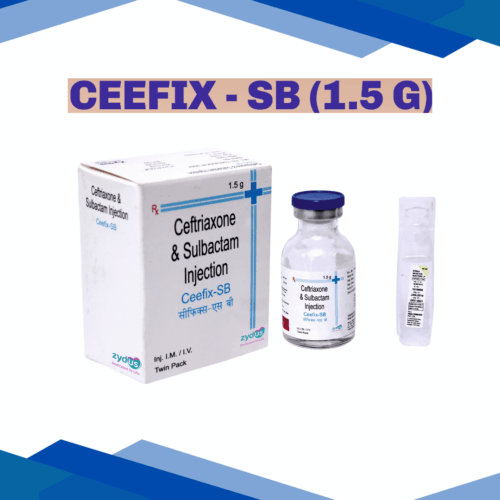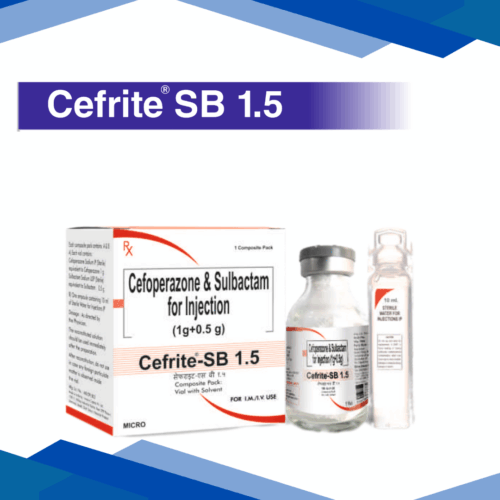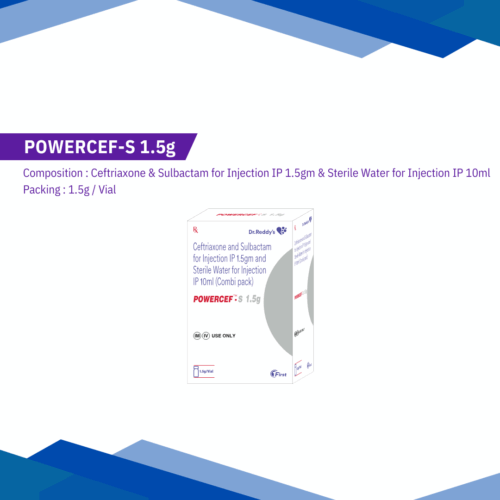


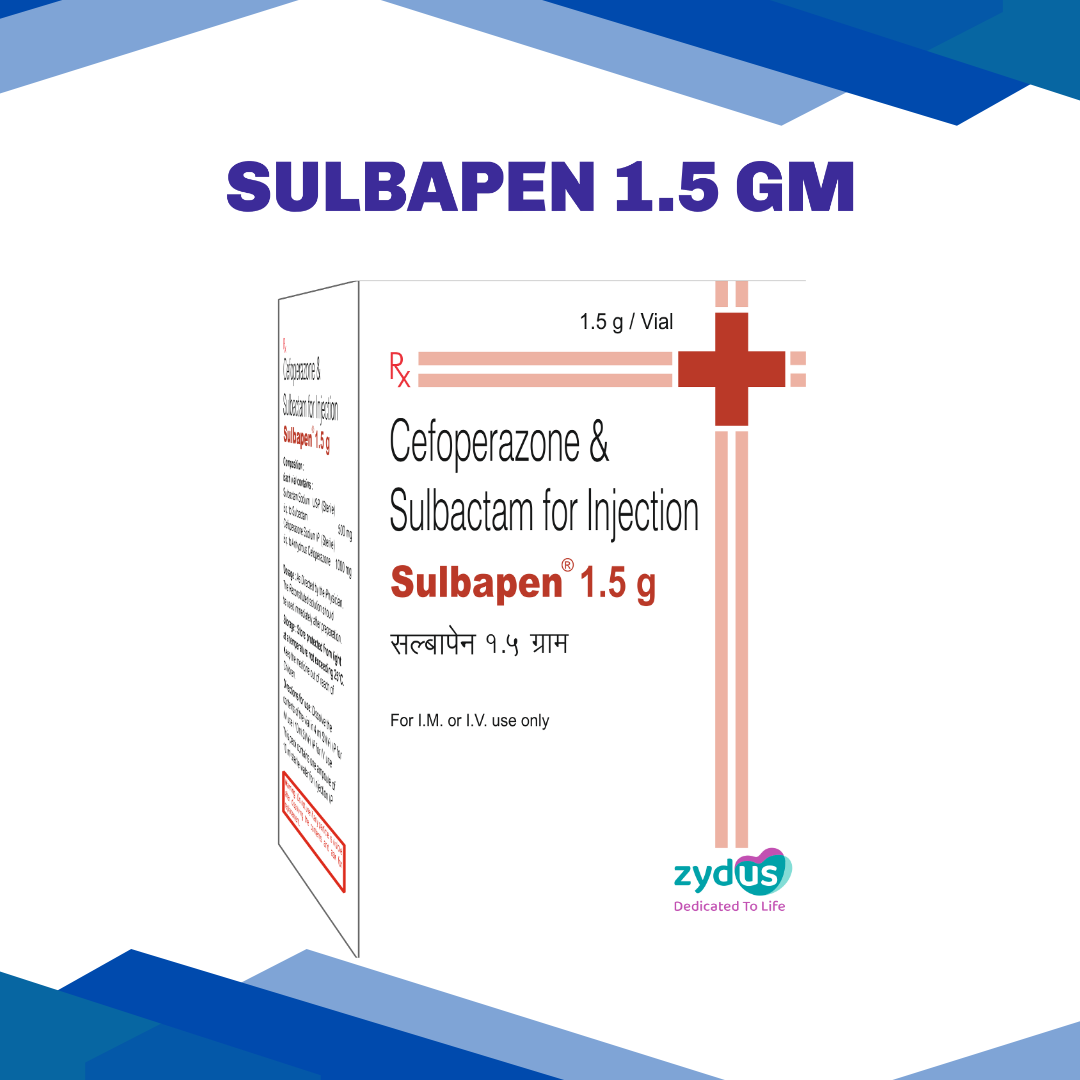
Sulbapen 1.5 gm
No Prescription yet? Don’t worry! Click Here to Get Online Consultation
Cefoperazone and Sulbactam are used to treat a wide range of bacterial infections, including respiratory tract infections, urinary tract infections, abdominal infections etc.For more details kindly click on Medicine Salts below:
Cefoperazone
Cefoperazone 1g Injection
Cefoperazone, a potent, third-generation cephalosporin antibiotic is mainly used to treat severe bacterial infections. Due to the ability to disrupt the bacterial cell wall formation, it acts effectively against multiple pathogens, including those that cause respiratory, urinary, and abdominal tract infections.
Therapeutic Uses
Respiratory Tract: Suitable for the treatment of severe pneumonia and bronchitis.
Abdominal Infection: Use in treating infected peritonitis and biliary infections.
Urogenital Health: Examples of complicated UTIs, and gonorrhea.
Preoperative Prophylactics: Uses in some procedures before surgery to lower the risk of infectious complications.
Product Fact Box
Features
Details
Chemical Class
Third-generation Cephalosporins
Habit Forming
No
Therapeutic Class
Anti-Infective
Common Storage
Store below 30°C
Protect from light
Safety & Interaction Warnings
Alcohol Warning:
Do not drink alcohol with Cefoperazone. Undesirable effects are induced due to the "disulfiram-like reaction," marked by extreme flushing, increased heart rate, nausea, and severe headaches. It is advised to stay away from alcohol for at least 72 hours post the ultimate doses.
Pregnancy: Generally considered safe if prescribed by a doctor. Animal studies show no fetal harm, but human data is limited.
Kidney & Liver: Caution is advised. While primarily excreted through the liver, patients with severe biliary obstruction or renal impairment may require dose adjustments.
Driving: Usually safe, but if you experience dizziness or fatigue, avoid operating heavy machinery.
Common Side Effects
Most of the side effects are mild in nature and resolve after the drug is withdrawn:
- Diarrhea (most common)
- Nausea or vomiting
- Temporary changes in liver enzymes
- Pain or redness at the injection site
Frequently Asked Questions (FAQs)
1. Is Cefoperazone the same as steroids?
No, Cefoperazone is purely an antibiotic that is a cephalosporin and specifically used for the killing of bacteria. It does not have any properties similar to those of steroids.
2. How is this medicine given?
Cefoperazone is usually given through a vein (intravenous, i.e., IV) or a large muscle (intramuscular, i.e., it. Muscular) injection. But for the sake of your safety, before administering this, make sure that the product is only opened and used with the reaction of a professional health worker in a clinical situation, due to cleanliness of course.
3. Why do I need to finish the full course?
Antibiotics work by eradicating bacteria. Prematurely stopping antibiotic treatment can increase the risk of developing treatment-resistant bacteria. While you may feel better with 2 days of therapy, some bacteria might remain.
4. Can Cefoperazone give a positive Coombs test?
Yes. As mentioned in the previous query, a positive direct Coombs test could be due to administration with this agent.
5. What should I do if I develop severe diarrhea?
Most antibiotics induce a few mild instances of diarrhea. However, in the event diarrhea becomes severe (watery, bloody), or with stomach cramps, your physician must be contacted immediately as a spotlight could evolve to signal the onset of serious bowel conditions.
Sulbactam
Sulbactam: At a Glance, Uses, and Safety Precautions
Sulbactam constitutes an efficient β-lactamase inhibitor. The drug has certain antibacterial properties of its own against organisms such as Acinetobacter baumannii and is mainly used in combination with antibiotics (such as Ampicillin or Cefoperazone). Sulbactam prevents the action of bacteria that would normally interrupt the potency of the antibiotic, thus ensuring that the therapy remains effective against resistant strains.
How Sulbactam Works
Many bacteria produce an enzyme called beta-lactamase, which breaks down antibiotics before they can kill the bacteria. Sulbactam acts as a "shield." It binds to these enzymes and neutralizes them, allowing the primary antibiotic to do its job and clear the infection effectively.
Common Uses and Indications
Physicians typically prescribe Sulbactam combinations for treating a variety of bacterial infections, including:
Gynecological Infections: Like pelvic inflammatory disease.
Intra-abdominal Infections: Including peritonitis.
Skin and Soft Tissue Infections: Such as severe skin and structural infections.
Respiratory Tract Infections: Such as pneumonia.
Urinary Tract Infections (UTIs): Especially nosocomial infections.
Important Safety Tips
Alcohol: It is generally advisable to avoid alcohol while on this medication to prevent increased dizziness or gastrointestinal upset.
Pregnancy: Consult a doctor; to be used only when the benefits outweigh risks.
Breastfeeding: Sulbactam passes into breast milk in small amounts. Watch for diarrhea or rash in the infant.
Driving: If you experience dizziness or fatigue, avoid driving or operating heavy machinery.
Kidney/Liver: Dose adjustments may be necessary for patients with kidney or liver impairment.
Common Side Effects
While most patients tolerate Sulbactam well, some may experience:
Diarrhea or loose stools
Nausea or vomiting
Pain or swelling at the injection site
Skin rash or itching
Fungal infections (oral thrush or vaginal yeast infection) with prolonged use
Note: If you experience signs of a severe allergic reaction—such as swelling of the face, tongue, or throat, or difficulty breathing—seek urgent medical help immediately.
Frequently Asked Questions (FAQs)
1. Is Sulbactam an antibiotic by itself?
While it has some minor antibacterial properties, Sulbactam is primarily a beta-lactamase inhibitor. It is almost always paired with an antibiotic to enhance effectiveness against resistant bacteria.
2. Can I stop the medication once I feel better?
No. Even if symptoms improve, you must complete the full prescribed course. Stopping early can lead to antibiotic resistance.
3. How is Sulbactam usually administered?
Clinically, it is administered via IV (intravenous) or IM (intramuscular) injection. Dosage and frequency depend on the severity of infection and patient condition.
4. What should I do if I miss a dose?
If administered in a hospital, your provider will manage dosing. For outpatient use, contact your healthcare provider immediately. Do not double the dose.
5. Can Sulbactam cure viral infections like flu or COVID-19?
No. Sulbactam is effective only against bacterial infections and does not work for viral illnesses such as the common cold, flu, or COVID-19.
Disclaimers
The content in this document is for informational purposes only and is not a substitute for professional medical advice. Always consult a qualified healthcare provider for diagnosis and treatment.
At Gem Pharmacy, we make every effort to provide accurate, expert-written, and thoroughly reviewed information related to medicines. However, this information should not be considered a substitute for professional medical advice, diagnosis, or treatment from a qualified doctor.
The purpose of this information is to educate users and improve communication between patients and healthcare professionals. It should not be used to diagnose or treat any condition.
Always consult a certified healthcare professional before taking any medication.


Related products