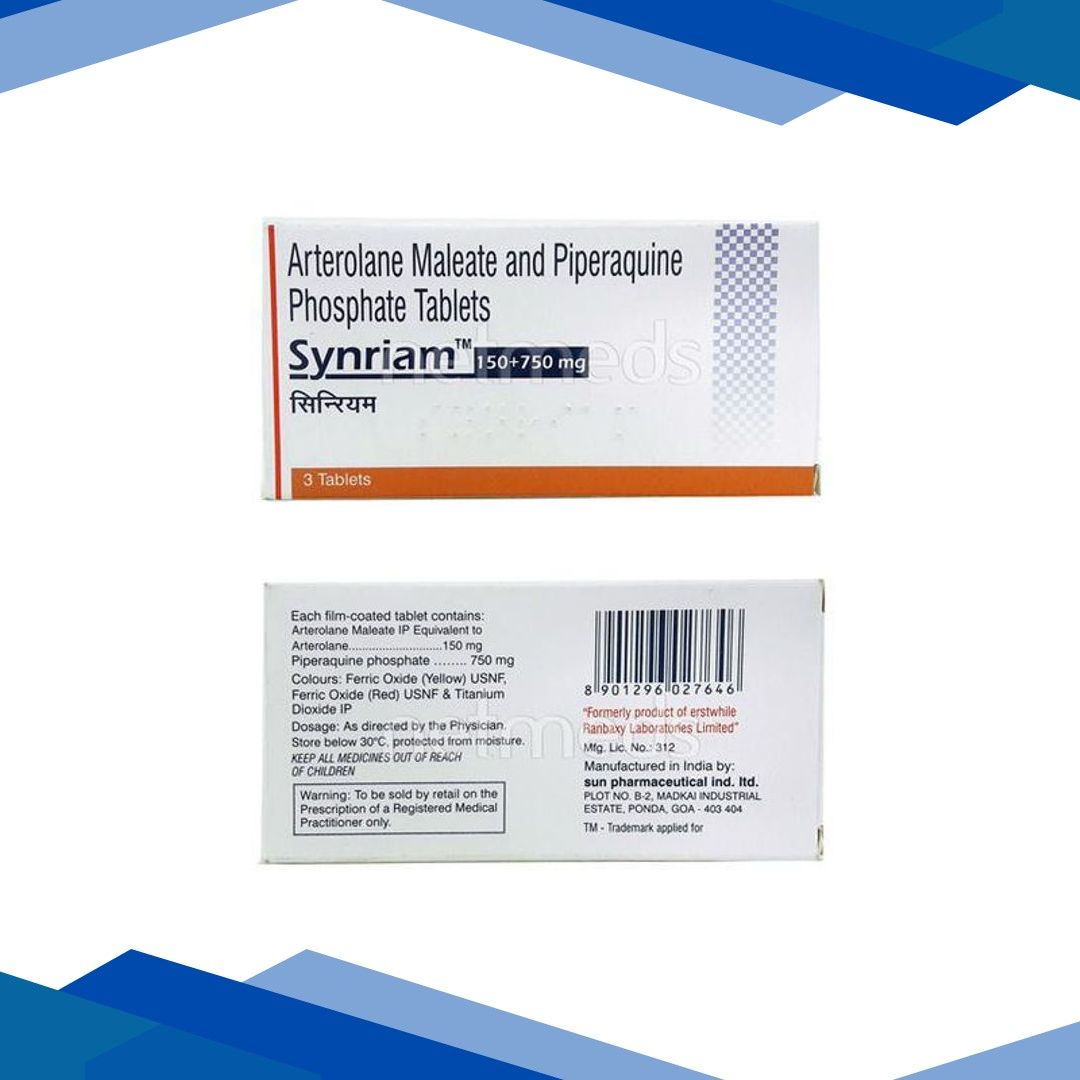
Synriam Tablet 3’S
Synriam Tablet is an antimalarial medicine used to treat uncomplicated malaria, especially malaria caused by Plasmodium falciparum. It combines two medicines that work together to clear the parasite from the blood. Arterolane acts quickly to kill the malaria parasites, while piperaquine helps remove the remaining parasites and supports longer-lasting protection against the infection returning. This combination is used under medical supervision to help control symptoms such as fever, chills, headache, and weakness caused by malaria. It is an effective treatment option in areas where malaria is common, but it should only be used when prescribed or recommended by a healthcare professional. Like all antimalarial medicines, it works best when taken as part of proper medical care and diagnosis.
Description
Synriam Tablet is an antimalarial medicine used for the treatment of uncomplicated malaria caused by susceptible plasmodium parasites, especially plasmodium falciparum in regions where this combination is recommended or effective. it is a fixed-dose combination that brings together two active ingredients with different mechanisms of action, which helps improve treatment effectiveness and reduce the chance of parasite survival. this medicine is generally used under medical supervision and is not meant for self-medication, because malaria can become severe quickly if not treated properly.
arterolane maleate acts rapidly against malaria parasites by attacking them during the early stage of their life cycle in the blood. it helps reduce the parasite load quickly, which can lead to faster improvement in fever, chills, headache, body aches, and general weakness. piperaquine phosphate has a longer duration of action and helps clear remaining parasites from the body after the fast-acting component has started working. together, these two medicines provide a combination of quick parasite reduction and longer-lasting support to prevent the infection from returning soon after treatment.
this medicine is typically prescribed for uncomplicated malaria, meaning malaria that has not yet caused severe complications such as altered consciousness, severe anemia, kidney failure, breathing problems, or shock. it is important to confirm the diagnosis before starting treatment whenever possible, because fever and other symptoms may also be caused by illnesses other than malaria. the response to treatment depends on correct diagnosis, local patterns of drug resistance, and adherence to the full prescribed course. even if symptoms improve early, the complete regimen must usually be followed exactly as directed by a healthcare professional.
because Synriam Tablet can affect heart rhythm in some people, it should be used carefully, especially in those with a history of cardiac problems or those taking other medicines that can also influence the qt interval. health professionals may consider a patient’s age, pregnancy status, other illnesses, and current medicines before choosing this treatment. it is most appropriate when guided by a clinician familiar with malaria management, since the best antimalarial choice can vary by region, parasite type, and individual patient factors.
ingredients
- arterolane maleate: this is the fast-acting antimalarial component. it helps kill malaria parasites in the blood at an early stage, leading to a quicker drop in parasite numbers and helping relieve symptoms sooner. its main role is rapid parasite clearance, which is important in uncomplicated malaria treatment.
- piperaquine phosphate: this is the longer-acting partner drug in the combination. it remains active in the body for a longer period and helps eliminate residual parasites that may survive the first phase of treatment. it also supports the overall effectiveness of the combination and helps reduce the risk of treatment failure when used appropriately.
key uses
- treatment of uncomplicated malaria: this medicine is used to treat malaria infections that have not become severe or complicated. it helps reduce the parasite burden and improve symptoms such as fever, sweating, chills, and headache.
- plasmodium falciparum infection: it is commonly used in areas where this species is prevalent and when the infection is confirmed or strongly suspected to be sensitive to this combination.
- mixed malaria infections in appropriate settings: in some cases, a clinician may choose this medicine when the malaria species and local treatment guidance support its use. the exact choice depends on diagnostic findings and regional recommendations.
- rapid clinical improvement in malaria symptoms: by acting quickly against blood-stage parasites, the medicine can help patients feel better sooner when taken correctly as prescribed.
how to use
Synriam Tablet should be taken exactly as prescribed by a healthcare professional. it is usually given as a short course over several days, and the full course should be completed even if symptoms improve early. stopping treatment too soon may allow parasites to survive and the infection to return. the medicine is generally taken by mouth, and it is important to follow the instructions on whether it should be taken with food or after meals, because food can sometimes affect how well certain medicines are absorbed and tolerated.
swallow the tablets or capsules with water, and try to take each dose at the same time each day if a multi-day schedule is prescribed. if you vomit soon after taking a dose, contact a healthcare professional because you may need advice on whether the dose should be repeated. do not take extra medicine to make up for a missed dose unless your doctor specifically advises you to do so. if malaria symptoms persist, worsen, or return after treatment, seek medical attention promptly, since persistent symptoms may indicate treatment failure, a different diagnosis, or a more severe form of malaria.
safety information
- warnings: this medicine should be used only when malaria has been diagnosed or strongly suspected by a healthcare professional. it may affect the heart’s electrical activity, including qt prolongation, which in rare cases can lead to serious rhythm problems. people with a history of heart rhythm disorders, low potassium or magnesium, fainting episodes, or those taking multiple medicines that affect the heart should be assessed carefully before use.
- side effects: common side effects may include nausea, vomiting, abdominal pain, loss of appetite, dizziness, weakness, headache, and sleep-related discomfort. some people may experience fever persistence for a short period as the infection clears. serious side effects are less common but may include abnormal heart rhythm, severe dizziness, fainting, palpitations, allergic reactions, severe vomiting, or signs of liver problems such as yellowing of the skin or eyes, dark urine, or unusual fatigue.
- precautions: use caution in people with known heart disease, prolonged qt interval, electrolyte imbalance, liver disease, kidney disease, or a history of allergic reactions to antimalarial medicines. extra care is needed in children, older adults, and patients who are dehydrated or severely unwell. this medicine is not a substitute for urgent care if malaria is severe, and severe malaria requires immediate hospital evaluation and different treatment.
- pregnancy/breastfeeding: pregnancy and breastfeeding require medical advice before use. malaria in pregnancy can be dangerous for both mother and baby, so treatment should not be delayed; however, the choice of medicine must be guided by a clinician. if breastfeeding, a healthcare professional should confirm whether this medicine is suitable based on the mother’s condition, the baby’s age, and local treatment guidance.
- interactions: this medicine may interact with other drugs that prolong the qt interval, such as certain antibiotics, antipsychotics, antiarrhythmics, and some antifungal medicines. caution is also needed with medicines that affect heart rhythm, liver enzymes, or electrolyte levels. alcohol may worsen dizziness, stomach upset, or dehydration, so it is generally best to avoid alcohol while being treated for malaria. always inform the doctor about all prescription medicines, over-the-counter products, and herbal supplements being used.
additional information
- storage: store in a cool, dry place away from moisture, heat, and direct sunlight. keep the medicine in its original packaging and out of reach of children. do not use tablets that are expired, damaged, or improperly stored.
- missed dose: if a dose is missed, take it as soon as you remember unless it is almost time for the next dose. if the next dose is near, skip the missed dose and continue the regular schedule. do not double the dose to compensate for a missed one unless specifically instructed by a healthcare professional.
- overdose: taking too much may increase the risk of severe nausea, vomiting, dizziness, palpitations, fainting, or dangerous heart rhythm disturbances. if an overdose is suspected, seek emergency medical help immediately or contact a poison control center right away. bring the medicine package with you if possible so healthcare providers can identify the product quickly.
- habit forming: no. Synriam Tablet is not habit-forming and does not cause dependence. it is used for a short-term infectious disease treatment rather than for ongoing or addictive use.
frequently asked questions
Q: what is Synriam Tablet used for?
A: it is used to treat uncomplicated malaria caused by susceptible malaria parasites. it is not meant for preventing malaria or for severe malaria unless specifically directed by a doctor.
Q: how does this medicine work against malaria?
A: it combines a fast-acting antimalarial with a longer-acting partner drug. together they reduce the parasite count quickly and help clear remaining parasites from the bloodstream.
Q: can i stop taking it when i start feeling better?
A: no. you should complete the full course exactly as prescribed, even if symptoms improve early. stopping early may allow the infection to return or treatment to fail.
Q: should this medicine be taken with food?
A: follow the instructions given by your doctor or pharmacist. in some cases, taking antimalarial medicine with food may help improve tolerance and reduce stomach upset, but always follow the specific product directions.
Q: what side effects should i watch for?
A: common effects include nausea, vomiting, dizziness, abdominal pain, and headache. seek urgent medical help if you develop fainting, palpitations, severe weakness, allergic reactions, or signs of serious illness.
Q: can this medicine cause heart problems?
A: it can affect heart rhythm in some people by prolonging the qt interval. this is why people with heart disease or those taking interacting medicines should be assessed carefully before treatment.
Q: is it safe during pregnancy?
A: pregnancy requires medical supervision because malaria itself can be harmful. a healthcare professional should decide whether this medicine is appropriate based on the stage of pregnancy and clinical circumstances.
Q: can i take it with other medicines?
A: some medicines may interact with it, especially drugs that affect heart rhythm or electrolyte balance. always tell your doctor or pharmacist about everything you are taking, including herbal supplements.
Q: what should i do if i vomit after taking a dose?
A: if vomiting happens soon after a dose, contact a healthcare professional for advice. you may need guidance on whether the dose should be repeated, depending on timing and your condition.
Q: does this medicine prevent malaria?
A: no. it is used to treat an active malaria infection, not to prevent future infection. malaria prevention requires separate preventive measures and medicines if recommended.
Q: can children take this medicine?
A: it may be used in children when prescribed by a qualified healthcare professional, but the decision depends on age, weight, and local treatment guidelines. never give it without medical advice.
Q: what if my fever does not improve?
A: if fever or other symptoms continue, worsen, or return after treatment, seek medical evaluation promptly. persistent symptoms may mean the malaria is not responding adequately or another illness is present.
this information is for educational purposes only and should not be considered medical advice. always consult a qualified healthcare professional before use.
At Gem Pharmacy, we make every effort to provide accurate, expert-written, and thoroughly reviewed information related to medicines. However, this information should not be considered a substitute for professional medical advice, diagnosis, or treatment from a qualified doctor.
The purpose of this information is to educate users and improve communication between patients and healthcare professionals. It should not be used to diagnose or treat any condition.
Always consult a certified healthcare professional before taking any medication.