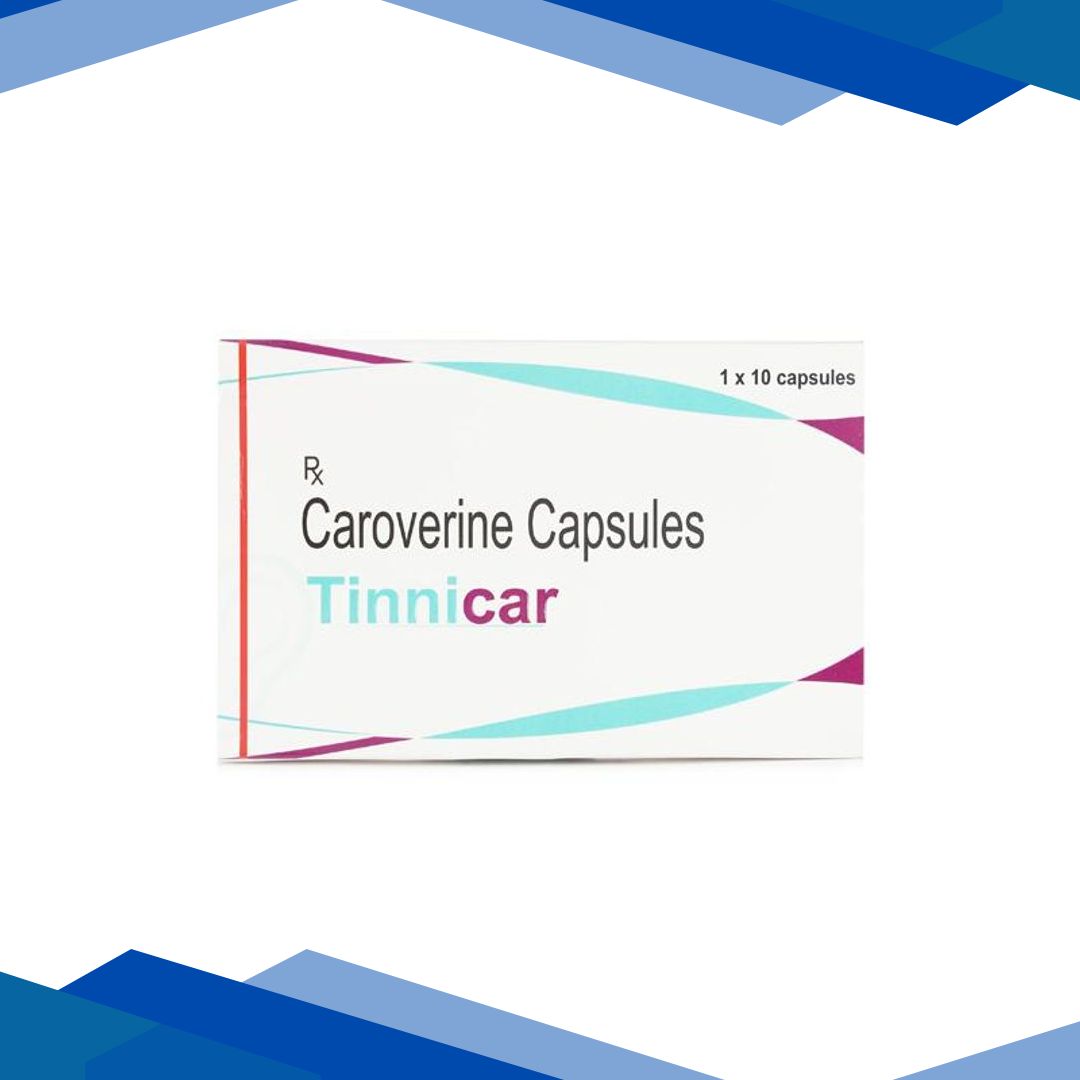
Tinnicar Capsule 10’S
No Prescription yet? Don’t worry! Click Here to Get Online Consultation
Tinnicar Capsule is a medication with antispasmodic and neuroprotective properties that acts as a smooth muscle relaxant. It is used in some countries to help relieve conditions such as gastrointestinal spasms, abdominal pain, and certain circulatory or nerve-related disorders. Tinnicar Capsule works by blocking specific receptors involved in muscle contraction and nerve signaling, helping to reduce abnormal muscle tightness and discomfort.
Description
Tinnicar Capsule is a pharmacologically active compound that belongs to the class of smooth muscle relaxants and neuro-modulating agents. it is primarily recognized for its dual action on smooth muscle tissues and certain neural pathways, making it useful in conditions associated with muscle spasms, visceral pain, and some vestibular disorders. Tinnicar Capsule works by modulating calcium influx in smooth muscle cells and acting as an antagonist at specific excitatory amino acid receptors, particularly nmda (n-methyl-d-aspartate) receptors. this combination of mechanisms allows it to reduce abnormal muscle contractions while also influencing pain transmission pathways in the nervous system.
medically, Tinnicar Capsule has been used in various countries for the management of gastrointestinal spasms, biliary colic, and functional abdominal pain disorders such as irritable bowel syndrome (ibs). in addition, it has been explored for use in otological and neurological conditions such as tinnitus and vertigo, especially when these symptoms are thought to be associated with excitotoxic neuronal activity in the auditory pathway. although not universally approved in all regions for every indication, its pharmacological profile has made it a subject of clinical interest in both gastroenterology and neuro-otology.
Tinnicar Capsule does not act like typical painkillers or sedatives. instead, it works at a cellular level by stabilizing calcium channels in smooth muscle and reducing excessive excitatory signaling in nerve cells. this results in decreased muscle spasm, improved blood flow in affected tissues, and reduced abnormal nerve firing. because of this targeted mechanism, it is generally considered useful for functional disorders where muscle overactivity or neural hypersensitivity plays a key role. however, its use should always be guided by a qualified healthcare professional due to variability in clinical approval and patient response.
ingredients
- Tinnicar Capsule (active ingredient): Tinnicar Capsule is the primary active pharmaceutical component. it acts as a spasmolytic agent by inhibiting calcium influx into smooth muscle cells, leading to relaxation of spasmodic muscles in the gastrointestinal and biliary systems. additionally, it functions as an nmda receptor antagonist, which helps regulate excitatory neurotransmission in the central and peripheral nervous systems. this dual mechanism contributes to both muscle relaxation and modulation of pain or abnormal sensory signals.
- excipients (inactive components): depending on the formulation (tablet, capsule, or injectable form), excipients may include stabilizers, fillers, binding agents, or preservatives. these substances do not have therapeutic effects but are essential for maintaining the stability, absorption, and shelf-life of the medication.
key uses
- gastrointestinal spasms: Tinnicar Capsule is used to relieve involuntary contractions of the smooth muscles in the gastrointestinal tract, helping reduce abdominal cramps, bloating, and discomfort associated with functional bowel disorders.
- irritable bowel syndrome (ibs): it may be prescribed in some cases of ibs to reduce abdominal pain and spasm-related symptoms by calming overactive intestinal smooth muscle activity.
- biliary colic and gallbladder spasm: Tinnicar Capsule helps relax the smooth muscles of the biliary tract, which can reduce pain caused by gallbladder or bile duct spasms.
- functional abdominal pain: it may be used in non-specific abdominal pain conditions where no structural abnormality is found but muscle spasm or hypersensitivity is suspected.
- tinnitus (exploratory use): in some clinical settings, Tinnicar Capsule has been investigated for tinnitus management due to its nmda receptor-blocking action, which may reduce abnormal auditory nerve activity.
- vertigo and vestibular disorders: it has been studied for use in certain balance disorders, where neural excitability in the vestibular system may contribute to dizziness or vertigo symptoms.
how to use
Tinnicar Capsule should always be used according to a healthcare provider’s instructions, as its use varies depending on the condition being treated and the formulation available. it is generally taken orally in tablet form or administered under medical supervision in injectable form in certain clinical settings. when taken orally, it is usually recommended to be swallowed with water and can be taken with or without food, although taking it after meals may help reduce the likelihood of gastrointestinal discomfort in sensitive individuals.
the timing and duration of therapy depend on the severity of symptoms and the underlying condition. for acute spasms, short-term use may be sufficient, while in chronic functional disorders, a longer course may be prescribed. patients are advised not to self-adjust the dosage or discontinue the medication abruptly without consulting a healthcare professional. consistency in timing helps maintain stable drug levels in the body, improving therapeutic effectiveness.
if a dose is missed, it should be taken as soon as remembered unless it is close to the time of the next scheduled dose. doubling of doses should be avoided to prevent potential side effects. medical supervision is essential, especially in long-term use, to monitor effectiveness and ensure safety.
safety information
- warnings: Tinnicar Capsule should be used with caution in individuals with known hypersensitivity to the drug or its components. it should also be used carefully in patients with pre-existing neurological or gastrointestinal conditions, as responses may vary. since it affects both muscle and neural activity, medical supervision is important to avoid inappropriate use.
- side effects: common side effects may include mild dizziness, nausea, dry mouth, headache, or gastrointestinal discomfort. these effects are usually temporary and resolve as the body adjusts to the medication. rare but serious side effects may include allergic reactions such as rash, itching, swelling, or difficulty breathing, which require immediate medical attention.
- precautions: patients with liver or kidney impairment should use Tinnicar Capsule cautiously, as drug metabolism and elimination may be affected. elderly patients may also be more sensitive to its effects and require dose adjustments. it is important to avoid operating heavy machinery or driving if dizziness occurs.
- pregnancy/breastfeeding: there is limited clinical data on the safety of Tinnicar Capsule during pregnancy and breastfeeding. therefore, it should only be used if clearly prescribed by a healthcare provider when the potential benefits outweigh the risks. self-medication during pregnancy is not recommended.
- interactions: Tinnicar Capsule may interact with other central nervous system-active drugs, including sedatives, muscle relaxants, and certain analgesics, potentially enhancing their effects. alcohol consumption should be avoided or minimized, as it may increase dizziness or sedation. patients should inform their doctor about all ongoing medications to avoid potential interactions.
additional information
- storage: store Tinnicar Capsule in a cool, dry place away from direct sunlight and moisture. it should be kept at room temperature and out of reach of children. do not use expired medication.
- missed dose: if a dose is missed, take it as soon as remembered. if it is close to the next dose, skip the missed dose and continue the regular schedule. do not take a double dose to compensate.
- overdose: overdose may lead to symptoms such as severe dizziness, confusion, nausea, or excessive sedation. in case of suspected overdose, immediate medical attention is required. supportive and symptomatic treatment is usually provided in clinical settings.
- habit forming: Tinnicar Capsule is not considered habit-forming or addictive. however, it should still be used only under medical supervision to ensure appropriate and safe use.
frequently asked questions
Q: what is Tinnicar Capsule mainly used for?
A: Tinnicar Capsule is mainly used to relieve smooth muscle spasms in the gastrointestinal tract and biliary system. it is also studied for conditions like tinnitus and vertigo due to its action on neural signaling pathways. its primary role is to reduce spasms and abnormal nerve excitability.
Q: is Tinnicar Capsule a painkiller?
A: Tinnicar Capsule is not a traditional painkiller like nsaids or opioids. instead, it works by relaxing smooth muscles and modulating nerve activity, which indirectly helps reduce pain caused by spasms or functional disorders.
Q: can Tinnicar Capsule be used for ibs?
A: yes, in some cases Tinnicar Capsule may be used for irritable bowel syndrome to help reduce abdominal cramps and spasms. however, its use depends on clinical judgment and availability in specific regions.
Q: does Tinnicar Capsule cause drowsiness?
A: Tinnicar Capsule may cause mild dizziness in some individuals, but significant drowsiness is not very common. still, patients should avoid driving or operating machinery if they feel affected.
Q: is Tinnicar Capsule safe for long-term use?
A: long-term use should only be under medical supervision. while it is generally well tolerated, prolonged use requires monitoring for effectiveness and any potential side effects.
Q: can i take Tinnicar Capsule with alcohol?
A: it is not recommended to consume alcohol while taking Tinnicar Capsule, as it may increase dizziness or enhance central nervous system side effects.
Q: what should i do if i miss a dose of Tinnicar Capsule?
A: if you miss a dose, take it as soon as you remember. if it is near the next scheduled dose, skip the missed one. do not double the dose.
Q: is Tinnicar Capsule available worldwide?
A: Tinnicar Capsule availability varies by country. it is approved and used in some regions for spasm-related conditions, but not universally available or indicated everywhere.
this information is for educational purposes only and should not be considered medical advice. always consult a qualified healthcare professional before use.
At Gem Pharmacy, we make every effort to provide accurate, expert-written, and thoroughly reviewed information related to medicines. However, this information should not be considered a substitute for professional medical advice, diagnosis, or treatment from a qualified doctor.
The purpose of this information is to educate users and improve communication between patients and healthcare professionals. It should not be used to diagnose or treat any condition.
Always consult a certified healthcare professional before taking any medication.


Related products