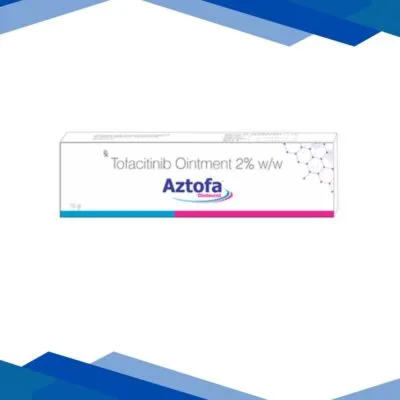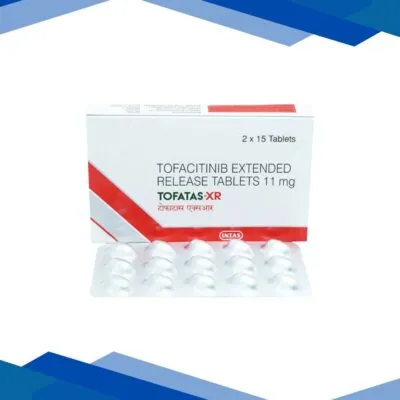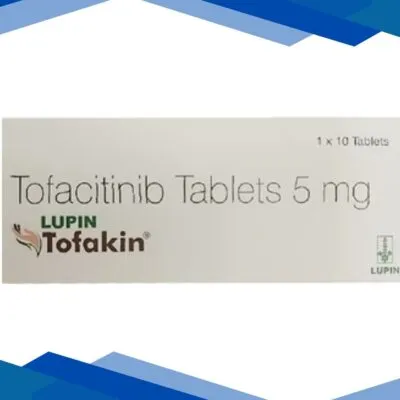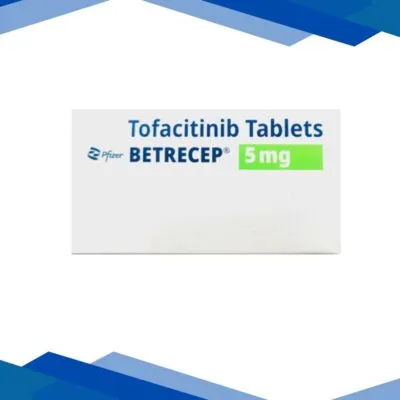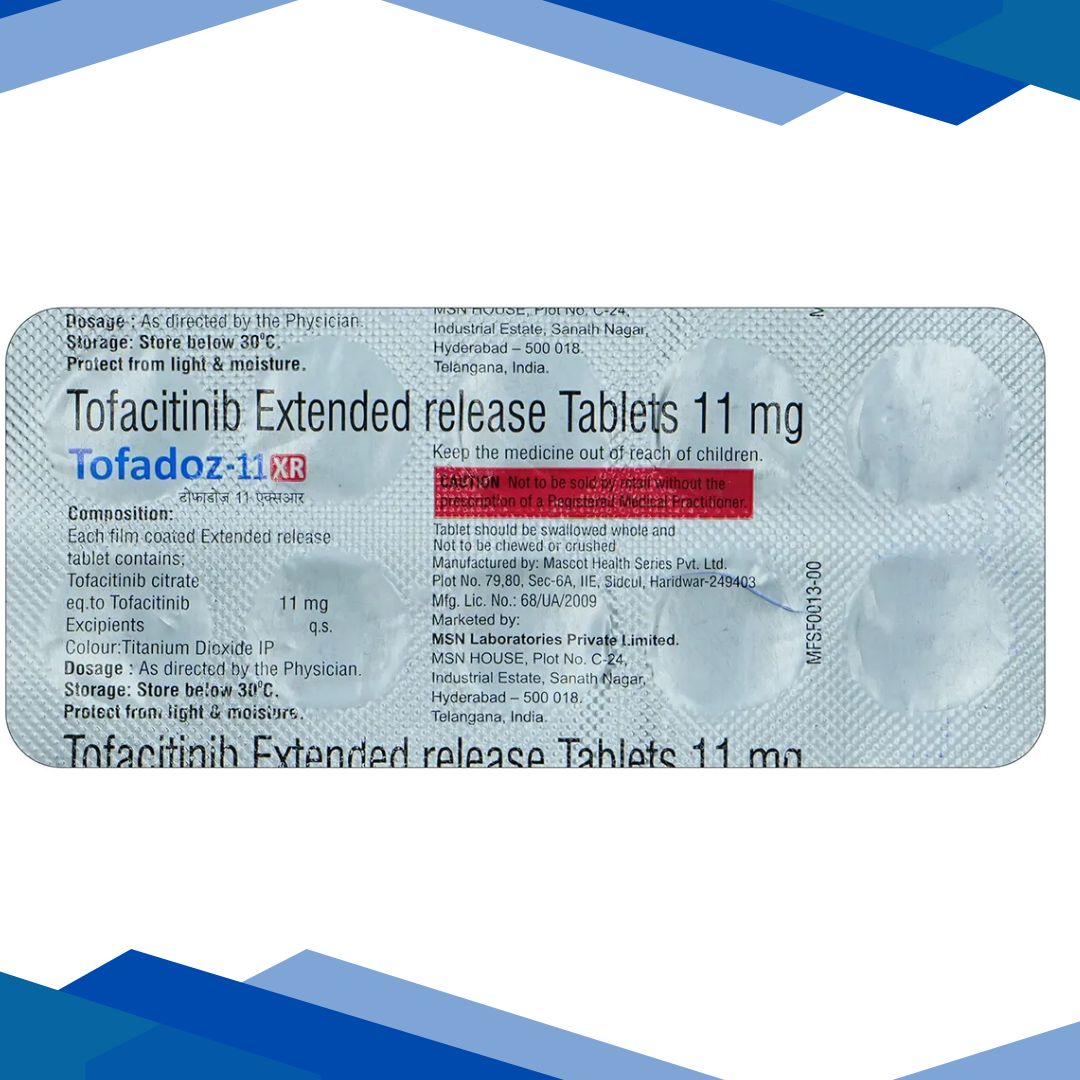
TOFADOZ 11 XR Tablet 10’s
No Prescription yet? Don’t worry! Click Here to Get Online Consultation
TOFADOZ 11 XR TABLET contains Tofacitinib, which belongs to the group of medicines called Antirheumatics. It is used to manage inflammatory diseases such as rheumatoid arthritis (chronic inflammatory diseases affecting the joints, causing pain and swelling), psoriatic arthritis (an arthritic condition that occurs in an individual with psoriasis), ulcerative colitis (ulcerative inflammation of the digestive tract) and ankylosing spondylitis (fusion of bones in the spine).
tofacitinib
Tofacitinib 5 mg / 11 mg Tablets, yes that one. Tofacitinib is an advanced targeted synthetic disease-modifying antirheumatic drug (tsDMARD) you will usually see listed as a Janus kinase (JAK) inhibitor. It’s given only with strict medical supervision, for adult and pediatric people with moderate-to-severe autoimmune inflammatory disorders, when the usual tumor necrosis factor (TNF) blockers either did not work well, or were not tolerated.
Therapeutic Class: Immunosuppressants / Antirheumatics
Action Class: Janus Kinase (JAK-1 and JAK-3) Inhibitors
Available Strengths: 5 mg Immediate-Release (IR) and 11 mg Extended-Release (XR)
Prescription Required: Yes, strictly Schedule H / Rx Required
Therapeutic Indications & Clinical Benefits
1. Rheumatoid Arthritis (RA) Management
Tofacitinib helps reduce structural joint damage, lowers painful swelling, and eases morning stiffness in adults who have active moderate-to-severe rheumatoid arthritis. It may be used by itself or teamed with conventional non-biologic DMARDs like methotrexate.
2. Active Psoriatic Arthritis (PsA)
If someone has joint swelling plus psoriatic skin plaques, tofacitinib calms systemic inflammation, improving mobility and supporting clearer skin.
3. Ankylosing Spondylitis (AS)
It supports more spinal movement, and it eases ongoing lower back pain in chronic inflammatory arthritis that targets the spine.
4. Ulcerative Colitis (UC), Induction and Maintenance
Tofacitinib is a key oral option for adults with moderately to severely active ulcerative colitis. It supports healing of deeper mucosal linings in the large intestine, aiming to cut down flare-ups and persistent diarrhea.
Mechanism of Action: How It Works
In autoimmune conditions, inflammatory cytokines get overactivated, these are signaling proteins. Tofacitinib acts at the cellular level by selectively blocking Janus kinase (JAK1 and JAK3) pathways. When those enzymatic pathways are blocked, the intracellular JAK-STAT signaling system is effectively interrupted. This helps stop the excessive production of harmful inflammatory cytokines, so the immune response is tempered and healthy tissue, as well as joints, are less likely to keep getting harmed.
Standard Administration & Dosage Guide
How to Take:
- Immediate-Release (5 mg): usually taken twice daily
- Extended-Release (11 mg): taken exactly once a day
Swallow the tablet whole, with a glass of water. Do not crush, chew, split, or dissolve extended-release tablets.
Food Compatibility:
Can be taken with or without food, no need for special timing.
Baseline Prerequisite:
Do not start this medication if your absolute lymphocyte count is under 500\text{ cells/mm}^3, your ANC (absolute neutrophil count) is below 1000\text{ cells/mm}^3, or hemoglobin is less than 9\text{ g/dL}.
Documented Side Effects & Clinical Warnings
Because tofacitinib changes systemic immune behavior, it has a specific side effect pattern that needs routine medical screening.
Common Side Effects:
- Upper respiratory tract infections, including nasopharyngitis and sinus congestion
- Headaches, plus mild dizziness
- Higher serum cholesterol or other lipid profile shifts
- Mild diarrhea, or general abdominal unease
Serious Clinical Concerns (Contact your care team immediately):
- Serious infections: active tuberculosis (TB), shingles (herpes zoster), or deep-tissue fungal infections, often tied to reduced immune defenses
- Thrombosis: blood clot warning signs, like sudden calf swelling, calf pain, redness, unexplained shortness of breath, or sudden chest tightness
- Gastrointestinal perforations: new or worsening severe abdominal pain with fever, nausea, or localized tenderness
Safety Guidelines & Precautions
| Risk Factor | Clinical Status | Medical Directive & Justification |
|---|---|---|
| Active Infections | ❌ Contraindicated | Do not begin tofacitinib if you have any local or systemic infection. It reduces your body’s ability to fight pathogens. |
| Live Vaccines | ❌ Contraindicated | Avoid live or attenuated vaccines (for instance, certain shingles vaccines or yellow fever shots) right before or while on therapy. |
| Pregnancy | ❌ Unsafe | Strictly avoided. Animal reproductive studies show meaningful embryofetal toxicity. Use effective birth control during, and for 4 weeks after treatment. |
| Breastfeeding | ❌ Unsafe | Not recommended. Components can pass into breast milk, creating an active risk of adverse reactions in the nursing infant. |
| Liver Insufficiency | ⚠️ High Caution | Not suitable for severe hepatic impairment or liver cirrhosis. Moderate liver problems may require notable dose reduction. |
Frequently Asked Questions (FAQs)
Q. How long does it usually take before tofacitinib shows real results?
Many patients notice improvement in joint pain, swelling, and systemic stiffness within 2 to 8 weeks. Still, reaching maximum benefit and steady control of autoimmune inflammation can take about 3 to 6 months of continuous use.
Q. What specific blood tests are needed while on tofacitinib?
Your prescriber will typically order baseline screening for latent TB and hepatitis B/C before the first dose. After starting, routine labs are used to review liver enzymes, watch lipid panels (cholesterol), and monitor complete blood counts (CBC), including lymphocytes, neutrophils, and hemoglobin.
Q. Can I take tofacitinib with other biologic therapies like adalimumab or infliximab?
No. Combining tofacitinib with biologic DMARDs, anti-TNF agents, or stronger immunosuppressants (like azathioprine or cyclosporine) is highly discouraged. Adding these medications together too much can seriously disrupt immune function, raising the risk of dangerous, life-threatening infections.
Q. Why do I sometimes see something like an empty tablet wrapper in my stool?
If you are taking the 11 mg Extended-Release (XR) tablet, the medicine is released gradually through a non-absorbable outer shell inside your gastrointestinal tract. Once the drug dissolves, that empty shell is passed safely as part of the normal delivery design, so it can show up in your stool. This is expected and usually not a problem.
At Gem Pharmacy, we make every effort to provide accurate, expert-written, and thoroughly reviewed information related to medicines. However, this information should not be considered a substitute for professional medical advice, diagnosis, or treatment from a qualified doctor.
The purpose of this information is to educate users and improve communication between patients and healthcare professionals. It should not be used to diagnose or treat any condition.
Always consult a certified healthcare professional before taking any medication.


Related products