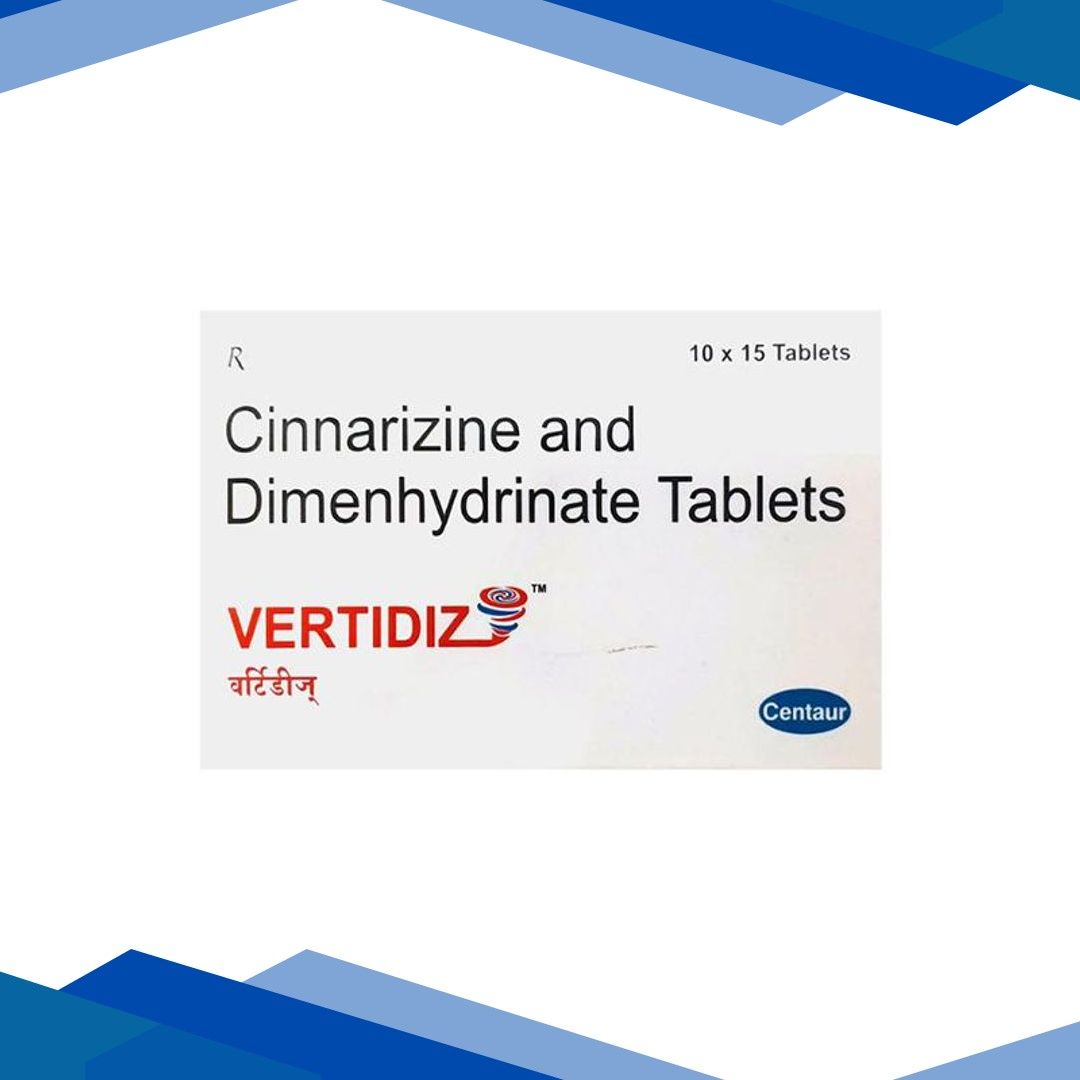
VERTIDIZ Tablet 15’s
VERTIDIZ Tablet is a combination medicine used to help relieve symptoms of vertigo, dizziness, nausea, and vomiting related to balance disorders of the inner ear, such as Ménière’s disease. It works by combining two medicines that act on the brain and inner ear to reduce the feeling of spinning, calm the nausea signal, and improve balance-related discomfort. Cinnarizine helps decrease abnormal nerve signals involved in dizziness, while dimenhydrinate helps control nausea and motion sickness-like symptoms. This medicine may be recommended when vertigo affects daily activities and makes it difficult to move or stay steady. It should be used under medical advice, as it may cause drowsiness in some people.
Description
VERTIDIZ Tablet is a combination medicine used mainly to help relieve vertigo, dizziness, and the uncomfortable spinning sensation that can occur when the balance system of the inner ear is disturbed. it is commonly prescribed for conditions such as ménière’s disease and other vestibular disorders, where symptoms may include nausea, vomiting, unsteadiness, and a feeling that the surroundings are moving. this medicine is designed to reduce both the motion-related nausea and the inner-ear imbalance that contribute to these symptoms.
the two ingredients work together in a complementary way. cinnarizine helps reduce excessive activity in the inner ear and improves blood flow in certain parts of the body, which may ease balance-related symptoms. dimenhydrinate is an antihistamine with anti-nausea and anti-motion-sickness properties; it helps calm the signals that trigger vomiting and dizziness. because of this dual action, the combination can be particularly helpful for people whose vertigo is accompanied by nausea or vomiting.
this medicine is generally intended for short-term or symptom-based use under medical guidance. it may help improve comfort and daily functioning when dizziness is severe enough to interfere with walking, reading, driving, or working. however, it can also cause drowsiness and reduced alertness, so it should be used carefully, especially by people who need to remain mentally sharp or physically coordinated. it is important to follow a healthcare professional’s advice, as vertigo can have many causes and some require urgent evaluation.
although VERTIDIZ Tablet can be effective for symptom control, it does not cure the underlying cause of vertigo in every case. people with persistent, worsening, or unusual dizziness should seek medical assessment to rule out causes such as ear disorders, medication effects, dehydration, low blood pressure, neurologic conditions, or other health problems. the medicine should be used exactly as advised, with attention to possible side effects and interactions.
ingredients
- cinnarizine: cinnarizine is a medicine that helps reduce vertigo and balance disturbances by calming the inner-ear signals involved in motion and spatial orientation. it is also known for its antihistamine-like action and its ability to reduce muscle constriction in blood vessels, which may contribute to symptom relief in certain vestibular conditions. in this combination, cinnarizine supports control of dizziness and helps make balance symptoms less intense.
- dimenhydrinate: dimenhydrinate is an antihistamine that helps prevent and reduce nausea, vomiting, and motion-related dizziness. it acts on the brain’s vomiting center and vestibular pathways, making it useful when vertigo is accompanied by sickness or queasiness. it is also sedating, which may help some people rest during severe episodes, but it can also cause sleepiness and slowed reaction time.
key uses
- vertigo relief: this medicine is used to reduce the spinning sensation and imbalance associated with vertigo, especially when symptoms are related to the inner ear.
- ménière’s disease symptom control: it may help lessen episodes of dizziness, nausea, and vomiting in people with ménière’s disease, although it does not cure the condition.
- vestibular disorder management: it can be used for other balance-related problems originating from the vestibular system, where the brain receives abnormal motion signals.
- nausea and vomiting associated with dizziness: the dimenhydrinate component helps reduce the sick feeling and vomiting that often come with vertigo.
- motion-related symptoms in selected patients: in some cases, it may help with motion-triggered dizziness or nausea when recommended by a clinician.
how to use
VERTIDIZ Tablet should be taken exactly as prescribed or directed by a healthcare professional. it is commonly taken with or after food to reduce stomach upset and may be easier to tolerate when swallowed with water. because this medicine can cause drowsiness, many people are advised to avoid activities that require full alertness, especially soon after taking it, until they know how it affects them. if it makes you sleepy, taking it at times that fit your daily routine may help reduce inconvenience, but the timing should always follow medical advice.
do not increase the amount or take it more often than recommended, even if symptoms continue, because higher exposure may increase sedation, dry mouth, blurred vision, and other unwanted effects. if vertigo is frequent or severe, it is important to speak with a healthcare professional rather than relying on self-treatment. the medicine works best as part of an overall management plan that may include rest, hydration, avoiding sudden head movements, and treatment of the underlying cause when identified.
safety information
- warnings: this medicine can cause significant drowsiness, slowed thinking, and reduced coordination. avoid driving, operating machinery, or climbing heights until you know your response. alcohol can worsen sleepiness and balance problems. in some people, especially older adults, it may increase the risk of confusion, falls, or impaired judgment. use caution if you have a history of glaucoma, urinary retention, enlarged prostate, asthma, liver problems, or seizures, and discuss these conditions with a clinician before use.
- side effects: common side effects include sleepiness, dry mouth, blurred vision, constipation, stomach discomfort, fatigue, and difficulty concentrating. some people may also experience headache or a sense of lightheadedness. more serious effects are uncommon but may include allergic reactions, severe confusion, marked restlessness, irregular heartbeat, trouble urinating, severe dizziness, or worsening movement problems. seek medical help if severe symptoms occur or if side effects do not improve.
- precautions: this medicine may not be suitable for people with glaucoma, urinary retention, severe asthma, certain heart rhythm problems, liver disease, or a history of sensitivity to antihistamines. older adults may be more sensitive to sedation and anticholinergic effects such as dry mouth, constipation, and confusion. it should be used cautiously in people who need to stay mentally alert. if vertigo is sudden, severe, associated with weakness, chest pain, hearing loss, fainting, or neurological symptoms, urgent medical evaluation is needed because the cause may be serious.
- pregnancy/breastfeeding: safety in pregnancy and breastfeeding depends on the individual situation, the stage of pregnancy, and the reason for use. because dimenhydrinate and cinnarizine may cause sedation and other effects, use during pregnancy or breastfeeding should be discussed with a healthcare professional before starting. the potential benefit must be weighed against possible risks to the mother and baby.
- interactions: this medicine may interact with alcohol, sleep medicines, opioid pain medicines, anti-anxiety medicines, sedating antidepressants, and other antihistamines, increasing drowsiness and impairing coordination. it may also interact with medicines that have anticholinergic effects, raising the chance of dry mouth, constipation, urinary retention, or confusion. always tell your clinician or pharmacist about all prescription medicines, over-the-counter products, herbal supplements, and allergy or cold remedies you use.
additional information
- storage: store in a cool, dry place away from direct sunlight, moisture, and heat. keep it in the original packaging and out of reach of children and pets. do not use the medicine after the expiration date.
- missed dose: if a dose is missed, take it when remembered unless it is almost time for the next scheduled dose. if it is close to the next dose, skip the missed dose and continue the regular schedule. do not take extra medicine to make up for a missed dose.
- overdose: an overdose can cause extreme drowsiness, confusion, agitation, hallucinations, dry mouth, enlarged pupils, rapid heartbeat, difficulty breathing, seizures, or loss of consciousness. if an overdose is suspected, seek emergency medical help immediately or contact poison control right away.
- habit forming: no, this medicine is not considered habit forming in the usual sense. however, people may become dependent on it for symptom relief if the underlying cause of dizziness is not addressed, so ongoing use should be reviewed by a healthcare professional.
frequently asked questions
Q: what is VERTIDIZ Tablet mainly used for?
A: it is mainly used to relieve vertigo, dizziness, nausea, and vomiting related to inner ear or vestibular disorders such as ménière’s disease. it helps reduce the spinning sensation and the sick feeling that often comes with balance problems.
Q: does VERTIDIZ Tablet make you sleepy?
A: yes. drowsiness is one of the most common effects of this medicine, especially because dimenhydrinate is sedating. avoid driving or doing tasks that require full alertness until you know how it affects you.
Q: can i drink alcohol while taking VERTIDIZ Tablet?
A: it is best to avoid alcohol because it can increase sleepiness, dizziness, and impaired coordination. combining alcohol with this medicine may make falls or accidents more likely.
Q: how quickly does VERTIDIZ Tablet work?
A: the onset can vary from person to person and depends on the condition being treated. some people notice relief within a short time, while others may need regular use as directed by a clinician to get the full benefit.
Q: can older adults take VERTIDIZ Tablet?
A: older adults may use it only with caution and medical advice because they are more likely to experience drowsiness, confusion, dry mouth, and falls. a clinician should review whether the benefits outweigh the risks in each case.
Q: is VERTIDIZ Tablet used for all types of dizziness?
A: no. it is mainly helpful for vertigo and vestibular dizziness. dizziness can have many causes, including low blood pressure, dehydration, anemia, heart problems, and neurological conditions, which may require different treatment.
Q: can i stop taking VERTIDIZ Tablet suddenly?
A: this medicine does not usually require gradual tapering, but you should follow your healthcare professional’s advice. if symptoms return or worsen after stopping, contact a clinician to reassess the cause of the vertigo.
Q: what should i do if i feel very drowsy after taking it?
A: sit or lie down safely and avoid driving or risky activities. if the drowsiness is severe, persistent, or associated with confusion, trouble breathing, or unusual behavior, seek medical advice promptly.
Q: can VERTIDIZ Tablet be taken with other cold or allergy medicines?
A: not without checking first. many cold, flu, and allergy products also contain antihistamines or other sedating ingredients, which can increase side effects when combined with this medicine.
Q: does this medicine cure vertigo?
A: it can help control the symptoms of vertigo, but it usually does not cure the underlying cause. proper diagnosis and treatment of the root problem are important, especially if symptoms are recurrent or severe.
this information is for educational purposes only and should not be considered medical advice. always consult a qualified healthcare professional before use.
At Gem Pharmacy, we make every effort to provide accurate, expert-written, and thoroughly reviewed information related to medicines. However, this information should not be considered a substitute for professional medical advice, diagnosis, or treatment from a qualified doctor.
The purpose of this information is to educate users and improve communication between patients and healthcare professionals. It should not be used to diagnose or treat any condition.
Always consult a certified healthcare professional before taking any medication.


Related products



Vertigon Forte 75mg Tablet 10’S