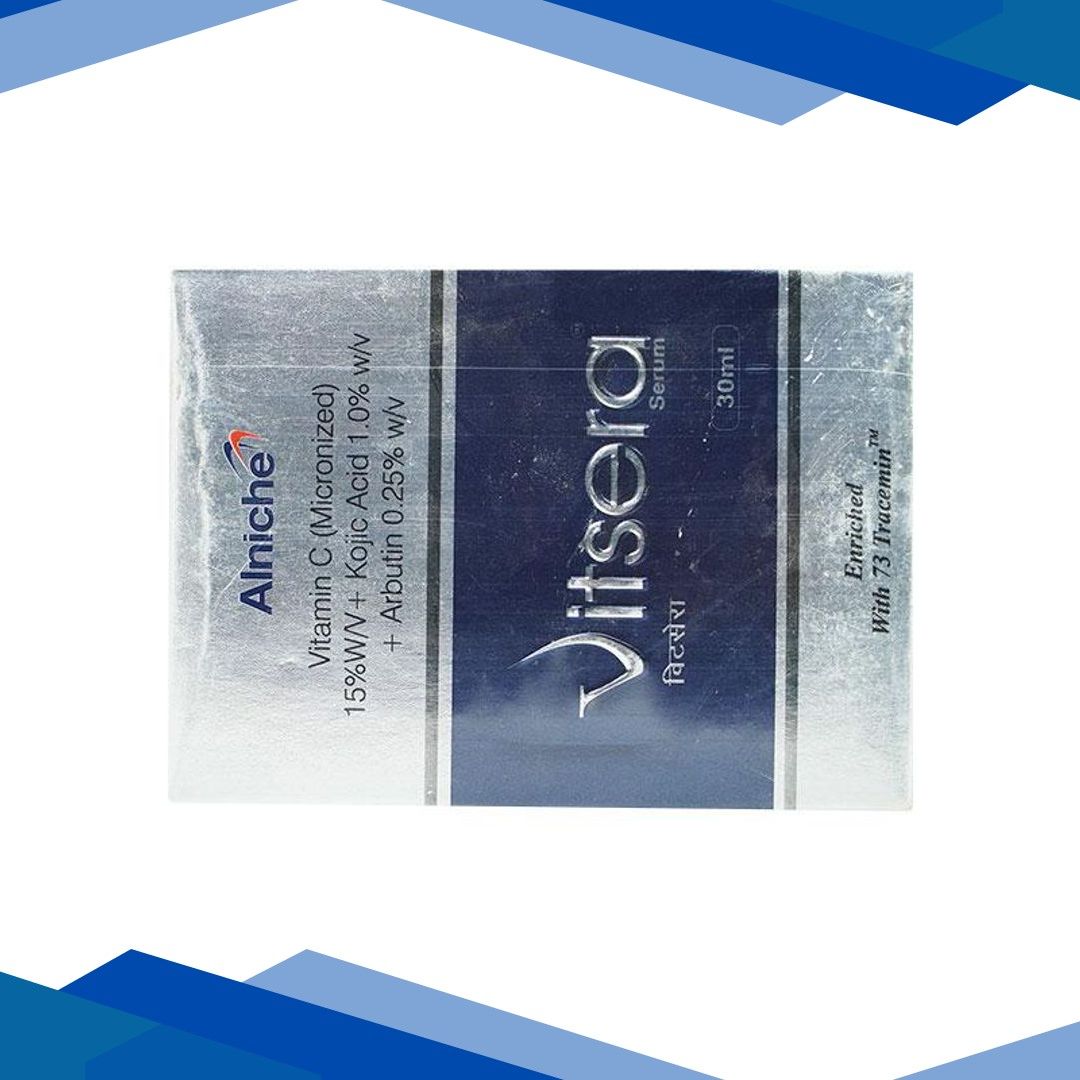
VITSERA Serum 30ml
❌ Due to high demand, this product is currently out of stock. New stock will be available shortly.
👉 Click here to Buy Same Salt medicine
VITSERA Serum is a skin-lightening combination commonly used to help reduce dark spots and uneven skin tone. ARBUTIN works by slowing the production of melanin, the pigment that gives skin its color, while KOJIC ACID helps block enzymes involved in melanin formation. Together, they may gradually fade hyperpigmentation caused by sun exposure, acne marks, melasma, and other discoloration problems. This combination is usually applied to affected areas of the skin and is intended for cosmetic and dermatologic use under medical guidance when needed. Results are typically gradual, and regular use as directed by a healthcare professional may help improve the appearance of blemishes and promote a more even complexion.
Description
VITSERA Serum is a topical skin-lightening combination used to help improve the appearance of uneven skin tone, dark spots, and areas of excess pigmentation. it is commonly found in creams, gels, serums, and other dermatological cosmetic preparations designed for hyperpigmentation-related concerns. this combination is not intended to “bleach” the skin or change a person’s natural complexion; instead, it works by gradually reducing the production and appearance of excess melanin in targeted areas.
arbutin and kojic acid are both known for their depigmenting properties, and when used together they may offer complementary benefits. arbutin helps slow down melanin formation by influencing the activity of tyrosinase, an enzyme involved in pigment production. kojic acid also acts on the same pathway, helping reduce the development of dark patches caused by acne marks, sun exposure, melasma, or post-inflammatory hyperpigmentation. because pigmentation often develops from multiple triggers, this dual-action approach may be helpful for people seeking a more even skin tone.
this medicine is generally used on the skin under the guidance of a healthcare professional, especially when pigmentation is persistent, widespread, or associated with sensitive skin. results are usually gradual rather than immediate, and consistent use along with sun protection is often important for best outcomes. since these ingredients can irritate some skin types, the product should be used carefully and exactly as directed on the label or by a dermatologist.
people who may benefit from VITSERA Serum include those with dark spots after acne, sun spots, melasma, freckles, or uneven pigmentation after skin inflammation or injury. it may also be recommended as part of a broader skincare routine that includes moisturizers and broad-spectrum sunscreen. however, it is important to understand that response varies from person to person, and some pigmentation conditions require longer treatment or additional medical evaluation.
ingredients
- arbutin: arbutin is a skin-lightening ingredient derived from plant sources or made synthetically. it works by helping reduce melanin production in the skin, mainly through inhibition of tyrosinase activity. this can gradually fade dark spots and improve the appearance of uneven skin tone. arbutin is often considered gentler than some other depigmenting agents, which makes it useful in products meant for regular topical use, although sensitivity can still occur in some people.
- kojic acid: kojic acid is a well-known depigmenting compound used to help reduce hyperpigmentation. it works by interfering with melanin formation and is commonly used for melasma, post-acne marks, sun-induced discoloration, and other forms of dark patches. kojic acid can be effective, but it may also cause irritation, dryness, or redness in some users, especially if the skin is sensitive or the product is used too often.
- base / vehicle ingredients: the actual product may also contain creams, gels, lotions, emulsifiers, stabilizers, preservatives, humectants, and soothing agents that help deliver the active ingredients into the skin. these supporting ingredients do not usually treat pigmentation directly, but they affect how well the product spreads, absorbs, and tolerates on the skin.
key uses
- melasma: this combination is commonly used to help reduce the appearance of melasma, a chronic pigmentation condition that often appears as brown or gray-brown patches on the face. improvement is usually gradual and the condition may recur without sun protection and ongoing skincare.
- post-inflammatory hyperpigmentation: dark marks left behind after acne, eczema, insect bites, or minor skin injury may respond to VITSERA Serum. it helps lighten the excess pigment that remains after the original inflammation has healed.
- sun spots / age spots: areas of discoloration caused or worsened by sun exposure may become less noticeable with regular use. this works best when combined with daily sunscreen, since uv exposure can continue to stimulate pigment formation.
- uneven skin tone: people with patchy or dull-looking skin due to localized pigmentation may use this product to improve overall tone and appearance. it is designed to target visible dark areas rather than alter normal skin color.
- freckles and localized pigmentation: in some cases, this combination may help lessen the prominence of freckles or other small areas of hyperpigmentation, though freckles may naturally darken again with sun exposure.
how to use
VITSERA Serum is generally applied topically to clean, dry skin, usually on the affected areas only. it is important to follow the specific instructions provided with the product or the advice of a dermatologist, because the strength and formulation can vary. in many cases, a small amount is applied in a thin layer, avoiding the eyes, lips, nostrils, and broken or irritated skin. many users find it best to start slowly, especially if they have sensitive skin, because these ingredients can sometimes cause irritation when introduced too quickly.
for best results, the product is often used as part of an evening skincare routine, although some formulations may be appropriate for daytime if directed. since sun exposure can worsen hyperpigmentation and reduce treatment benefit, broad-spectrum sunscreen is usually essential during the day. the medicine should not be layered over harsh scrubs or strong exfoliants unless advised by a healthcare professional, as this may increase dryness and irritation. consistency matters, and visible improvement may take several weeks rather than days.
if a patch test is recommended on the package or by a clinician, it should be done before regular use, particularly for individuals with sensitive skin, allergies, or a history of irritation from skincare products. if burning, severe redness, or persistent peeling develops, use should be stopped and medical advice sought. do not apply more frequently or in larger amounts than directed in the hope of faster results, since this can increase the chance of irritation without improving outcomes.
safety information
- warnings: VITSERA Serum can irritate the skin, especially in people with sensitive skin or when used with other active products such as retinoids, acids, or abrasive cleansers. avoid contact with the eyes, mouth, and broken skin. do not use on areas with active rash, infection, or severe inflammation unless a doctor specifically advises it. long-term or excessive use without guidance is not recommended, as it may lead to irritation or worsening of skin sensitivity. always use sun protection, because untreated sun exposure can counteract the benefits and may worsen pigmentation.
- side effects: common side effects may include mild redness, dryness, itching, stinging, burning, or peeling at the application site. these effects are often related to skin sensitivity and may improve if the product is used less often or discontinued. more serious reactions are uncommon but may include intense irritation, swelling, blistering, allergic contact dermatitis, or significant worsening of discoloration. if severe symptoms occur, stop use and seek medical evaluation promptly.
- precautions: people with very sensitive skin, eczema, rosacea, active dermatitis, or a history of product allergies should use extra caution. those who are already using prescription acne treatments, exfoliating acids, benzoyl peroxide, or retinoids may be more likely to experience dryness or irritation. individuals with uncertain pigmentation changes, rapidly changing dark spots, or lesions that are irregular in shape should first have a medical assessment to rule out more serious causes.
- pregnancy/breastfeeding: topical use may be considered only after discussing with a healthcare professional, since safety data can be limited depending on the product formulation and area of application. avoid using on large areas or under occlusion unless specifically advised. during breastfeeding, avoid applying to areas that could come into direct contact with the infant, and ensure the product is not used on the breast or nipple unless instructed by a clinician.
- interactions: when used with other skin treatments, VITSERA Serum may increase irritation, dryness, or peeling. caution is needed with topical retinoids, benzoyl peroxide, alpha hydroxy acids, beta hydroxy acids, strong vitamin c formulations, and other brightening agents if the skin becomes sensitive. there are no major alcohol interactions in the same way as oral medicines, but alcohol-based skincare or excessive alcohol use that dehydrates the skin may make irritation more noticeable. if using multiple dermatological products, professional guidance is advisable.
additional information
- storage: store the product in a cool, dry place away from direct sunlight, heat, and moisture. keep the container tightly closed when not in use. do not freeze unless the label specifically allows it. always keep out of reach of children.
- missed dose: if a dose is missed, apply it when remembered unless it is nearly time for the next scheduled application. do not apply extra product to make up for a missed use. resume the regular routine as directed.
- overdose: overuse on the skin may cause excessive dryness, redness, burning, peeling, or irritation rather than faster improvement. if a large amount is accidentally applied or if severe skin reaction develops, wash the area gently with water, stop using the product, and consult a healthcare professional if symptoms persist or worsen.
- habit forming: no. VITSERA Serum is not known to cause dependence or addiction. however, some people may continue using it for prolonged periods because pigmentation can return if underlying triggers such as sun exposure are not controlled. long-term use should be reviewed periodically by a healthcare professional.
frequently asked questions
Q: what is VITSERA Serum used for?
A: it is used topically to help fade dark spots, melasma, acne marks, sun spots, and other forms of hyperpigmentation. it works gradually and is usually most effective when combined with daily sun protection.
Q: how long does it take to work?
A: results are usually not immediate. many people need several weeks of regular use before noticing improvement, and some pigmentation conditions may take longer depending on severity, skin type, and sun exposure.
Q: can i use VITSERA Serum every day?
A: some formulations are designed for daily use, but this depends on the product strength and your skin sensitivity. if irritation occurs, reduce frequency or seek advice from a dermatologist.
Q: does it lighten normal skin?
A: no. it is intended to reduce excess pigment in dark spots and uneven areas, not to permanently bleach normal skin tone.
Q: should i use sunscreen with it?
A: yes. sunscreen is very important because uv exposure can worsen hyperpigmentation and reduce the benefit of treatment. broad-spectrum sun protection is usually recommended every day.
Q: can it cause irritation?
A: yes. common side effects include redness, itching, dryness, burning, or peeling. if the irritation is severe or persistent, stop use and consult a healthcare professional.
Q: can i use it with acne treatments?
A: sometimes yes, but caution is needed because many acne treatments can make the skin more sensitive. combining multiple active products may increase dryness or irritation, so professional guidance is helpful.
Q: is it safe for sensitive skin?
A: it may be tolerated by some people with sensitive skin, but there is also a higher chance of irritation. a patch test and cautious, gradual use are often recommended.
Q: can i apply it near the eyes?
A: it is generally not recommended near the eyes, eyelids, lips, or other delicate areas unless a healthcare professional specifically instructs you to do so.
Q: what should i do if i get a rash?
A: stop using the product immediately, wash the area gently, and seek medical advice if the rash is severe, spreading, or associated with swelling or discomfort.
Q: can men use VITSERA Serum?
A: yes. skin pigmentation concerns can affect anyone, and the product may be used by men or women when appropriate for the condition being treated.
Q: is this medicine a steroid?
A: no. VITSERA Serum is a depigmenting topical combination and is not the same as a steroid medication.
Q: can i use it during the day?
A: some products may be used during the day if directed, but daytime use should always be paired with sunscreen and sun avoidance measures to protect the skin and treatment results.
Q: what happens if i use too much?
A: using too much can increase irritation, redness, and peeling without improving results. apply only as directed and avoid overuse.
Q: will it permanently remove dark spots?
A: not always. some spots improve significantly, but pigmentation can return if the underlying cause remains, especially with continued sun exposure or recurrent inflammation.
Q: do i need a prescription?
A: this depends on the country and formulation. some products are available over the counter, while others may be recommended by a dermatologist for specific pigmentation conditions.
Q: can pregnant women use it?
A: pregnancy use should be discussed with a healthcare professional first, because safety information may be limited and individual circumstances matter.
Q: can it be used on acne scars?
A: it may help with dark marks left after acne, but it does not remove pitted or depressed scars. those types of scars often require different treatments.
Q: what should i avoid while using it?
A: avoid harsh scrubs, over-exfoliation, picking at dark spots, and unnecessary sun exposure. also be cautious when combining it with other strong skincare actives.
Q: when should i see a doctor?
A: you should consult a healthcare professional if the pigmentation changes are rapidly worsening, irregular, painful, itchy, bleeding, or not improving after consistent use as directed.
this information is for educational purposes only and should not be considered medical advice. always consult a qualified healthcare professional before use.
At Gem Pharmacy, we make every effort to provide accurate, expert-written, and thoroughly reviewed information related to medicines. However, this information should not be considered a substitute for professional medical advice, diagnosis, or treatment from a qualified doctor.
The purpose of this information is to educate users and improve communication between patients and healthcare professionals. It should not be used to diagnose or treat any condition.
Always consult a certified healthcare professional before taking any medication.


Related products

JECTOCOS LIPO NEW Tablet 15’s