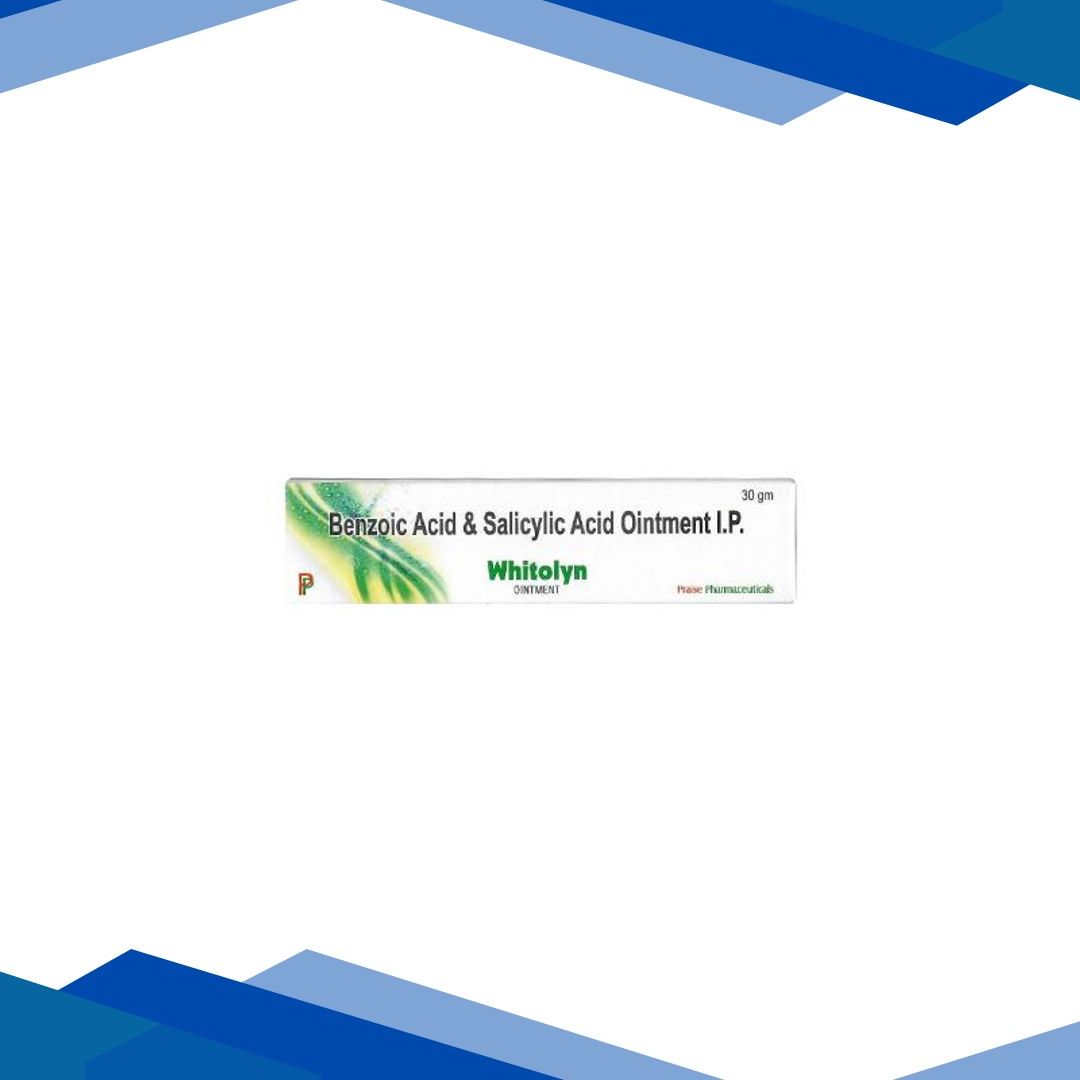
WHITOLYN Ointment 30gm
❌ Due to high demand, this product is currently out of stock. New stock will be available shortly.
👉 Click here to Buy Same Salt medicine
WHITOLYN Ointment is a topical medicine used to help treat certain skin conditions, especially fungal infections such as ringworm, athlete’s foot, and jock itch. It works by combining two ingredients that have mild antiseptic, antifungal, and keratolytic effects. Benzoic acid helps stop the growth of fungi and some germs, while salicylic acid helps soften and remove thick, rough, or scaly skin so the medicine can work better. This makes it useful for soothing irritated, peeling, or flaky skin caused by superficial infections. It is meant for external use only and should be used as directed by a healthcare professional. Avoid contact with the eyes, mouth, and broken skin unless advised by a doctor.
Description
WHITOLYN Ointment is a topical combination commonly used to help soften, loosen, and remove thickened, rough, or scaly skin. it is most often found in ointments, creams, lotions, or medicated preparations designed for external use only. this combination works locally on the skin and is not intended to treat internal conditions. it is especially useful when the skin has become hardened by conditions such as warts, corns, calluses, dandruff-related scaling, or certain forms of dry, flaky skin that benefit from gentle chemical exfoliation.
each ingredient plays a specific role in improving the skin’s surface. salicylic acid is the main keratolytic agent, meaning it helps break down the buildup of keratin, the protein that makes up the outer layer of the skin. by softening and shedding excess dead skin cells, it helps reduce thickened patches and makes the affected area easier to manage. benzoic acid also contributes to the softening and peeling effect and may help create an environment less favorable for certain microorganisms on the skin surface. in combination, these ingredients can improve the appearance and texture of rough, scaly areas while supporting the removal of dead skin.
this medicine is generally meant for localized skin problems rather than widespread irritation. it is often used when the skin needs gradual treatment over time, rather than immediate relief. because it can irritate healthy skin if overused or applied incorrectly, it should be used carefully and only on the areas intended. people with sensitive skin, open wounds, or certain medical conditions should seek medical advice before using it. when used properly, it can be a helpful treatment for reducing thick skin buildup and improving comfort.
ingredients
- benzoic acid: benzoic acid is an organic acid that has mild antiseptic and antifungal properties and may help reduce microbial growth on the skin surface. in topical products, it may also support the overall keratolytic effect by helping soften hardened skin and improving the product’s activity on rough, scaly areas. it is used primarily as part of a combination treatment and should not be relied on as a standalone cure for serious infections.
- salicylic acid: salicylic acid is the key active ingredient responsible for loosening and peeling away dead skin. it works by breaking down the bonds between skin cells in the outer layer, allowing thickened skin to shed more easily. this makes it useful for warts, corns, calluses, and certain scaly skin conditions. it can also help reduce the rough texture and improve the appearance of affected areas over time.
key uses
- wart treatment support: the combination helps soften and break down thick wart tissue so it can gradually be removed with regular topical use. it does not work instantly and may require consistent application over time.
- corn and callus reduction: it is commonly used to soften hardened skin caused by pressure or friction, making corns and calluses less thick and less uncomfortable.
- scaling and rough skin: in some skin conditions with dry, flaky, or thickened patches, it helps remove excess dead skin cells and improve smoothness.
- adjunct care for certain superficial skin lesions: it may be used in carefully selected cases to help soften superficial lesions before further treatment by a clinician.
how to use
WHITOLYN Ointment is meant for external use only and should be applied exactly as directed on the product label or by a healthcare professional. before application, the affected area is usually cleaned and dried thoroughly. the medicine is then applied only to the targeted skin area, avoiding surrounding healthy skin as much as possible. many formulations work best when used consistently and patiently, because the skin-softening process is gradual rather than immediate.
it is important not to apply this medicine to broken, bleeding, irritated, or infected skin unless specifically instructed by a clinician. the area should not be covered with tight or occlusive dressings unless advised, because this can increase absorption and raise the risk of irritation. hands should be washed after use unless the hands themselves are the treated area. if the product is used on feet, hands, or thick skin lesions, following any preparation steps on the packaging can improve results. if the skin becomes very red, painful, or blistered, use should be stopped and medical advice sought.
safety information
- warnings: this medicine can irritate healthy skin if it is applied too broadly, too often, or on sensitive areas. avoid contact with eyes, mouth, nostrils, genitals, and other mucous membranes. do not use on large areas of skin without medical supervision, especially in infants, young children, or people with poor kidney function, because salicylic acid can be absorbed through the skin. if the area becomes severely irritated, cracked, burned, or develops signs of infection, discontinue use and consult a healthcare professional.
- side effects: common side effects include mild redness, stinging, dryness, peeling, itching, or slight burning at the application site. these effects may be expected to some degree because the medicine works by removing dead skin. more serious reactions can include intense irritation, swelling, blistering, skin breakdown, allergic rash, or signs of salicylate overexposure such as ringing in the ears, dizziness, nausea, vomiting, or unusual tiredness, especially if used excessively or on large areas.
- precautions: people with diabetes, poor circulation, nerve damage in the feet, kidney disease, very sensitive skin, eczema, or psoriasis should use caution and seek medical guidance before use. these conditions can increase the risk of skin injury or make it harder to notice worsening irritation. it should also be used carefully in children because their skin may absorb more of the active ingredient than adults’ skin. do not use it on moles, birthmarks, or unusual skin growths unless a clinician has confirmed the diagnosis.
- pregnancy/breastfeeding: topical use may be acceptable in some cases, but safety depends on the amount used, the area treated, and the condition being treated. because salicylic acid can be absorbed through the skin, pregnant or breastfeeding individuals should consult a doctor or pharmacist before using it. it should not be applied over large areas or used for prolonged periods without professional advice.
- interactions: topical interactions are less common than with oral medicines, but risk increases when used together with other strong skin products such as retinoids, benzoyl peroxide, alpha hydroxy acids, sulfur, alcohol-based preparations, or other exfoliating agents. these combinations may cause excessive dryness or irritation. aspirin or other salicylate-containing medicines may increase overall salicylate exposure if the topical product is used heavily or on large areas. alcohol can worsen dryness and skin irritation, especially if used with other irritating topical products.
additional information
- storage: store the product at room temperature unless the label says otherwise. keep it tightly closed, away from excessive heat, moisture, and direct sunlight. do not freeze unless specifically instructed. keep out of reach of children and pets, and discard the product if it changes color, smell, or consistency in a way that suggests deterioration.
- missed dose: if a dose or application is missed, apply it when remembered unless it is almost time for the next scheduled use. do not double the amount to make up for a missed application, because this may increase irritation rather than improve results.
- overdose: using too much, applying it too often, or covering large areas can lead to severe skin irritation and, in rare cases, salicylate toxicity. symptoms may include nausea, vomiting, dizziness, confusion, headache, rapid breathing, or ringing in the ears. if overdose is suspected, stop using the product, wash off the area if appropriate, and seek medical help promptly.
- habit forming: no, this medicine is not habit forming. it does not cause dependence or withdrawal, but it should still be used only as needed and according to guidance to avoid skin damage or excessive irritation.
frequently asked questions
Q: what is WHITOLYN Ointment used for?
A: it is commonly used on the skin to help soften and remove thick, rough, or scaly areas such as warts, corns, calluses, and some flaky skin conditions. it works gradually by loosening dead skin cells and making hardened tissue easier to shed.
Q: how long does it take to work?
A: results are usually gradual and may take several days to weeks depending on the condition being treated, the thickness of the skin, and how consistently the product is used. it is important to follow the instructions and not expect immediate results.
Q: can i use it on my face?
A: it should generally be used on the face only if specifically recommended by a healthcare professional. facial skin is more sensitive, and this medicine can cause irritation or burning if misused.
Q: should i apply it on broken skin?
A: no, it should not usually be applied to open, broken, or irritated skin unless a doctor tells you to do so. using it on damaged skin can increase absorption and worsen irritation.
Q: can children use this medicine?
A: children may be more sensitive to salicylic acid, so use in children should be done only under medical guidance. the amount applied and the surface area treated must be carefully limited.
Q: what should i do if my skin burns after application?
A: mild stinging or tingling may occur, but strong burning, redness, swelling, or blistering is not normal. wash the area gently, stop using the product, and contact a healthcare professional if the reaction is significant or persistent.
Q: can i use other creams with it?
A: some creams can be used with this medicine, but other exfoliating, drying, or irritating products may make side effects worse. ask a pharmacist or doctor before combining it with other topical treatments.
Q: is it safe during pregnancy?
A: topical use may not always be harmful, but because salicylic acid can be absorbed through the skin, pregnant individuals should consult a healthcare professional before using it, especially over large areas or for long periods.
Q: can it be used for fungal infections?
A: it is not a primary treatment for fungal infections. while benzoic acid may have mild antiseptic or antifungal effects, this combination is mainly used as a keratolytic skin treatment rather than a full antifungal medicine.
Q: what if i accidentally apply too much?
A: if too much is applied, remove the excess if possible and monitor for irritation or systemic symptoms such as dizziness, nausea, or ringing in the ears. seek medical help if symptoms are severe or if a large amount was used.
Q: does it treat the cause of warts?
A: it helps remove the wart tissue gradually, but it may not eliminate the underlying viral cause in every case. some warts return even after treatment, so persistent or recurring lesions should be checked by a clinician.
Q: can i cover the treated area?
A: covering the area may sometimes be recommended for certain products, but using airtight or tight coverings can increase absorption and irritation. follow the product directions or ask a healthcare professional before using occlusive dressings.
Q: what if i have diabetes or poor circulation?
A: you should be especially careful and seek medical advice before using this medicine on your feet or other areas. people with diabetes or poor circulation may not notice skin injury easily and are at higher risk of complications.
Q: can i use it every day?
A: some products are intended for regular use, but the frequency depends on the formulation and the condition being treated. use only as directed, and stop if the skin becomes too irritated or damaged.
Q: will it remove calluses completely?
A: it can help soften and reduce calluses, but recurrence is possible if the underlying friction or pressure continues. wearing better-fitting shoes or reducing pressure on the area often helps maintain improvement.
this information is for educational purposes only and should not be considered medical advice. always consult a qualified healthcare professional before use.
At Gem Pharmacy, we make every effort to provide accurate, expert-written, and thoroughly reviewed information related to medicines. However, this information should not be considered a substitute for professional medical advice, diagnosis, or treatment from a qualified doctor.
The purpose of this information is to educate users and improve communication between patients and healthcare professionals. It should not be used to diagnose or treat any condition.
Always consult a certified healthcare professional before taking any medication.


Related products