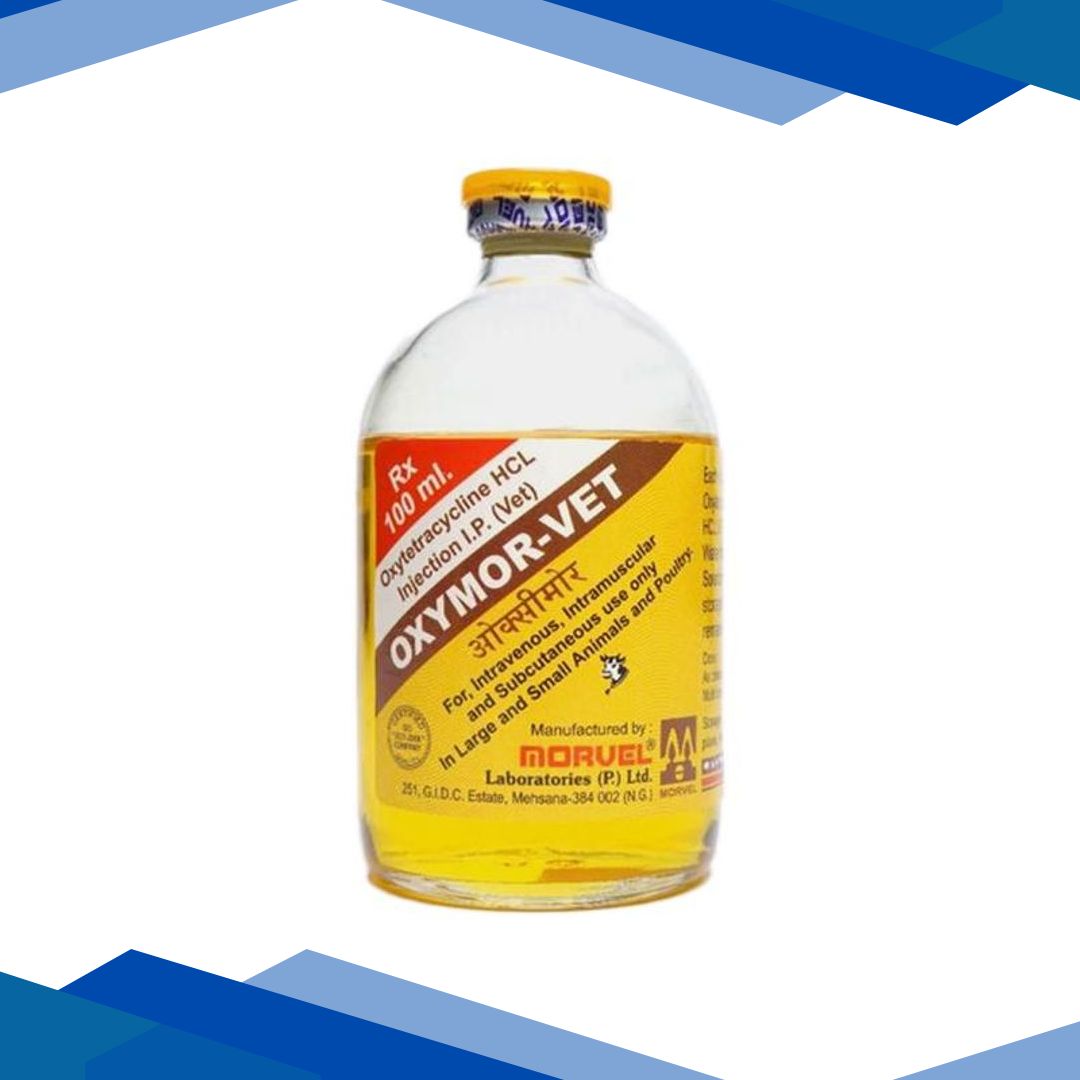
OXYMOR (VET) Injection 100ml
❌ Due to high demand, this product is currently out of stock. New stock will be available shortly.
👉 Click here to Buy Same Salt medicine
OXYMOR (VET) Injection is an antibiotic medicine used to treat certain bacterial infections. It belongs to the tetracycline group and works by stopping bacteria from making the proteins they need to grow and multiply, which helps the body clear the infection. OXYMOR (VET) Injection is commonly used for infections affecting the skin, eyes, respiratory tract, and other parts of the body when the bacteria are sensitive to it. It may also be used in some cases for acne and other specific infections as directed by a healthcare professional. This medicine is not effective against viral illnesses like the common cold or flu. OXYMOR (VET) Injection should be used only under medical supervision to help ensure it is appropriate for the infection being treated.
Description
OXYMOR (VET) Injection is a broad-spectrum antibiotic belonging to the tetracycline class of medicines. it is used to treat a range of bacterial infections caused by susceptible organisms, and it works by stopping bacteria from making the proteins they need to grow and multiply. by interfering with bacterial protein synthesis, OXYMOR (VET) Injection helps control the infection and gives the body’s immune system a better chance to clear it. it is important to understand that this medicine treats bacterial infections only; it does not work against viruses such as those that cause the common cold, flu, or most sore throats.
OXYMOR (VET) Injection is valued because it can act against many different types of bacteria, including certain respiratory, skin, eye, and animal-related infections, depending on the product form and clinical setting. in some regions and formulations, it may also be used in veterinary medicine and in certain topical or ophthalmic preparations. the exact use depends on the strength, dosage form, and the sensitivity of the organism causing the infection. because antibiotic resistance is common in some bacteria, it should be used only when a healthcare professional believes it is appropriate.
mechanistically, OXYMOR (VET) Injection enters bacterial cells and binds to the 30s ribosomal subunit, preventing the attachment of transfer rna needed to build proteins. this action is bacteriostatic, meaning it usually stops bacteria from multiplying rather than directly killing them. over time, this reduction in bacterial growth allows the immune system and the prescribed treatment plan to resolve the infection. like other tetracyclines, it can also affect some non-bacterial targets and may be associated with class-specific adverse effects such as stomach upset, sensitivity to sunlight, and effects on developing teeth and bones in children.
this medicine may be prescribed or recommended for people who have infections that are likely to respond to tetracycline-class antibiotics, or when laboratory testing shows that the causative bacteria are sensitive to it. it is not suitable for every infection, and proper diagnosis matters. people with a history of allergy to tetracyclines, pregnant individuals, young children, or those taking medications that interfere with absorption or increase side effects should discuss safety carefully with a clinician or pharmacist before using it.
ingredients
- OXYMOR (VET) Injection: this is the active antibiotic ingredient. it inhibits bacterial protein synthesis by binding to the bacterial ribosome, which prevents bacteria from growing and spreading. it is the component responsible for the medicine’s therapeutic effect against susceptible infections.
- inactive ingredients/excipients: depending on the manufacturer and dosage form, the product may contain fillers, binders, coatings, preservatives, stabilizers, or solvents. these ingredients do not treat infection but help ensure the medicine is stable, usable, and properly delivered in tablet, capsule, injection, topical, or ophthalmic form. because excipients vary by product, patients with allergies or sensitivities should review the full label.
- formulation-specific components: some OXYMOR (VET) Injection products may include ingredients designed for topical application, eye use, or controlled release. these supporting components affect how the medicine is absorbed or applied, but they are not the active antibacterial agent.
key uses
- bacterial infections of the skin and soft tissues: OXYMOR (VET) Injection may be used for certain susceptible skin infections where the bacteria respond to tetracycline treatment. it can help reduce bacterial load, inflammation, and spread of infection when properly chosen.
- respiratory tract infections: in selected cases, it may be used for bacterial infections affecting the airways or lungs if the causative organism is susceptible. it is not useful for viral bronchitis or influenza.
- eye infections: some ophthalmic forms or clinical uses involve bacterial eye infections caused by organisms sensitive to tetracyclines. proper diagnosis is essential because eye symptoms can have non-bacterial causes that need different treatment.
- certain zoonotic or animal-associated infections: depending on local practice and product availability, OXYMOR (VET) Injection may be used against infections linked to animal exposure or specific bacterial pathogens known to respond to tetracyclines.
- other susceptible bacterial infections: a healthcare professional may choose this medicine for infections confirmed or strongly suspected to be caused by bacteria that are responsive to tetracycline-class antibiotics. use depends on culture results, local resistance patterns, and patient-specific factors.
how to use
OXYMOR (VET) Injection should be used exactly as directed by a healthcare professional or according to the product label if it is an over-the-counter or topical preparation. general oral forms are usually taken with a full glass of water to help reduce irritation of the throat and stomach, and it is often best taken at the same time each day to maintain consistent levels in the body. if the medicine causes stomach upset, a clinician may advise taking it with a small amount of food, but dairy products, calcium-rich foods, antacids, iron, zinc, and magnesium supplements should generally be avoided close to the dose because they can reduce absorption and make the antibiotic less effective.
do not lie down immediately after taking an oral dose, as this can increase the risk of esophageal irritation. complete the full course even if symptoms begin to improve, because stopping early can allow bacteria to regrow and may contribute to antibiotic resistance. for topical or eye preparations, use only as directed, wash hands before and after application, and avoid touching the tip of tubes or dropper containers to any surface to reduce contamination. if you are unsure how to use a specific OXYMOR (VET) Injection product, ask a pharmacist or healthcare professional for clear instructions.
safety information
- warnings: OXYMOR (VET) Injection can cause serious side effects if used incorrectly or in people for whom it is not appropriate. it may irritate the stomach and esophagus, so it should be taken with adequate water and not right before lying down. it can also make the skin more sensitive to sunlight, increasing the risk of sunburn. long or unnecessary use can lead to overgrowth of non-susceptible organisms, including fungi, and can contribute to antibiotic resistance. severe allergic reactions, although uncommon, require immediate medical attention.
- side effects: common side effects include nausea, vomiting, diarrhea, loss of appetite, stomach discomfort, and mild skin sensitivity to sunlight. some people may notice headache or irritation at the application site if using a topical form. serious side effects may include severe diarrhea, signs of liver problems such as yellowing of the skin or eyes, difficulty breathing, swelling of the face or throat, severe rash, blistering, or symptoms of increased pressure in the brain such as severe headache and vision changes. if any serious reaction occurs, seek urgent medical help.
- precautions: people with a known allergy to tetracyclines should avoid OXYMOR (VET) Injection. it is generally not recommended for pregnant individuals unless a healthcare professional determines the benefit outweighs the risk, because tetracycline-class antibiotics can affect fetal bone and tooth development. it is also usually avoided in young children, particularly those under 8 years of age, due to the risk of permanent tooth discoloration and potential effects on bone growth. caution is needed in people with liver disease, kidney disease, swallowing problems, or a history of esophageal irritation.
- pregnancy/breastfeeding: OXYMOR (VET) Injection is generally not preferred during pregnancy because tetracyclines can interfere with the development of teeth and bones in the unborn baby. during breastfeeding, small amounts may pass into breast milk; use should be discussed with a healthcare professional to weigh benefits and risks. a specialist may recommend an alternative antibiotic if appropriate.
- interactions: OXYMOR (VET) Injection can interact with antacids, calcium supplements, iron, zinc, magnesium, bismuth, and some multivitamins, reducing absorption. it may also interact with certain blood thinners, retinoid medicines, and some seizure or antibiotic therapies, depending on the patient’s medication list. alcohol does not usually cause a direct dangerous interaction, but heavy drinking may worsen stomach irritation and interfere with recovery. always provide a full list of prescription drugs, over-the-counter medicines, and herbal products to a healthcare professional.
additional information
- storage: store OXYMOR (VET) Injection exactly as directed on the package label. in general, keep it in a cool, dry place away from moisture, heat, and direct sunlight. do not store it in a bathroom unless the label specifically allows it. keep all medicines out of reach of children and pets. if the product is a liquid, ointment, or eye preparation, check the label for special storage rules and discard it after the recommended period.
- missed dose: if a dose is missed, take it as soon as you remember unless it is almost time for the next dose. in that case, skip the missed dose and return to the regular schedule. do not double up doses to make up for a missed one unless a healthcare professional specifically instructs you to do so. for products used less frequently or topically, follow the label instructions carefully.
- overdose: taking too much OXYMOR (VET) Injection may cause severe nausea, vomiting, dizziness, abdominal pain, or significant irritation of the digestive tract. large overdoses or misuse may also increase the risk of harmful reactions affecting the liver or kidneys. if an overdose is suspected, contact emergency services, a poison center, or a healthcare professional immediately. bring the medicine package with you if seeking urgent care so the product can be identified quickly.
- habit forming: no. OXYMOR (VET) Injection is not considered habit-forming or addictive. however, it must still be used responsibly because unnecessary or improper use can reduce effectiveness, cause side effects, and promote antibiotic-resistant bacteria.
frequently asked questions
Q: what is OXYMOR (VET) Injection used for?
A: OXYMOR (VET) Injection is an antibiotic used to treat certain bacterial infections caused by organisms that are sensitive to tetracycline-class medicines. the exact use depends on the dosage form and the infection being treated.
Q: can OXYMOR (VET) Injection treat viral infections like colds or flu?
A: no. OXYMOR (VET) Injection does not work against viruses. it should only be used for bacterial infections when a healthcare professional recommends it.
Q: should OXYMOR (VET) Injection be taken with food?
A: it may sometimes be taken with a small amount of food if it upsets the stomach, but dairy products and mineral supplements such as calcium, iron, magnesium, and zinc should be avoided near the dose because they can reduce absorption.
Q: why should i avoid lying down after taking OXYMOR (VET) Injection?
A: lying down right after taking it can increase the risk of irritation in the throat or esophagus, which may cause pain, heartburn, or swallowing discomfort. taking it with plenty of water helps lower this risk.
Q: can OXYMOR (VET) Injection cause sun sensitivity?
A: yes. like other tetracycline antibiotics, OXYMOR (VET) Injection can make skin more sensitive to sunlight, which increases the risk of sunburn. limiting sun exposure and using protective clothing or sunscreen may help.
Q: who should avoid OXYMOR (VET) Injection?
A: people allergic to tetracyclines, pregnant individuals unless specifically advised, and young children are often advised to avoid it. people with certain liver or swallowing problems should also use it only with medical supervision.
Q: what happens if i miss a dose?
A: take the missed dose when you remember unless it is almost time for the next dose. if so, skip the missed dose and continue the schedule. do not take two doses at once unless instructed by a healthcare professional.
Q: does OXYMOR (VET) Injection need a prescription?
A: in many settings, yes, because appropriate use depends on the type of infection and local resistance patterns. even when available without a prescription in some forms or regions, medical guidance is still strongly recommended.
Q: can i drink alcohol while using OXYMOR (VET) Injection?
A: moderate alcohol does not usually cause a specific severe interaction, but alcohol can worsen stomach upset and may delay recovery. it is best to ask a healthcare professional for advice based on your situation.
Q: is OXYMOR (VET) Injection safe for children?
A: it is generally avoided in young children, especially under 8 years of age, because tetracycline-class medicines can cause permanent tooth discoloration and may affect bone development. a clinician should choose the safest alternative when possible.
Q: what should i do if i have severe side effects?
A: stop using the medicine and seek urgent medical help if you develop breathing difficulty, swelling, severe rash, blistering, jaundice, severe diarrhea, or signs of an allergic reaction.
Q: how does OXYMOR (VET) Injection work?
A: it blocks bacterial protein production by binding to the 30s ribosomal subunit. this prevents bacteria from growing and multiplying, allowing the body to clear the infection more effectively.
Q: can i take vitamins with OXYMOR (VET) Injection?
A: some vitamins contain minerals such as iron, calcium, magnesium, or zinc that can interfere with absorption. if you need supplements, take them at a different time and ask a pharmacist for the best spacing.
Q: does OXYMOR (VET) Injection cure infection immediately?
A: no. symptoms may improve gradually over time. it is important to complete the full course as directed to reduce the chance of treatment failure or resistance.
Q: what if the medicine upsets my stomach?
A: mild stomach upset can happen. taking the medicine with a small amount of food may help in some cases, but avoid taking it with dairy or mineral supplements close to the dose. if symptoms are severe, contact a healthcare professional.
Q: can OXYMOR (VET) Injection be used for acne?
A: tetracycline-class antibiotics are sometimes used for acne, but whether OXYMOR (VET) Injection is appropriate depends on the product, the patient, and local treatment guidelines. a clinician should determine the best option.
Q: should i stop OXYMOR (VET) Injection when i feel better?
A: no, not unless your healthcare professional tells you to. stopping early can leave bacteria alive and make the infection come back or become harder to treat.
Q: what signs suggest a serious allergic reaction?
A: trouble breathing, swelling of the face or throat, hives, severe dizziness, or rapid worsening rash may signal a serious allergic reaction and require emergency care.
this information is for educational purposes only and should not be considered medical advice. always consult a qualified healthcare professional before use.
At Gem Pharmacy, we make every effort to provide accurate, expert-written, and thoroughly reviewed information related to medicines. However, this information should not be considered a substitute for professional medical advice, diagnosis, or treatment from a qualified doctor.
The purpose of this information is to educate users and improve communication between patients and healthcare professionals. It should not be used to diagnose or treat any condition.
Always consult a certified healthcare professional before taking any medication.


Related products