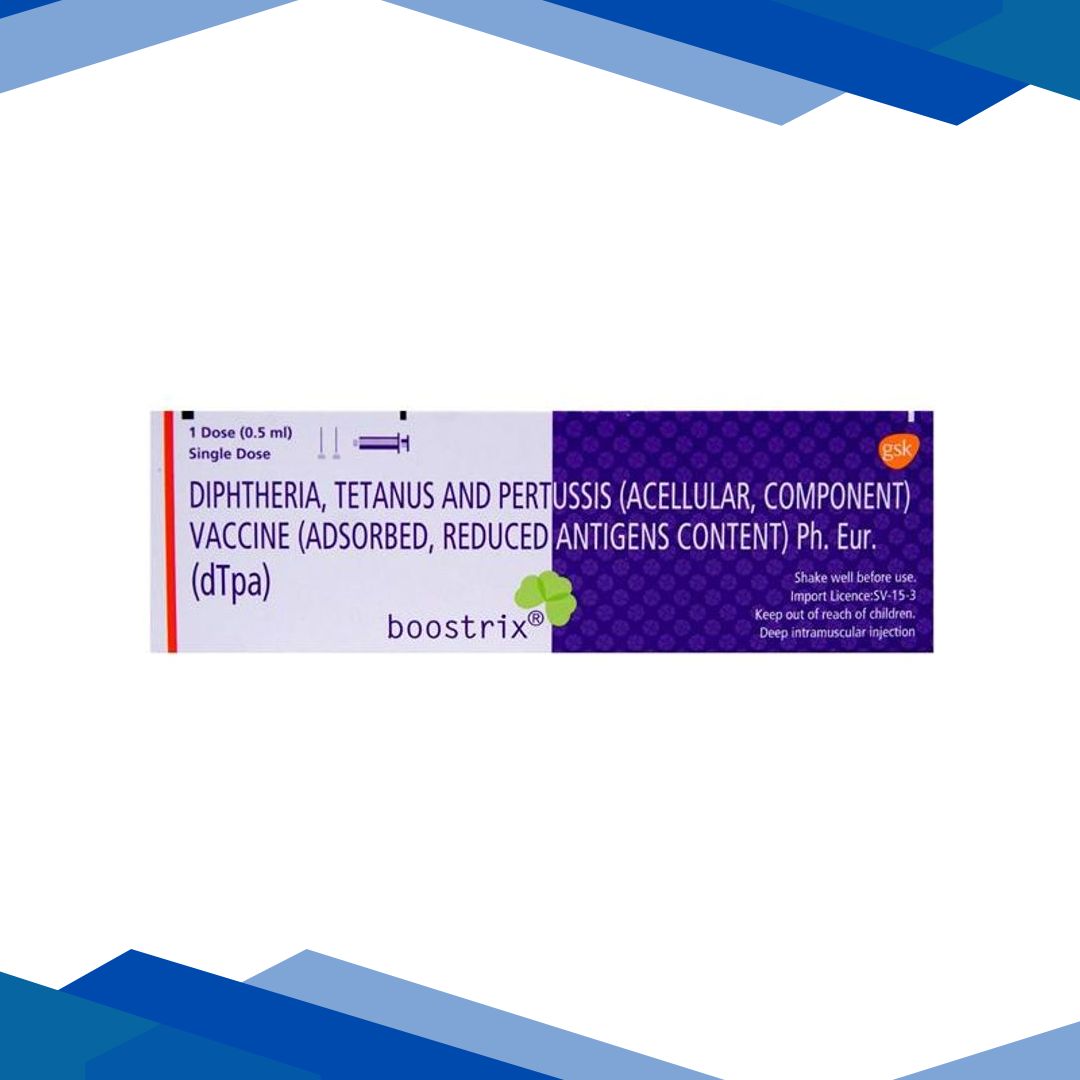
Boostrix Injection 1’s
❌ Due to high demand, this product is currently out of stock. New stock will be available shortly.
👉 Click here to Buy Same Salt medicine
Boostrix Injection is a combination vaccine used to help protect against several serious infections, including diphtheria, Haemophilus influenzae type b (Hib), pertussis (whooping cough), and tetanus. It works by stimulating the body’s immune system to make protective antibodies against these germs or their toxins, so the body can respond more quickly if exposed in the future. This medicine is mainly used for routine immunization, especially in infants and young children, to reduce the risk of severe illness, complications, and spread of infection. It is given under medical supervision as part of a vaccination schedule recommended by healthcare professionals.
Description
Boostrix Injection is a combination immunization product designed to help protect against several serious bacterial infections that can cause severe illness, long-term complications, or even death. it is used in preventive healthcare, especially in infants and young children, to build immunity against diphtheria, tetanus, pertussis (whooping cough), and haemophilus influenzae type b (hib). these infections are most dangerous in early childhood because they can spread quickly and may lead to breathing problems, brain inflammation, paralysis, or life-threatening toxin-related damage.
this medicine works by exposing the immune system to carefully prepared antigens that are not meant to cause disease but are strong enough to stimulate antibody production. the body then learns to recognize these threats and develop immune memory. if the child is later exposed to the real bacteria, the immune system can respond much faster and more effectively, reducing the risk of severe disease. the diphtheria toxoid, pertussis toxoid, and tetanus toxoid components are inactivated toxins or toxin fragments that help the immune system build protection against toxin-mediated illness, while the haemophilus influenzae type b capsular polysaccharide component helps the body defend against invasive hib infection.
depending on the exact formulation and local immunization schedule, this product may be given as part of routine childhood vaccination programs, often in combination with other vaccines to reduce the number of injections needed. it is not used to treat active infection and does not provide immediate protection after a single dose. instead, protection develops over time as the immune system responds to the vaccine series and booster doses, if recommended. a healthcare professional should always determine the correct schedule, because vaccination timing can vary based on age, prior vaccines, health status, and national guidelines.
in some situations, a diphtheria immune globulin component may refer to antibody-based protection used in specific clinical contexts, particularly when rapid passive immunity is needed. however, in combined vaccine-style descriptions, the product name may represent a bundled immunization reference. because vaccine formulations and indications can differ by country and manufacturer, it is important to verify the exact product details with a doctor, pharmacist, or immunization provider before administration.
ingredients
- diphtheria immune globulin: provides antibodies against diphtheria toxin or related antigens, offering immediate passive immune support in some settings. antibody-based protection can be especially useful when a person may already have been exposed or when rapid short-term protection is needed before the body can make its own response.
- haemophilus influenzae type b capsular polysaccharide: the hib capsular polysaccharide is the part of the bacterium that helps the immune system recognize the organism. in vaccines, it is commonly linked to a carrier protein to improve immune response in infants. this helps prevent invasive hib disease such as meningitis, bloodstream infection, epiglottitis, and pneumonia.
- pertussis toxoid: a detoxified form of pertussis toxin that teaches the immune system to recognize and defend against whooping cough. pertussis can lead to prolonged coughing fits, breathing difficulty, vomiting after coughing, and serious complications in babies, including apnea and hospitalization.
- tetanus toxoid: an inactivated tetanus toxin used to stimulate protective antibodies. tetanus is caused by a toxin-producing bacterium that can enter through wounds and cause painful muscle stiffness, jaw locking, spasms, and life-threatening breathing problems. the toxoid helps the body prevent toxin effects if exposure occurs.
- other formulation components: the product may also contain stabilizers, preservatives, buffers, adjuvants, or trace residual substances from manufacturing. these are not active disease-fighting ingredients, but they support product stability, safety, and effectiveness. exact excipients vary by manufacturer and should be checked on the package insert.
key uses
- prevention of diphtheria: helps reduce the risk of diphtheria, a serious throat and airway infection that can produce dangerous toxins and cause heart, nerve, and breathing complications.
- prevention of tetanus: supports immunity against tetanus, a toxin-mediated illness that often follows contaminated wounds and can cause severe muscle rigidity and spasms.
- prevention of pertussis (whooping cough): helps protect against pertussis, which is highly contagious and particularly dangerous for infants because it can cause prolonged coughing attacks and breathing pauses.
- prevention of invasive hib disease: reduces the chance of serious infections caused by haemophilus influenzae type b, including meningitis, bloodstream infection, and severe airway disease.
- routine childhood immunization: used as part of standard pediatric vaccine schedules to build early immunity during the period when children are most vulnerable to these infections.
- booster or catch-up protection when recommended: in some immunization plans, similar antigen combinations are used to maintain immunity or complete missed vaccine series under medical supervision.
how to use
this product should be used only under the direction of a qualified healthcare professional. it is typically administered by injection in a clinic, hospital, or vaccination center by trained personnel. the exact route, number of doses, and timing depend on the specific formulation, the person’s age, prior vaccination history, and the recommended immunization schedule in the region. it should not be self-administered.
before vaccination, the healthcare provider may ask about fever, recent illness, previous vaccine reactions, allergies, seizure history, immune system problems, bleeding disorders, or any neurologic conditions. if the person is moderately or severely ill, vaccination may be delayed until recovery. after administration, the individual may be observed for a short period to monitor for immediate allergic reactions or fainting, which can occur after many injections.
for best protection, the full vaccine series should be completed according to the recommended schedule. missing doses can delay immunity, and incomplete vaccination may leave the child inadequately protected. if a dose is missed, a healthcare provider should be consulted as soon as possible to determine how to resume the series. the spacing between doses is important because the immune system needs proper intervals to develop a strong and lasting response.
safety information
- warnings: serious allergic reactions are rare but possible. seek emergency help immediately if signs such as difficulty breathing, swelling of the face or throat, widespread rash, severe dizziness, or collapse occur. inform the healthcare provider about previous severe reactions to any vaccine or vaccine component. people with a history of neurologic reactions after pertussis-containing vaccines require careful evaluation before receiving another dose.
- side effects: common side effects may include pain, redness, swelling, or tenderness at the injection site, mild fever, irritability, tiredness, decreased appetite, and temporary fussiness in children. less common but more serious effects can include high fever, persistent crying, seizure, severe allergic reaction, unusual weakness, or signs of anaphylaxis. any unusually severe or persistent symptom should be medically assessed.
- precautions: use caution in people with acute moderate or severe illness, a history of strong allergic reactions to vaccines, certain neurologic conditions, uncontrolled seizures, or bleeding problems. in children with compromised immunity, vaccine response may be weaker than usual. if there is a history of a serious reaction after a previous dose, the prescriber must weigh risks and benefits carefully.
- pregnancy/breastfeeding: this product is generally intended for pediatric use, so pregnancy and breastfeeding are usually not relevant for the primary indicated population. if a similar antigen combination is considered for an older patient, it should only be given when clearly indicated by a clinician. immunization decisions in pregnancy or lactation must be individualized and should follow professional guidance.
- interactions: other vaccines are often given according to a schedule, and spacing requirements may apply depending on the products used. tell the healthcare provider about all medicines, vaccines, immune globulins, corticosteroids, chemotherapy, or immunosuppressive treatments, because these may affect vaccine response. alcohol interactions are not usually relevant for children, but adults receiving related immunization products should avoid excessive alcohol if it worsens side effects or general health.
additional information
- storage: store exactly as directed on the product label, commonly in a refrigerator within the recommended temperature range and protected from freezing unless the manufacturer states otherwise. do not use if the vial or syringe has been frozen, discolored, damaged, or expired. keep out of reach of children and do not expose to excessive heat or direct light.
- missed dose: if a scheduled dose is missed, contact a healthcare professional promptly. the series usually does not need to be restarted, but the timing of the next dose should be adjusted based on official immunization guidance. do not double doses unless specifically instructed by a clinician.
- overdose: an overdose is unlikely in the usual sense because the product is administered by healthcare professionals, but giving too much or giving doses too close together may increase side effects such as fever, local pain, or irritability. if an administration error is suspected, seek medical advice immediately and monitor for unexpected reactions.
- habit forming: no. this medicine is not habit-forming and does not cause dependence or addiction. it is an immunization product intended to train the immune system, not a medicine that produces euphoria or repeated-use craving.
frequently asked questions
this information is for educational purposes only and should not be considered medical advice. always consult a qualified healthcare professional before use.
At Gem Pharmacy, we make every effort to provide accurate, expert-written, and thoroughly reviewed information related to medicines. However, this information should not be considered a substitute for professional medical advice, diagnosis, or treatment from a qualified doctor.
The purpose of this information is to educate users and improve communication between patients and healthcare professionals. It should not be used to diagnose or treat any condition.
Always consult a certified healthcare professional before taking any medication.


Related products