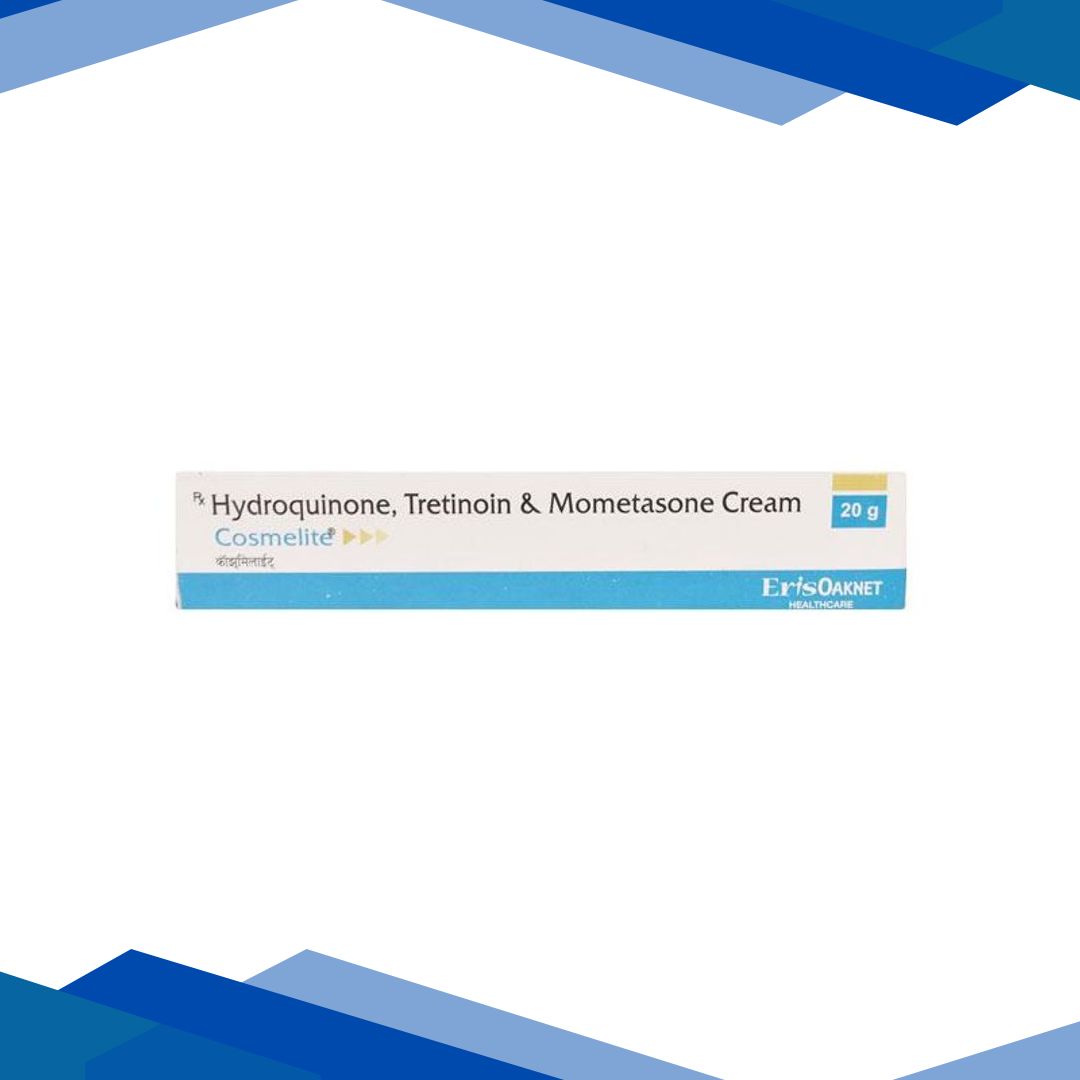
Cosmelite Cream 20gm
Cosmelite Cream is a prescription skin medicine used to help improve dark patches and uneven skin tone, especially in conditions like melasma, freckles, and post-inflammatory hyperpigmentation. It combines three active ingredients that work in different ways: hydroquinone helps reduce excess melanin production, tretinoin speeds up skin cell turnover to help fade pigmentation and improve skin renewal, and allantoin soothes and protects the skin by supporting gentle healing. Together, they may make dark spots appear lighter and the skin look more even over time. This medicine is meant for short-term use under medical supervision, as it can cause skin irritation in some people. It is generally used on areas of hyperpigmentation rather than for general skin whitening.
Description
Cosmelite Cream is a combination topical medicine used mainly for treating certain types of dark patches on the skin, especially melasma and other forms of hyperpigmentation. it is designed to help fade excess pigmentation while also improving the overall appearance and texture of the skin. this combination works best when used exactly as directed by a healthcare professional, because it contains active ingredients that can make the skin more sensitive and may cause irritation if used incorrectly.
each ingredient in Cosmelite Cream plays a different role. hydroquinone helps reduce the formation of melanin, the pigment that gives skin its color, thereby lightening areas that are darker than surrounding skin. tretinoin helps increase skin cell turnover, which allows pigmented skin cells to shed more quickly and helps other ingredients work more effectively. allantoin is included to soothe and protect the skin, helping reduce dryness and irritation that may occur with treatment. together, these ingredients offer a multi-step approach to managing stubborn discoloration.
this medicine is generally used for short-term treatment of visible pigmentation problems under medical supervision. it is not a general skin-lightening product for cosmetic use, and it should not be applied to normal, unpigmented skin unless a clinician specifically advises it. because it can cause irritation, redness, peeling, and increased sun sensitivity, careful use and sun protection are very important. people with sensitive skin, a history of allergic reactions to topical retinoids or bleaching agents, or certain skin conditions should discuss risks and benefits with a dermatologist or other qualified healthcare professional before starting treatment.
Cosmelite Cream is most often prescribed when dark patches are persistent and have not improved enough with basic skin care or sun protection alone. it is particularly useful for pigmentation related to hormonal changes, inflammation, acne marks, or chronic sun exposure when a medical professional believes combination therapy is appropriate. since results are gradual and depend on correct application and consistent use, patients should have realistic expectations and understand that ongoing sun protection is essential to prevent the discoloration from returning.
ingredients
- allantoin: a skin-soothing and skin-conditioning ingredient that helps calm irritation, support skin barrier comfort, and reduce dryness or roughness. in this combination, it helps make the treatment more tolerable, especially since the other active ingredients may cause peeling or redness.
- hydroquinone: a depigmenting agent that works by reducing melanin production in the skin. it helps lighten dark spots, uneven pigmentation, and areas of excess coloration by acting on the process that creates pigment.
- tretinoin: a vitamin a derivative that speeds up skin cell turnover and helps the skin shed pigmented cells more efficiently. it can also improve how well hydroquinone penetrates the skin and may enhance overall treatment effectiveness.
key uses
- melasma: used to help reduce brown or gray-brown patches that commonly appear on the face, often linked to hormones, sunlight, and genetic factors.
- post-inflammatory hyperpigmentation: may help fade dark marks left behind after acne, eczema, irritation, or other skin inflammation.
- uneven skin discoloration: can be prescribed for localized areas of hyperpigmentation when a healthcare professional determines that treatment is appropriate.
- supportive treatment for stubborn pigmentation: often used when simpler measures such as sunscreen and gentle skincare have not been enough to improve skin tone.
how to use
Cosmelite Cream is usually applied to clean, dry skin in a thin layer over the affected area only, not over the entire face or body unless instructed by a clinician. it is commonly used at night because tretinoin can make the skin more sensitive to sunlight. before application, the skin should be washed gently with a mild cleanser and allowed to dry completely; applying it to damp skin may increase irritation. a small amount is generally enough, and more product does not mean faster results. avoid the eyes, lips, nostrils, corners of the nose, open wounds, and irritated or broken skin.
after application, hands should be washed unless the medicine is being used on the hands themselves. during treatment, daily use of broad-spectrum sunscreen and protective clothing is essential, as sun exposure can worsen pigmentation and increase irritation. harsh scrubs, alcohol-based toners, waxing on treated areas, and other irritating skincare products should be avoided unless the prescriber says they are safe. results are usually gradual and may take several weeks to become noticeable. if irritation becomes strong or persistent, a healthcare professional should be consulted rather than increasing use on your own.
safety information
- warnings: this medicine can irritate the skin and increase sensitivity to sunlight. it should be used only on affected areas and only for the duration recommended by a healthcare professional. overuse may cause severe redness, peeling, burning, or worsening discoloration. hydroquinone use should be monitored carefully because prolonged or inappropriate use may lead to undesirable pigmentation changes, including rare but serious ochronosis, which can cause blue-black darkening of the skin.
- side effects: common side effects may include mild burning, stinging, dryness, redness, peeling, itching, or temporary skin tightness. some people may notice increased sensitivity to sun exposure. serious side effects can include severe swelling, blistering, intense irritation, allergic rash, or unusual darkening or lightening of treated skin. if severe reaction signs occur, stop using the product and seek medical advice promptly.
- precautions: people with sensitive skin, eczema, rosacea, active dermatitis, sunburn, or broken skin should be especially cautious. it may not be suitable for individuals with known allergy to any ingredient, those who cannot reliably avoid sun exposure, or those using other irritating skin treatments without medical guidance. do not use on large areas or for longer than instructed.
- pregnancy/breastfeeding: safety in pregnancy should be discussed with a healthcare professional before use, especially because tretinoin and hydroquinone are not generally preferred without medical supervision. during breastfeeding, extra care is needed to avoid application on areas that could come into contact with the infant. a clinician should determine whether the benefit outweighs the potential risk.
- interactions: other topical products that may increase irritation, such as exfoliants, abrasive cleansers, retinoids, benzoyl peroxide, strong acids, or alcohol-based products, may worsen dryness or redness. alcohol does not have a direct medication interaction but may contribute to dehydration and poor skin tolerance in some people. always tell your healthcare professional about all skincare products, prescription medicines, and treatments being used.
additional information
- storage: store at room temperature in a tightly closed container, away from excess heat, moisture, and direct sunlight. do not freeze unless the label specifically says otherwise. keep out of reach of children and pets.
- missed dose: if a dose is missed, apply it when remembered unless it is almost time for the next scheduled application. do not apply extra product to make up for a missed dose, as this may increase irritation without improving results.
- overdose: applying too much can lead to marked redness, burning, peeling, swelling, or discomfort. if excessive application causes severe irritation, wash the area gently with mild cleanser and water, discontinue use, and contact a healthcare professional for advice.
- habit forming: no, this medicine is not habit forming. however, it should still be used carefully and only under medical guidance because improper or prolonged use can cause skin damage or rebound pigmentation issues.
frequently asked questions
Q: what is Cosmelite Cream used for?
A: it is commonly used to treat hyperpigmentation conditions such as melasma and post-inflammatory dark spots by reducing pigment production, increasing skin cell turnover, and soothing irritation.
Q: how long does it take to see results?
A: improvement is usually gradual and may take several weeks of regular use. the exact timeline varies depending on the severity of pigmentation, skin type, and consistent sun protection.
Q: can i use this on my entire face?
A: it is generally applied only to affected dark areas unless a healthcare professional instructs otherwise. using it on normal skin can increase the risk of irritation and uneven lightening.
Q: should i use sunscreen with this medicine?
A: yes. daily broad-spectrum sunscreen is very important because tretinoin can increase sun sensitivity and uv exposure can worsen pigmentation.
Q: can i use makeup after applying it?
A: makeup may usually be used after the product has been absorbed and if the skin is not overly irritated, but it is best to follow your clinician’s advice and use gentle, non-irritating cosmetics.
Q: what if my skin gets very red or burns?
A: mild irritation can happen, but severe redness, burning, swelling, or blistering is not normal. stop using the product and seek medical advice if symptoms are intense or persistent.
Q: can i use other acne or anti-aging products with it?
A: not without guidance. many acne or anti-aging products can increase dryness and irritation when combined with this medicine. ask a healthcare professional before mixing treatments.
Q: is this medicine safe for long-term use?
A: it is generally intended for limited use under medical supervision. long-term or unsupervised use can raise the risk of irritation and other adverse skin changes, so periodic review by a clinician is important.
Q: can it make my skin darker at first?
A: temporary irritation may sometimes make the skin look worse before it improves, and excessive sun exposure can also worsen dark patches. proper use and sun protection are essential.
Q: what should i avoid while using it?
A: avoid excessive sun exposure, tanning beds, harsh scrubs, waxing on treated areas, and irritating skin products unless your healthcare professional says they are safe.
Q: does it work for all types of dark spots?
A: no. it is most appropriate for specific pigment disorders like melasma or post-inflammatory hyperpigmentation. a clinician should confirm whether your condition is likely to respond.
Q: can i stop using it once the spots fade?
A: you should follow the duration advised by your healthcare professional. some pigmentation conditions can return if triggers such as sun exposure or hormonal factors are not controlled.
Q: what happens if i apply more than recommended?
A: using more than directed does not improve results faster and may instead cause irritation, peeling, and inflammation. use only the amount recommended by your prescriber.
Q: can this medicine be used on sensitive skin?
A: it may be difficult for very sensitive skin to tolerate this combination. a healthcare professional should assess whether it is suitable and may recommend a gradual or modified approach.
Q: does it require a prescription?
A: in many places, yes, because it contains active ingredients that should be used with medical supervision. follow local regulations and professional advice.
Q: what if i accidentally apply it near my eyes?
A: rinse the area gently with plenty of water and avoid rubbing. if irritation persists or the product gets into the eye, seek medical advice promptly.
this information is for educational purposes only and should not be considered medical advice. always consult a qualified healthcare professional before use.
At Gem Pharmacy, we make every effort to provide accurate, expert-written, and thoroughly reviewed information related to medicines. However, this information should not be considered a substitute for professional medical advice, diagnosis, or treatment from a qualified doctor.
The purpose of this information is to educate users and improve communication between patients and healthcare professionals. It should not be used to diagnose or treat any condition.
Always consult a certified healthcare professional before taking any medication.


Related products