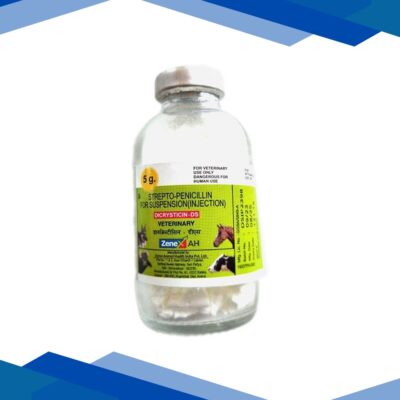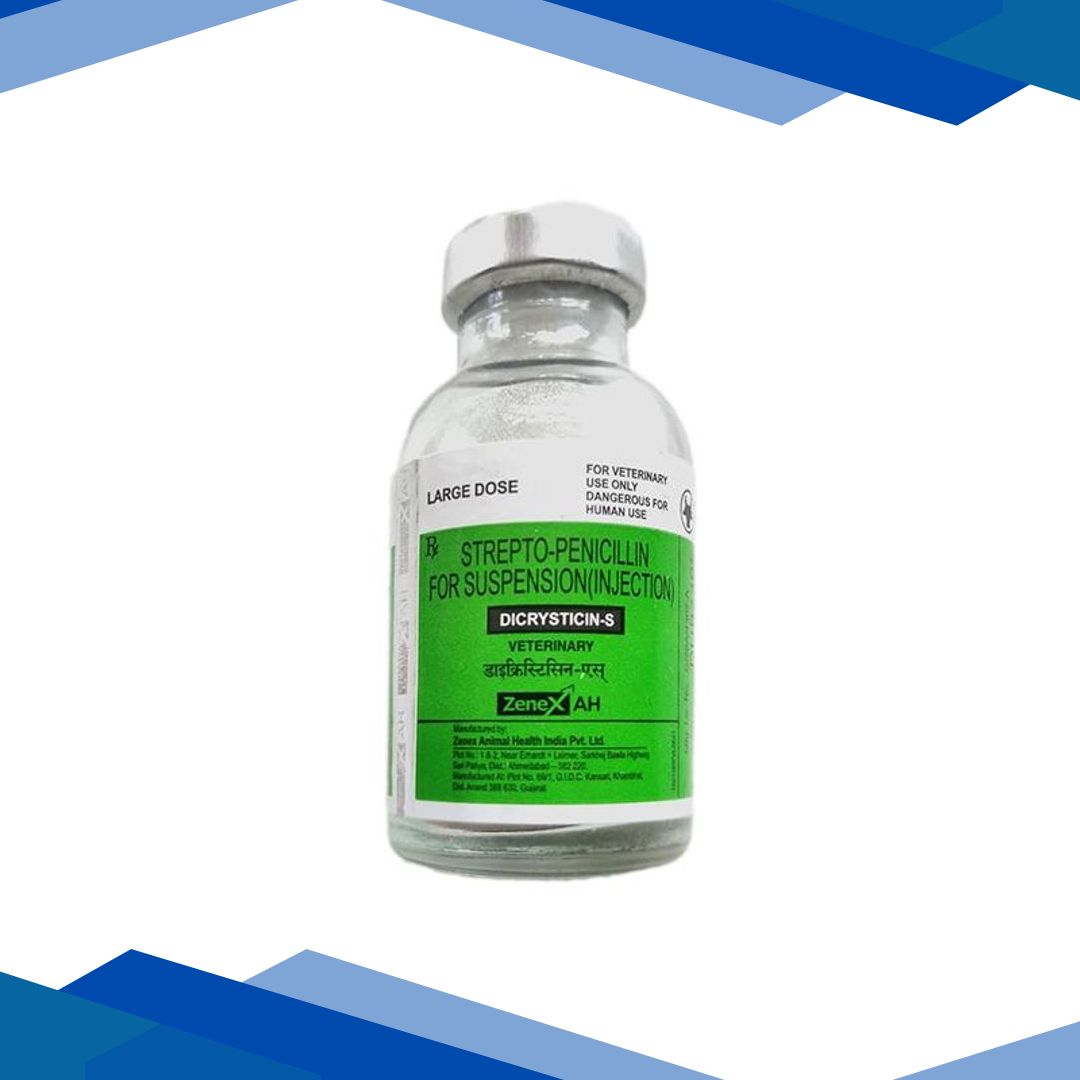
DICRYSTICIN S (VET) Injection 1’s
❌ Due to high demand, this product is currently out of stock. New stock will be available shortly.
👉 Click here to Buy Same Salt medicine
DICRYSTICIN S (VET) Injection is a long-acting antibiotic used to treat and help prevent certain bacterial infections. It belongs to the penicillin group and works by stopping bacteria from building a strong cell wall, which leads to the death of the bacteria. Because it stays in the body for a longer time, it is often used when slow, steady antibiotic action is needed. This medicine is commonly used for conditions such as syphilis, rheumatic fever prevention, and some throat or skin infections caused by penicillin-sensitive bacteria. It should be used under medical supervision, since it is not effective against viral infections and may not be suitable for people with a penicillin allergy.
Description
DICRYSTICIN S (VET) Injection is a long-acting antibiotic belonging to the penicillin family. it is used to treat and prevent certain bacterial infections caused by organisms that are sensitive to penicillin. unlike many oral antibiotics, this medicine is given by injection and is formulated to release slowly over time, which allows it to maintain antibacterial activity in the body for an extended period. because of this prolonged action, it is especially useful when a sustained penicillin level is needed to treat specific infections or to help prevent recurrence of conditions such as rheumatic fever.
this medicine works by interfering with the formation of the bacterial cell wall, which is essential for the survival of many bacteria. when the cell wall is weakened, the bacteria become unstable and eventually die. this makes DICRYSTICIN S (VET) Injection a bactericidal antibiotic, meaning it kills susceptible bacteria rather than merely stopping their growth. its long duration of action is one of its main advantages, but it also means that the medicine is generally administered by a healthcare professional rather than taken at home.
DICRYSTICIN S (VET) Injection is not effective against viral infections such as the common cold, flu, or most sore throats caused by viruses. it is prescribed only when there is a clear medical reason and when the likely bacteria are known or strongly suspected to respond to penicillin. because serious allergic reactions can occur in some people, careful medical assessment is important before treatment. a healthcare professional will decide whether this medicine is appropriate based on the infection being treated, allergy history, and overall health status.
this medicine is commonly used in patients who need reliable, prolonged antibiotic coverage, including those being treated for certain throat infections, skin infections, or specific conditions such as syphilis and rheumatic fever prevention, depending on local medical guidelines. it is important that the injection is given correctly and that the patient is monitored for allergy or other side effects, especially after the first dose. if there is any uncertainty about whether this medicine is suitable, a doctor or pharmacist should be consulted.
ingredients
- DICRYSTICIN S (VET) Injection: this is the active antibiotic ingredient. it belongs to the penicillin group and kills susceptible bacteria by preventing them from building a strong cell wall. the benzathine form makes the medicine long-acting, allowing slow release from the injection site and prolonged antibacterial effect.
- inactive ingredients: depending on the manufacturer, the injection may contain additional excipients such as stabilizers, suspending agents, or solvents that help keep the medication in a usable form and support proper administration. these ingredients do not treat infection but help deliver the active drug safely and effectively.
key uses
- treatment of susceptible bacterial infections: it may be used for infections caused by bacteria known to respond to penicillin, especially when prolonged antibiotic exposure is needed. the choice depends on the organism and clinical setting.
- syphilis treatment: DICRYSTICIN S (VET) Injection is a standard therapy for certain stages of syphilis when prescribed according to established medical guidelines. it is valued for its long action and reliable penicillin exposure.
- prevention of rheumatic fever recurrence: in some patients with a history of rheumatic fever, regular long-acting penicillin injections may be used to reduce the risk of recurrence after streptococcal infections.
- streptococcal infections: it may be used in selected cases of group a streptococcal infection, especially when adherence to oral treatment is a concern or when sustained drug levels are desired.
- other doctor-directed uses: in certain situations, clinicians may choose this medicine for infection control when a long-acting penicillin is preferred. its use should always be based on professional medical judgment and local treatment standards.
how to use
DICRYSTICIN S (VET) Injection is administered as an intramuscular injection by a qualified healthcare professional. it is not typically taken by mouth and should not be self-injected unless specifically instructed and trained by a medical provider. the injection is usually given into a large muscle, such as the buttock or thigh, using the technique recommended for the formulation. because this is a depot preparation designed to release slowly, proper administration is important to ensure effectiveness and reduce the risk of local irritation.
the timing and number of injections depend on the infection being treated, the patient’s age, body size, and medical condition, as well as the reason for use. it is essential to complete the full course or follow the scheduled repeat injections exactly as prescribed, even if symptoms improve early. stopping early or missing doses can reduce effectiveness and may allow the infection to persist or return. if the medicine is being used for prevention, keeping the recommended schedule is especially important.
before each dose, the healthcare professional should review any history of penicillin allergy, asthma, previous severe drug reactions, kidney problems, or other relevant medical issues. patients should remain alert for signs of allergy after the injection, particularly during the first exposure. if severe pain, swelling, rash, breathing difficulty, dizziness, or fainting occurs after receiving the injection, urgent medical attention is required.
safety information
- warnings: DICRYSTICIN S (VET) Injection can cause serious allergic reactions, including anaphylaxis, which may be life-threatening. anyone with a known allergy to penicillin or a history of severe reaction to beta-lactam antibiotics should inform a healthcare professional before use. this medicine must be given by proper intramuscular injection only; incorrect administration can increase pain or cause injury. it is not suitable for viral illnesses and should only be used when bacterial infection is likely or confirmed.
- side effects: common side effects may include pain, tenderness, redness, or swelling at the injection site, mild fever, nausea, or general discomfort. some people may experience rash, itching, headache, or temporary muscle soreness. serious side effects can include severe allergic reaction, wheezing, difficulty breathing, widespread skin rash, blistering, severe diarrhea, blood abnormalities, or neurologic symptoms. any severe or unusual reaction should be reported immediately.
- precautions: use caution in people with a history of penicillin allergy, severe asthma, eczema, kidney disease, or previous drug-induced hypersensitivity. patients with bleeding disorders or those taking blood thinners may have a higher risk of injection-site complications and should be evaluated carefully. extra caution is also needed in infants, frail older adults, and anyone with a history of severe allergic disease. a healthcare professional should determine whether the medicine is appropriate.
- pregnancy/breastfeeding: penicillin antibiotics are generally considered compatible with pregnancy when medically needed, but treatment should always be guided by a clinician. DICRYSTICIN S (VET) Injection may also be used during breastfeeding, as penicillins are usually regarded as low risk for nursing infants. however, breastfed babies should be monitored for diarrhea, rash, or thrush, and the prescribing clinician should be informed if concerns arise.
- interactions: some medicines may interact with penicillins, including certain antibiotics, blood thinners, and drugs that affect kidney clearance. oral contraceptive effectiveness is not strongly reduced by penicillins in most cases, but patients should still discuss contraception concerns with a clinician. alcohol does not have a direct dangerous interaction with this antibiotic, but drinking heavily can worsen dehydration, stomach upset, and recovery from infection. always tell the healthcare provider about all prescription medicines, over-the-counter drugs, and supplements being taken.
additional information
- storage: store the medicine exactly as directed by the manufacturer or healthcare facility. it is usually kept in a controlled environment away from excessive heat, moisture, and direct light. do not freeze unless specifically instructed, and keep all medicines out of reach of children. because this is typically a hospital- or clinic-administered injection, storage and handling are often managed by healthcare staff.
- missed dose: if a scheduled injection is missed, contact the prescribing doctor or clinic as soon as possible. do not try to “double up” on injections or self-administer a replacement dose. the healthcare professional will advise when the next dose should be given based on the treatment plan and how long it has been since the missed dose.
- overdose: an overdose is uncommon because the medicine is usually administered by healthcare professionals. too much may increase the risk of severe side effects, including intense injection-site reactions, neurologic symptoms, or allergic reactions. if overdose is suspected or a person develops serious symptoms such as trouble breathing, collapse, seizures, or marked swelling, emergency medical help should be sought immediately.
- habit forming: no. DICRYSTICIN S (VET) Injection is an antibiotic and is not habit forming. it does not cause dependence or addiction. it should, however, be used only when prescribed appropriately, because unnecessary antibiotic use can contribute to resistance and reduce future treatment effectiveness.
frequently asked questions
Q: what is DICRYSTICIN S (VET) Injection used for?
A: DICRYSTICIN S (VET) Injection is used for selected bacterial infections that respond to penicillin, and it is also commonly used in some cases to treat syphilis and to help prevent recurrent rheumatic fever, depending on medical guidance.
Q: why is DICRYSTICIN S (VET) Injection given by injection?
A: it is given by intramuscular injection because the medicine is designed to release slowly over time. this long-acting effect helps maintain antibiotic levels in the body for an extended period, which is useful for certain infections and prevention strategies.
Q: can DICRYSTICIN S (VET) Injection be taken orally?
A: no. this medicine is not meant to be taken by mouth. it must be administered by a healthcare professional as an injection to work properly and safely.
Q: how quickly does DICRYSTICIN S (VET) Injection work?
A: it begins acting after injection, but because it is long-acting, the full benefit depends on the infection being treated and the individual response. symptom improvement may not be immediate, so the complete prescribed plan should be followed.
Q: what are the most common side effects?
A: the most common side effects include pain or swelling at the injection site, mild fever, nausea, or general discomfort. most side effects are mild, but severe allergy or unusual symptoms require urgent medical attention.
Q: who should not use DICRYSTICIN S (VET) Injection?
A: people with a known allergy to penicillin or a history of severe allergic reaction to similar antibiotics should not use it unless a specialist determines it is safe. anyone with a history of serious drug reactions should inform their doctor before treatment.
Q: is DICRYSTICIN S (VET) Injection safe in pregnancy?
A: it is often considered acceptable during pregnancy when clearly needed, because penicillin antibiotics are commonly used in pregnant patients. still, the decision should be made by a healthcare professional after reviewing the benefits and risks.
Q: can breastfeeding mothers use this medicine?
A: yes, it is generally regarded as compatible with breastfeeding when prescribed. small amounts may pass into breast milk, so the baby should be observed for diarrhea, rash, or oral thrush if treatment is started.
Q: does DICRYSTICIN S (VET) Injection interact with alcohol?
A: there is no major direct interaction with alcohol, but drinking may worsen stomach upset, dehydration, and general recovery from illness. it is usually wiser to limit alcohol while being treated for an infection.
Q: what should i do if i think i am allergic after the injection?
A: seek emergency medical help immediately if you develop rash, swelling, trouble breathing, wheezing, dizziness, or fainting after the injection. severe allergic reactions can progress quickly and require urgent treatment.
Q: can i stop treatment when i feel better?
A: no. treatment should be completed exactly as prescribed, even if symptoms improve early. stopping too soon may allow the infection to return or may not fully protect against recurrence in preventive treatment.
Q: why is this medicine sometimes used for rheumatic fever prevention?
A: it provides long-lasting penicillin levels that help reduce the chance of repeat streptococcal infections, which can trigger rheumatic fever in susceptible patients. the schedule is determined by a clinician based on risk and medical history.
Q: can DICRYSTICIN S (VET) Injection cause diarrhea?
A: yes, diarrhea can occur with antibiotics, including this one. mild diarrhea may resolve on its own, but severe, persistent, or bloody diarrhea should be evaluated promptly because it can indicate a more serious intestinal infection.
Q: is it safe for people with kidney problems?
A: it may still be used in some patients with kidney issues, but extra caution and professional monitoring are important. the healthcare provider will assess whether the medicine is appropriate based on the individual’s condition.
Q: can this medicine treat a viral sore throat or flu?
A: no. it only works against bacteria that are sensitive to penicillin and will not help with viral illnesses such as influenza or the common cold. unnecessary use should be avoided.
this information is for educational purposes only and should not be considered medical advice. always consult a qualified healthcare professional before use.
At Gem Pharmacy, we make every effort to provide accurate, expert-written, and thoroughly reviewed information related to medicines. However, this information should not be considered a substitute for professional medical advice, diagnosis, or treatment from a qualified doctor.
The purpose of this information is to educate users and improve communication between patients and healthcare professionals. It should not be used to diagnose or treat any condition.
Always consult a certified healthcare professional before taking any medication.


Related products