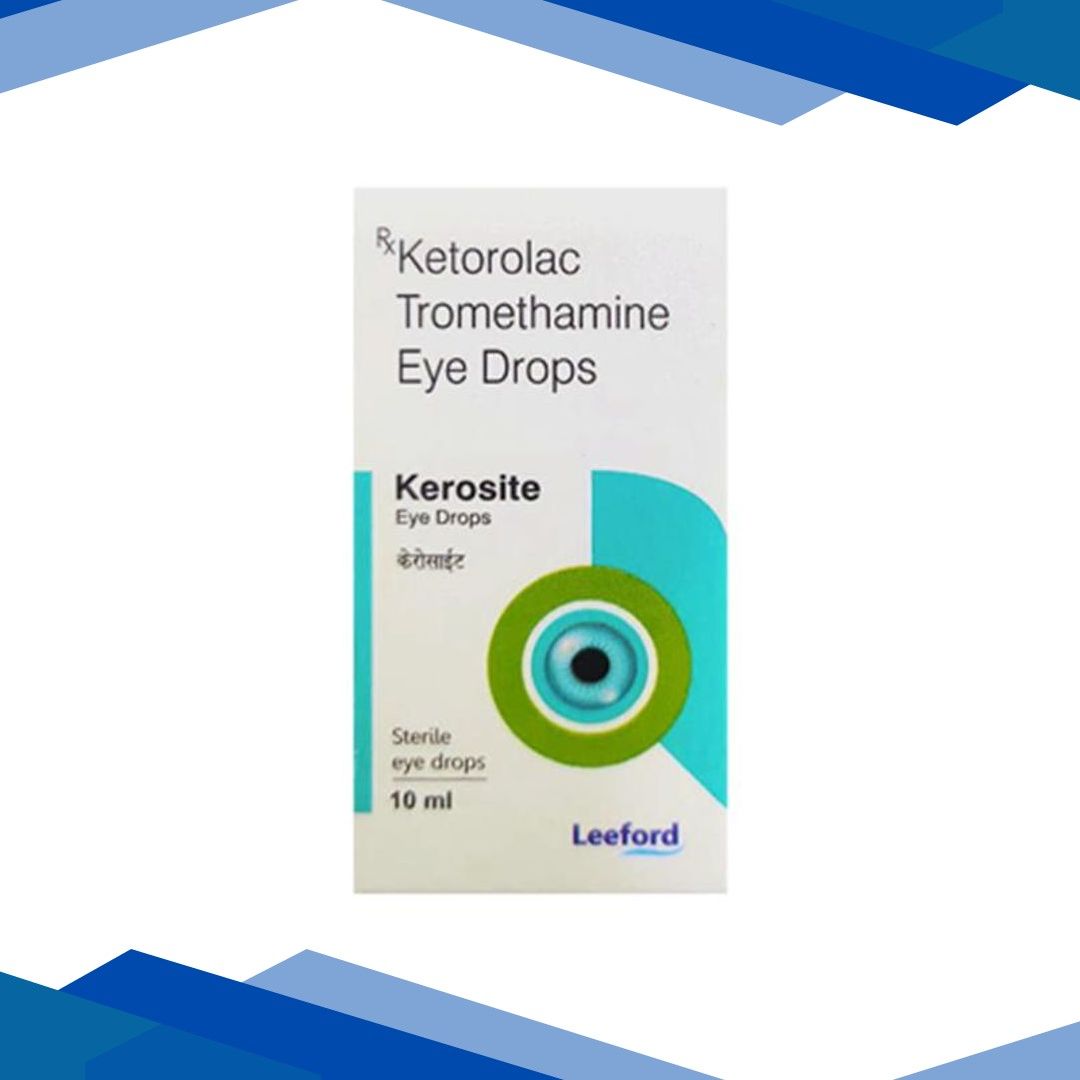
KEROSITE Eye Drops 10ml
KEROSITE Eye Drops is an eye medicine used to relieve allergy-related eye discomfort, especially symptoms such as itching, redness, and irritation. Alcaftadine helps block histamine release in the eye, which reduces the allergic response, while ketorolac is a nonsteroidal anti-inflammatory medicine that helps calm inflammation and ease pain or swelling. Together, they provide relief when eye allergies cause bothersome symptoms and inflammation. This combination is mainly used for allergic conjunctivitis and similar eye irritation due to allergies. It may help make the eyes feel more comfortable and less irritated. As with any eye medicine, it should be used under the guidance of a healthcare professional, especially if symptoms are severe, long-lasting, or if there is vision change or eye pain.
Description
KEROSITE Eye Drops is an ophthalmic medicine used for eye-related allergic and inflammatory conditions, especially when itching, redness, and discomfort need targeted relief. it combines two different active ingredients that work in complementary ways: alcaftadine helps reduce allergy-driven symptoms such as itching, while ketorolac helps decrease inflammation and discomfort in the eye. because it is formulated for eye use, its action is localized to the affected area, which helps provide relief directly where symptoms occur.
this medicine is generally used when eye irritation is linked to allergic reactions or inflammation and a clinician feels that a combination approach may be helpful. the anti-allergic component helps block histamine-related effects that commonly trigger itching and watery eyes, while the anti-inflammatory component reduces the body’s local inflammatory response. together, these effects can make the eyes feel less irritated, less red, and more comfortable. it is important to understand that this medicine is intended to relieve symptoms and not to cure the underlying tendency toward allergies.
KEROSITE Eye Drops should be used only as directed by a healthcare professional, especially because eye symptoms can sometimes be caused by infections, injury, dry eye, glaucoma, or other conditions that need different treatment. if the cause of eye pain, blurred vision, severe swelling, or discharge is uncertain, medical evaluation is essential before starting treatment. people who wear contact lenses, have a history of eye surgery, or have chronic eye disease should be particularly careful and seek guidance before use.
ingredients
- alcaftadine: alcaftadine is an anti-allergy medicine used in the eye to help relieve itching and irritation caused by allergic conjunctivitis. it works mainly by blocking histamine receptors and helping prevent the allergic cascade that leads to symptoms such as itching, tearing, and redness. its role is especially valuable for fast symptom control in allergic eye conditions.
- ketorolac: ketorolac is a nonsteroidal anti-inflammatory drug (nsaid) used in ophthalmic form to reduce inflammation and pain-related eye discomfort. it helps lower the production of substances involved in inflammation, which may reduce redness, swelling, and irritation. in eye care, ketorolac is commonly used when inflammation contributes to symptoms or after certain eye procedures under medical supervision.
- inactive ingredients: the formulation may also contain preservatives, stabilizers, solvents, and buffering agents that help maintain the safety, comfort, and shelf stability of the eye drops. these ingredients do not provide the therapeutic effect but are important for product performance and proper dosing.
key uses
- relief of allergic eye itching: the combination helps reduce itching caused by seasonal or environmental allergies, making the eyes feel calmer and less irritated.
- reduction of redness and irritation: by addressing both allergy and inflammation, it may help lessen visible redness and the uncomfortable burning or gritty sensation in the eyes.
- supportive treatment of allergic conjunctivitis: it is used for eye allergy symptoms where histamine-driven itching and inflammatory discomfort are both present.
- management of inflammation-related eye discomfort: ketorolac may help reduce inflammatory symptoms when a clinician considers an nsaid-based eye treatment appropriate.
- post-procedure or clinician-directed eye inflammation control: in some cases, ophthalmic anti-inflammatory therapy may be used around eye procedures, but this should only be done under direct medical advice.
how to use
KEROSITE Eye Drops should be used exactly as instructed by your doctor or eye specialist. because this is an eye medicine, proper technique matters: wash your hands before applying it, avoid touching the dropper tip to any surface, and keep the bottle closed when not in use. if you wear contact lenses, ask your healthcare professional whether they should be removed before use and when they can be reinserted, since some eye drops can interact with lenses or irritate the eye surface.
to apply eye drops, tilt your head back, gently pull down the lower eyelid to create a small pocket, and place the prescribed number of drops into that pocket. then close your eyes gently for a short time without blinking forcefully or rubbing the eyes. if another eye medicine is being used, spacing the drops apart may be recommended so the medicines do not wash each other out. use the drops only in the eye(s) directed by your clinician, and do not use more often than advised, since overuse may increase irritation or side effects.
for the best results, use the medicine consistently as directed, even if symptoms improve early. if symptoms persist, worsen, or are accompanied by pain, light sensitivity, discharge, or vision changes, stop self-managing and seek medical care. eye symptoms can overlap with infections and other eye disorders, and the correct diagnosis is important for safe treatment.
safety information
- warnings: this medicine should not be used if you are allergic to alcaftadine, ketorolac, aspirin, or other nsaids, unless a doctor specifically says it is safe. eye pain, sudden vision loss, severe redness, thick discharge, or injury-related symptoms require urgent evaluation because these may indicate conditions that need different treatment. ketorolac-containing eye medicines may also irritate the eye surface in some people, especially if the eye is already dry or sensitive. do not share eye drops with others, and do not use a contaminated bottle.
- side effects: common side effects can include temporary stinging or burning after instillation, mild eye irritation, watery eyes, itching, redness, or a brief blurred vision. less common but more concerning effects may include swelling of the eyelids, increased eye discomfort, worsening redness, eye pain, sensitivity to light, or signs of an allergic reaction. rarely, nsaid eye drops can contribute to corneal problems, especially in people with underlying eye surface disease or after certain eye surgeries.
- precautions: use caution if you have a history of dry eye, corneal disease, recent eye surgery, bleeding disorders, asthma triggered by nsaids, or sensitivity to aspirin. children, older adults, and people with multiple eye conditions should use it only under professional supervision. if your symptoms are not clearly due to allergy or inflammation, a proper eye examination is important before treatment.
- pregnancy/breastfeeding: safety in pregnancy and breastfeeding should be discussed with a healthcare professional before use. although eye drops usually have lower whole-body exposure than oral medicines, ketorolac is an nsaid and may still require caution, especially in pregnancy. during breastfeeding, medical guidance is recommended to weigh benefits and risks.
- interactions: tell your doctor about all medicines you use, especially other eye drops, topical steroids, anticoagulants, antiplatelet drugs, aspirin, oral nsaids, and medicines that may affect bleeding or healing. alcohol does not directly interact with eye drops in the same way as oral medicines, but excessive alcohol use may worsen dehydration and eye irritation in some people. using multiple eye medicines without spacing them properly can reduce effectiveness or increase irritation.
additional information
- storage: store the bottle as directed on the product label, usually at room temperature away from excessive heat, moisture, and direct sunlight. keep it tightly closed and out of reach of children. do not freeze unless the packaging specifically says it is safe to do so. discard the bottle if the solution changes color, becomes cloudy, or has passed its expiration date.
- missed dose: if you miss a dose, use it when you remember unless it is almost time for the next scheduled dose. do not double up to make up for a missed dose unless your healthcare professional tells you to do so. if you are unsure, follow the dosing schedule provided by your doctor or pharmacist.
- overdose: an eye-drop overdose usually means using too many drops or applying them too often. this may increase irritation, burning, redness, or tearing. if excessive use occurs, rinse the eye with clean water or saline if advised, and contact a healthcare professional for guidance. if the medicine is swallowed accidentally or if severe symptoms occur, seek medical advice promptly.
- habit forming: no. KEROSITE Eye Drops is not known to cause dependence or addiction. however, it should still be used only as prescribed because unnecessary or prolonged use may increase the risk of side effects or mask another eye problem.
frequently asked questions
Q: what is KEROSITE Eye Drops used for?
A: it is used to help relieve allergic eye itching, redness, irritation, and other inflammation-related eye discomfort under medical guidance.
Q: how quickly does KEROSITE Eye Drops work?
A: some people may notice relief relatively soon after use, but the exact response can vary depending on the cause of symptoms and individual sensitivity.
Q: can i wear contact lenses while using this medicine?
A: you should ask your healthcare professional. contact lenses may need to be removed before using eye drops and reinserted later, depending on the product and your eye condition.
Q: what should i do if the drops sting?
A: mild temporary stinging can happen. if burning is severe, persistent, or gets worse each time you use it, contact a healthcare professional.
Q: can i use KEROSITE Eye Drops with other eye drops?
A: yes, sometimes it can be used with other eye medicines, but spacing them apart may be necessary. follow your doctor’s instructions to avoid washing out one medication with another.
Q: is this medicine safe for long-term use?
A: it should be used only for the duration recommended by your doctor. long-term use without supervision is not advisable because eye nsaids may increase the risk of irritation or corneal complications in some patients.
Q: can this medicine treat an eye infection?
A: no. it is not an antibiotic or antiviral medicine. if you have pus, thick discharge, fever, worsening pain, or vision changes, seek medical care because an infection may be present.
Q: what if my symptoms do not improve?
A: if symptoms persist, worsen, or recur frequently, consult an eye specialist. the underlying cause may need a different diagnosis or treatment plan.
Q: can children use this medicine?
A: use in children should be determined by a qualified healthcare professional. pediatric eye symptoms should not be treated without proper assessment.
Q: should i stop using it if my eyes feel better?
A: only stop or continue based on your doctor’s instructions. some treatments are meant for a defined course, and stopping too early may bring symptoms back.
this information is for educational purposes only and should not be considered medical advice. always consult a qualified healthcare professional before use.
At Gem Pharmacy, we make every effort to provide accurate, expert-written, and thoroughly reviewed information related to medicines. However, this information should not be considered a substitute for professional medical advice, diagnosis, or treatment from a qualified doctor.
The purpose of this information is to educate users and improve communication between patients and healthcare professionals. It should not be used to diagnose or treat any condition.
Always consult a certified healthcare professional before taking any medication.


Related products
Dentaforce DT 10mg Tablet 10’S