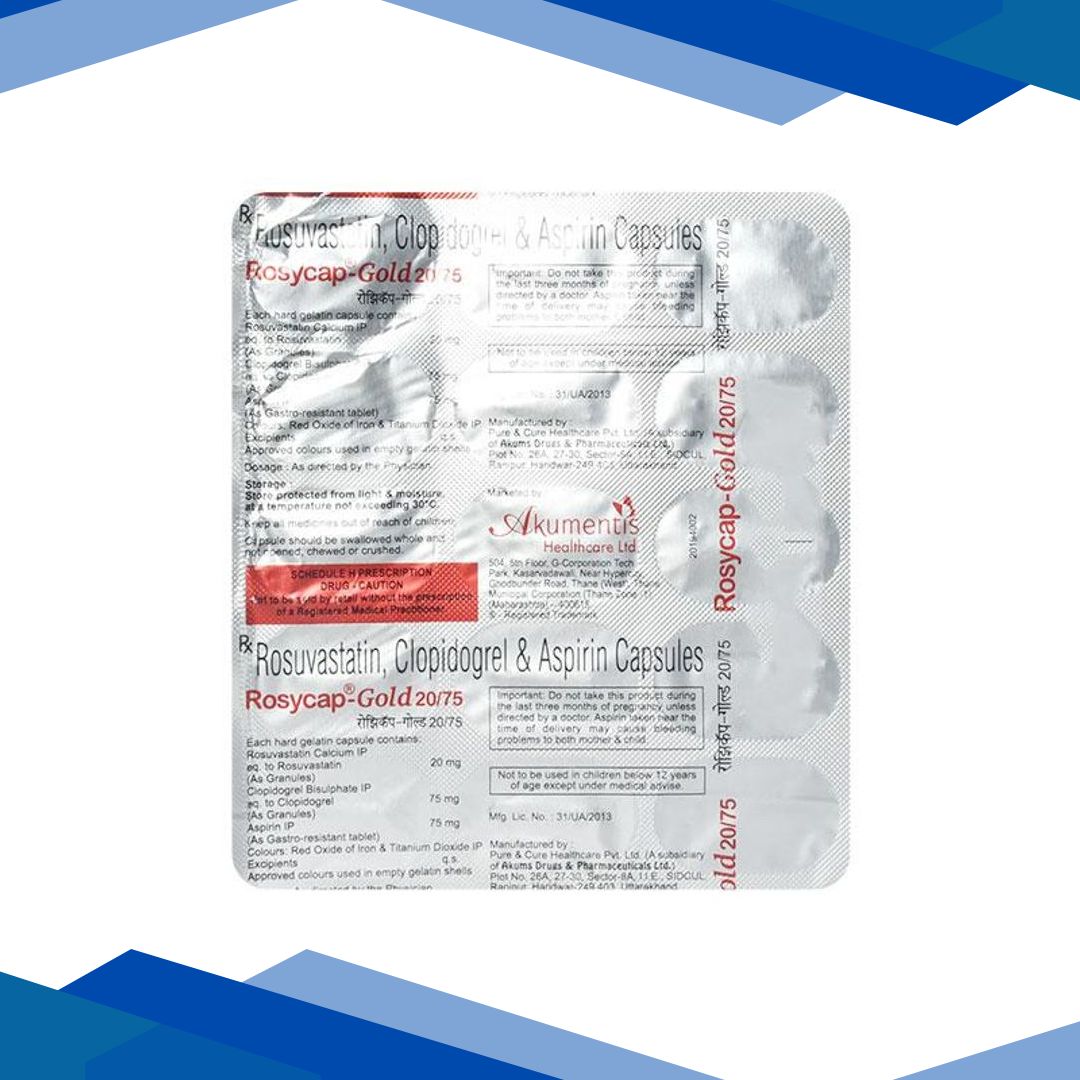
ROSYCAP GOLD 20/75 Capsule 15’s
ROSYCAP GOLD 20/75 Capsule is a combination medicine used to help protect the heart and blood vessels in people at risk of cardiovascular problems. It contains two antiplatelet medicines, acetylsalicylic acid and clopidogrel, which work together to reduce the ability of platelets to clump and form harmful blood clots. It also contains rosuvastatin, a statin that lowers bad cholesterol and helps slow the buildup of fatty deposits in the arteries. This medicine is commonly used in patients with conditions such as coronary artery disease, after a heart attack or stent placement, or in those who need stronger protection against stroke or heart-related events. It should be used under medical supervision because it may increase the risk of bleeding and needs to be matched to the patient’s health condition.
Description
ROSYCAP GOLD 20/75 Capsule is a combination medicine used to lower the risk of serious cardiovascular events in people who need broad protection against blood clot formation and high cholesterol-related artery damage. it brings together three well-known medicines with different but complementary actions: acetylsalicylic acid helps prevent platelets from sticking together, clopidogrel further reduces platelet aggregation, and rosuvastatin lowers harmful cholesterol and helps stabilize fatty deposits in the arteries. this combination is commonly considered when a patient has a significant risk of heart attack, stroke, or other complications caused by narrowed or blocked blood vessels.
the anti-clotting components work by making blood less likely to form dangerous clots inside arteries. acetylsalicylic acid, a form of aspirin, blocks an enzyme involved in clot-promoting substances, while clopidogrel blocks a specific platelet receptor called p2y12. using both together can provide stronger antiplatelet protection than either one alone in selected patients, especially when the risk of artery blockage is high. rosuvastatin works in a different way: it reduces the liver’s production of cholesterol, especially low-density lipoprotein (ldl), often called “bad cholesterol.” lowering ldl helps slow the buildup of plaque and may reduce inflammation in the blood vessel wall.
this medicine is generally intended for patients who have cardiovascular disease, have had a heart attack or stroke, or are at high risk of these events because of conditions such as diabetes, smoking, hypertension, or established atherosclerosis. it is not a routine pain reliever or general cholesterol tablet. because it affects both clotting and cholesterol, it must be used carefully and only under the guidance of a healthcare professional, especially in people with bleeding risk, liver problems, stomach ulcers, or a history of allergy to any of the components.
as with any combination medicine, the benefit depends on the right patient, the right timing, and ongoing monitoring. some people may experience fewer cardiovascular events when taking this type of therapy, but it also carries important safety considerations, particularly bleeding risk from the antiplatelet drugs and muscle or liver-related concerns from rosuvastatin. regular follow-up with a clinician is often needed to assess response, check for side effects, and review whether the treatment remains appropriate over time.
ingredients
- acetylsalicylic acid: this ingredient is an antiplatelet agent that helps prevent blood clots by reducing the production of thromboxane, a substance that makes platelets stick together. in cardiovascular care, its main benefit is lowering the chance of clot-related events such as heart attack and ischemic stroke. it is not the same as a simple painkiller when used in this setting; rather, it is used in a low-dose, preventive role under medical guidance.
- clopidogrel: clopidogrel is another antiplatelet medicine that works by blocking the p2y12 receptor on platelets. this reduces platelet activation and aggregation, helping keep arteries from becoming blocked by clots. it is especially valuable in patients with coronary artery disease, after certain procedures, or in those who have already had vascular events and need stronger clot prevention.
- rosuvastatin: rosuvastatin is a statin medication that lowers ldl cholesterol and triglycerides while modestly increasing hdl cholesterol in some people. beyond cholesterol reduction, it helps stabilize plaque in the arteries and may reduce the inflammatory activity within blood vessels. this contributes to long-term cardiovascular protection and lowers the likelihood of future artery-related events.
key uses
- prevention of heart attack: the combination helps reduce the risk of clot-related blockage in coronary arteries, especially in people with known heart disease or multiple risk factors.
- prevention of ischemic stroke: by lowering platelet aggregation and improving lipid control, it can help reduce the chance of a clot reaching the brain and causing stroke.
- secondary prevention after cardiovascular events: it may be used in patients who have already had a heart attack, angioplasty, stent placement, or certain vascular events to help prevent recurrence.
- management of atherosclerotic cardiovascular risk: rosuvastatin lowers ldl cholesterol and helps slow plaque progression, while the antiplatelet agents reduce the likelihood of plaque-related clot formation.
- comprehensive vascular protection in selected high-risk patients: in carefully chosen patients, the combination offers both cholesterol control and clot prevention, addressing two major pathways of cardiovascular disease.
how to use
ROSYCAP GOLD 20/75 Capsule should be used exactly as directed by a healthcare professional. it is usually taken by mouth, and many patients are advised to take it consistently at the same time each day so the medicine remains effective and adherence is easier. it may be taken with or without food, though taking it with food can sometimes help reduce stomach irritation caused by acetylsalicylic acid. the tablet or capsule should generally be swallowed whole unless the product label or your doctor specifically says otherwise.
because this medicine combines blood-thinning and cholesterol-lowering effects, it is not appropriate for self-starting based on symptoms alone. your doctor may recommend it based on your cardiovascular history, blood tests, and overall risk profile. do not stop it suddenly without medical advice, especially if it has been prescribed to protect a stent or after a recent cardiovascular event, because stopping antiplatelet therapy prematurely can increase the risk of clot formation.
while taking this medicine, it is often important to follow heart-healthy habits such as maintaining a balanced diet, reducing smoking, staying physically active as advised, and controlling blood pressure and diabetes. your clinician may also monitor cholesterol levels, liver function, kidney function, and signs of bleeding or muscle-related side effects to ensure the treatment is safe and effective for you.
safety information
- warnings: this medicine increases the risk of bleeding because both acetylsalicylic acid and clopidogrel reduce platelet function. warning signs include unusual bruising, nosebleeds that are hard to stop, black or tarry stools, blood in vomit, pink or red urine, severe weakness, or sudden severe headache. seek urgent care if you notice symptoms of major bleeding, allergic reaction, or signs of stroke or heart attack. rosuvastatin can, in rare cases, contribute to muscle injury or liver problems, so unexplained muscle pain, tenderness, weakness, dark urine, yellowing of the skin, or severe fatigue should be reported promptly.
- side effects: common side effects may include stomach upset, indigestion, abdominal discomfort, mild nausea, diarrhea, headache, dizziness, easy bruising, or minor nosebleeds. less common but serious effects include gastrointestinal bleeding, bleeding in the brain, severe allergic reactions, severe skin reactions, liver enzyme elevation, and muscle breakdown (rhabdomyolysis) associated with statin therapy.
- precautions: use with great caution in people with a history of stomach ulcers, gastrointestinal bleeding, bleeding disorders, recent surgery, uncontrolled high blood pressure, severe liver disease, severe kidney disease, asthma triggered by aspirin or nsaids, or prior allergy to aspirin, clopidogrel, or statins. people who are elderly, underweight, or taking multiple medicines may need closer monitoring because bleeding and statin-related side effects can be more likely. tell your doctor if you have planned surgery or dental procedures, as temporary interruption may be needed in some cases.
- pregnancy/breastfeeding: this medicine is generally not recommended during pregnancy unless a physician determines that the benefit clearly outweighs the risk. acetylsalicylic acid and clopidogrel may increase bleeding risk, and rosuvastatin is typically avoided in pregnancy because cholesterol synthesis is important for fetal development. breastfeeding safety also requires medical review; a healthcare professional should decide whether this medicine is appropriate or whether an alternative is better.
- interactions: this medicine may interact with other blood thinners such as warfarin, heparin, direct oral anticoagulants, and other antiplatelet drugs, increasing bleeding risk. nsaids such as ibuprofen or naproxen can raise the risk of stomach bleeding and may interfere with aspirin’s antiplatelet effect if used improperly. some antidepressants, corticosteroids, alcohol, and certain herbal supplements such as ginkgo, garlic, or high-dose fish oil may also increase bleeding tendency. rosuvastatin may interact with certain cholesterol medicines, some antivirals, cyclosporine, and other drugs that increase statin concentration. always inform your doctor and pharmacist about all prescription medicines, over-the-counter products, and supplements you use.
additional information
- storage: store in a cool, dry place away from direct sunlight, moisture, and excessive heat. keep the medicine in its original container if possible and out of reach of children and pets. do not use it after the expiration date, and follow any storage instructions on the package.
- missed dose: if you miss a dose, take it when you remember unless it is almost time for your next dose. do not double the dose to make up for a missed one. if you are unsure what to do after a missed dose, ask your pharmacist or doctor for guidance, especially if you use the medicine for a recent stent or after a cardiovascular event.
- overdose: an overdose may cause severe bleeding, ringing in the ears, dizziness, vomiting, fast breathing, confusion, extreme weakness, or signs of liver or muscle injury. a serious overdose is a medical emergency. call emergency services or a poison control center immediately and seek urgent medical care. do not wait for symptoms to become severe.
- habit forming: no. this medicine is not habit forming or addictive. however, it should not be stopped abruptly without medical supervision because sudden interruption of antiplatelet therapy can raise the risk of dangerous clot-related events.
frequently asked questions
Q: what is ROSYCAP GOLD 20/75 Capsule used for?
A: it is used to lower the risk of heart attack, stroke, and other clot-related cardiovascular problems in patients who need both antiplatelet protection and cholesterol lowering. it is generally prescribed for people with established cardiovascular disease or high risk after careful medical evaluation.
Q: how does this medicine work in the body?
A: it works in three ways: acetylsalicylic acid reduces platelet activation, clopidogrel blocks a platelet receptor to prevent clots, and rosuvastatin lowers ldl cholesterol and helps stabilize plaque in the arteries. together, these actions help reduce the risk of artery blockage.
Q: can i take this medicine with food?
A: yes, it is often taken with or without food, but taking it with food may help reduce stomach irritation in some people. follow the instructions provided with your specific product or those given by your healthcare professional.
Q: what are the most important side effects to watch for?
A: the most important concerns are bleeding and, less commonly, muscle or liver-related problems from rosuvastatin. watch for black stools, vomiting blood, unusual bruising, severe weakness, muscle pain, dark urine, or yellowing of the skin, and seek medical attention if they occur.
Q: is this medicine safe for people with stomach ulcers?
A: it may not be suitable or may require extra caution in people with active or past stomach ulcers because acetylsalicylic acid and clopidogrel can increase the risk of gastrointestinal bleeding. a doctor should decide whether the benefit outweighs the risk and whether stomach protection is needed.
Q: can i stop taking it once i feel better?
A: no, not unless your doctor tells you to. this medicine is often used for prevention, so you may not feel a direct effect. stopping suddenly can increase the risk of heart attack or stroke in some patients, especially after a recent vascular event or stent placement.
Q: does this medicine lower cholesterol right away?
A: rosuvastatin begins working fairly soon, but the full cholesterol-lowering effect is usually seen after continued use over time. blood test monitoring is often needed to assess how well it is working.
Q: can i drink alcohol while taking this medicine?
A: alcohol should be limited, because it can increase stomach irritation and bleeding risk and may also affect liver health, especially when combined with rosuvastatin. ask your doctor about safe alcohol intake for your situation.
Q: why might my doctor choose this combination instead of separate medicines?
A: a combination product can simplify treatment and help improve adherence by putting three important cardiovascular therapies into one regimen. it may be chosen when a patient clearly benefits from all three components and the doctor wants a streamlined approach.
Q: what should i do before surgery or dental work?
A: tell your surgeon, dentist, or prescribing doctor well in advance. because this medicine affects clotting, you may need a plan for temporary interruption or special precautions to reduce bleeding risk. never stop it on your own without medical advice.
Q: is ROSYCAP GOLD 20/75 Capsule the same as a painkiller?
A: no. although acetylsalicylic acid can relieve pain in other contexts, this combination is primarily used for cardiovascular protection rather than pain control. it should not be used as a general pain medicine unless specifically advised by a healthcare professional.
Q: who should not take this medicine?
A: people with active bleeding, aspirin allergy, severe liver disease, certain bleeding disorders, or a history of serious reaction to any component may not be suitable candidates. pregnant individuals and those with high bleeding risk should only use it if a clinician determines it is necessary.
Q: how long do i need to take it?
A: the duration depends on your medical condition, risk factors, and treatment goals. some patients need it long term, while others may use it for a specific period after a procedure or event. only your doctor can determine the right duration.
Q: can this medicine cause muscle pain?
A: yes, rosuvastatin can sometimes cause muscle aches or weakness. mild muscle discomfort should be reported, and severe muscle pain, weakness, or dark urine needs urgent medical evaluation because it could indicate a rare but serious muscle injury.
Q: what if i notice unusual bruising?
A: unusual bruising can be a sign that the antiplatelet medicines are affecting clotting more than expected. contact your healthcare provider, especially if bruising is frequent, severe, or accompanied by nosebleeds, bleeding gums, or blood in stool or urine.
Q: should i avoid any foods while taking it?
A: there is no major food restriction specific to this combination, but a heart-healthy diet is strongly recommended. limiting very fatty foods, excessive alcohol, and unsafe supplements can support treatment and reduce risk.
Q: can this medicine be used after a stent?
A: it may be considered in some patients after stent placement because antiplatelet therapy is important to prevent stent thrombosis. however, the exact regimen and duration must be determined by the cardiologist based on the type of stent and bleeding risk.
Q: will it affect my blood pressure?
A: this medicine is not primarily a blood pressure medicine. however, by reducing cardiovascular risk overall, it may complement other treatments that directly control blood pressure. blood pressure still needs to be managed separately if elevated.
Q: do i need blood tests while taking it?
A: many patients need periodic monitoring, including cholesterol tests and sometimes liver function tests, and others may need assessment for bleeding or muscle symptoms. your doctor will decide which tests are appropriate for you.
Q: can i take ibuprofen with this medicine?
A: ibuprofen and similar nsaids can increase the risk of bleeding and stomach irritation, and they may interfere with aspirin’s antiplatelet effect. do not combine them regularly without medical advice; ask your pharmacist or doctor for a safer option if needed.
this information is for educational purposes only and should not be considered medical advice. always consult a qualified healthcare professional before use.
At Gem Pharmacy, we make every effort to provide accurate, expert-written, and thoroughly reviewed information related to medicines. However, this information should not be considered a substitute for professional medical advice, diagnosis, or treatment from a qualified doctor.
The purpose of this information is to educate users and improve communication between patients and healthcare professionals. It should not be used to diagnose or treat any condition.
Always consult a certified healthcare professional before taking any medication.


Related products