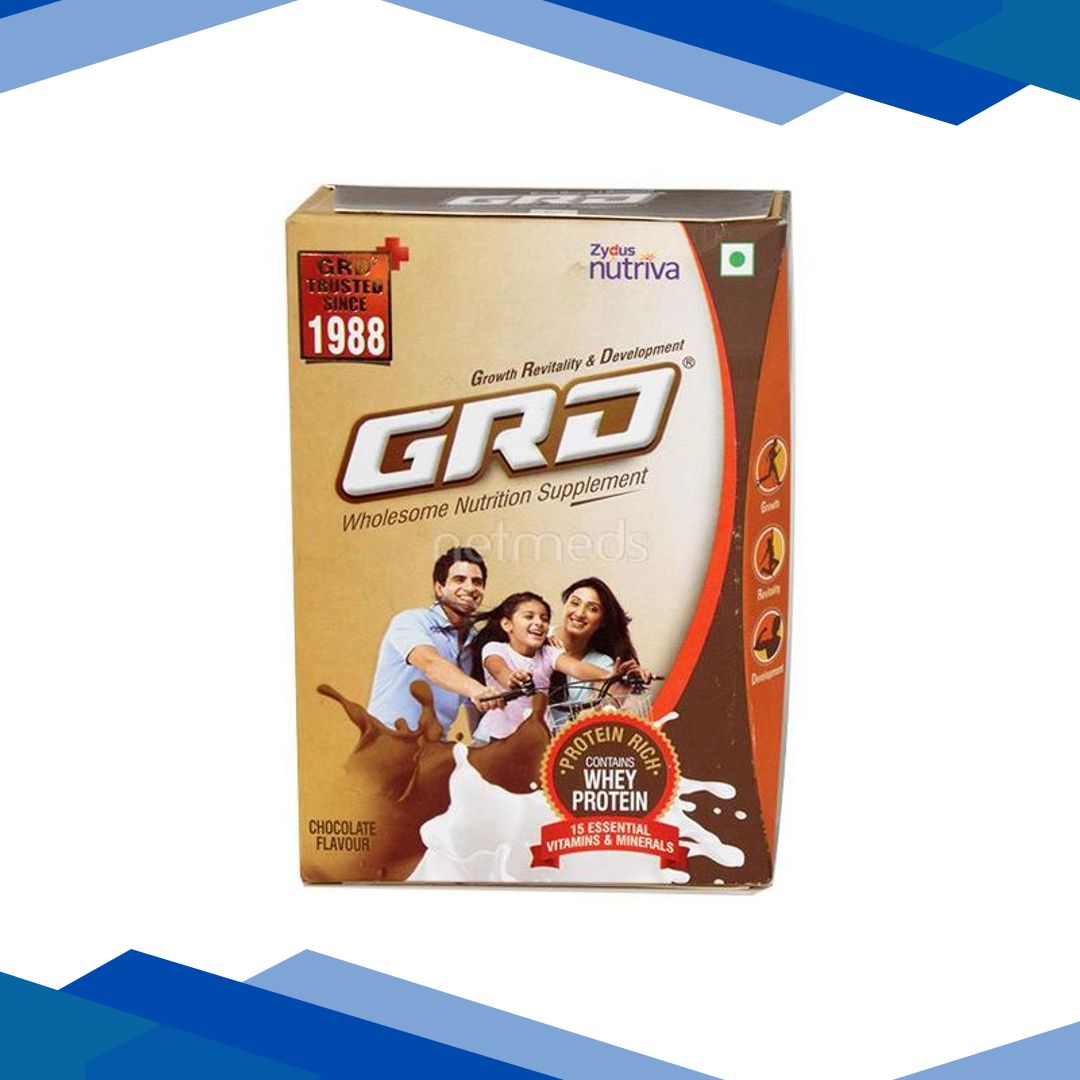
GRD Chocolate Powder(Refill) 400gm
No Prescription yet? Don’t worry! Click Here to Get Online Consultation
GRD Chocolate Powder(Refill) is an essential mineral supplement used to prevent and treat iron deficiency and iron deficiency anemia. It helps the body produce healthy red blood cells by supporting hemoglobin formation, which is necessary for carrying oxygen throughout the body. Adequate iron levels improve energy, reduce fatigue, and support overall physical and cognitive function.
Description
vitamin e acetate is a fat-soluble derivative of vitamin e (tocopherol), commonly used in oral supplements, topical formulations, and certain pharmaceutical preparations to support overall antioxidant defense and skin health. as a stabilized ester form of vitamin e, vitamin e acetate is more resistant to oxidation during storage and becomes biologically active once it is hydrolyzed in the body to free tocopherol. this conversion allows it to exert its protective effects against oxidative stress, which is a major contributor to cellular aging, inflammation, and tissue damage.
the primary mechanism of action of vitamin e acetate involves its role as a potent antioxidant. it neutralizes free radicals—unstable molecules generated by environmental factors such as pollution, uv radiation, and metabolic processes—that can damage cellular membranes, proteins, and dna. by preserving the integrity of cell membranes, vitamin e acetate plays a crucial role in maintaining healthy skin, eyes, immune function, and cardiovascular health. additionally, it supports lipid metabolism and helps prevent the oxidation of low-density lipoproteins (ldl), thereby contributing to vascular protection.
vitamin e acetate is particularly beneficial for individuals with vitamin e deficiency, which may occur due to malabsorption disorders, chronic illnesses, or inadequate dietary intake. it is also widely used in dermatological preparations due to its moisturizing and healing properties, especially in conditions involving dry, damaged, or aging skin. furthermore, it may be recommended as part of a nutritional regimen for individuals seeking to improve immune function, reproductive health, and protection against oxidative damage associated with chronic diseases.
although widely available as an over-the-counter supplement, the use of vitamin e acetate should be guided by healthcare professionals in certain populations, especially when used in high doses or in combination with other medications. its benefits are well-established, but excessive intake can lead to unwanted effects. therefore, understanding its proper use, potential risks, and clinical relevance is essential for safe and effective supplementation.
ingredients
- vitamin e acetate (alpha-tocopheryl acetate): this is the primary active ingredient, a stable ester of vitamin e that is converted in the body to its active form, alpha-tocopherol. it acts as a powerful antioxidant, protecting cells from oxidative damage, supporting immune function, improving skin hydration, and promoting wound healing. it also helps maintain the integrity of cell membranes and contributes to cardiovascular health.
- excipients (in formulations): depending on the dosage form (capsule, cream, oil), inactive ingredients such as gelatin, glycerin, vegetable oils, emulsifiers, and preservatives may be included. these components aid in stability, absorption, and delivery of the active ingredient without contributing therapeutic effects.
key uses
- vitamin e deficiency: used to treat or prevent deficiency in individuals with poor dietary intake or malabsorption disorders.
- skin health support: helps improve skin hydration, elasticity, and repair of damaged skin, making it useful in dry skin, scars, and minor burns.
- antioxidant protection: reduces oxidative stress, which may help protect against chronic diseases and premature aging.
- immune system support: enhances immune response by protecting immune cells from oxidative damage.
- cardiovascular health: may help reduce oxidative modification of lipids, supporting heart and vascular health.
- eye health: contributes to maintaining retinal integrity and may support prevention of age-related eye conditions.
- hair and scalp care: used in topical products to improve scalp health and reduce dryness or irritation.
how to use
vitamin e acetate should be used according to the form in which it is prescribed or purchased, such as oral capsules, liquid supplements, or topical preparations. oral supplements are typically taken with meals to enhance absorption, as vitamin e is fat-soluble and better absorbed in the presence of dietary fats. topical forms, such as creams or oils, should be applied directly to clean, dry skin, usually once or twice daily depending on the condition being treated.
it is important not to exceed the recommended dosage, especially with oral supplements, as excessive intake may lead to adverse effects. individuals using vitamin e acetate for specific medical conditions should follow the guidance of a healthcare professional to ensure appropriate dosing and duration of use. for best results, consistent use over time is generally required, particularly in skin and nutritional applications.
safety information
- warnings: high doses of vitamin e acetate may increase the risk of bleeding, especially in individuals taking anticoagulants or those with bleeding disorders. it should be used cautiously in such cases and only under medical supervision.
- side effects: common side effects may include nausea, diarrhea, stomach cramps, fatigue, and headache. rare but serious effects may include blurred vision, severe weakness, or unusual bleeding or bruising.
- precautions: individuals with liver disease, vitamin k deficiency, or those preparing for surgery should use this supplement with caution. it is important to inform healthcare providers about all supplements being taken.
- pregnancy/breastfeeding: vitamin e acetate is generally considered safe when used within recommended dietary limits. however, high-dose supplementation should be avoided unless prescribed by a healthcare professional.
- interactions: may interact with anticoagulants (such as warfarin), antiplatelet drugs, cholesterol-lowering medications, and certain chemotherapy agents. alcohol may also interfere with its absorption and metabolism.
additional information
- storage: store in a cool, dry place away from direct sunlight and moisture. keep the container tightly closed and out of reach of children.
- missed dose: if a dose is missed, it should be taken as soon as remembered. if it is close to the time for the next dose, skip the missed dose and continue with the regular schedule. do not double the dose.
- overdose: overdose may result in symptoms such as nausea, diarrhea, blurred vision, or increased risk of bleeding. in case of suspected overdose, seek immediate medical attention.
- habit forming: no, vitamin e acetate is not habit-forming and does not cause dependency.
frequently asked questions
Q: what is vitamin e acetate used for?
A: vitamin e acetate is used to prevent or treat vitamin e deficiency and to provide antioxidant protection. it is also widely used for skin health, immune support, and protection against oxidative stress.
Q: is vitamin e acetate good for skin?
A: yes, it is commonly used in skincare products due to its moisturizing, healing, and antioxidant properties. it helps improve skin texture, reduce dryness, and support wound healing.
Q: can i take vitamin e acetate daily?
A: it can be taken daily within recommended doses. however, long-term or high-dose use should be discussed with a healthcare professional.
Q: are there any side effects of vitamin e acetate?
A: some people may experience mild side effects such as nausea or stomach discomfort. high doses may increase the risk of bleeding or other complications.
Q: is vitamin e acetate safe during pregnancy?
A: it is generally safe in dietary amounts, but high-dose supplements should only be used under medical supervision during pregnancy.
Q: can vitamin e acetate interact with other medications?
A: yes, it may interact with blood thinners, cholesterol-lowering drugs, and certain other medications. always consult your doctor before combining supplements.
Q: does vitamin e acetate help with hair growth?
A: it may support scalp health and reduce oxidative stress, which can indirectly benefit hair health, though it is not a primary treatment for hair loss.
Q: how long does it take to see results?
A: results vary depending on the purpose. skin benefits may be seen within weeks, while systemic benefits may take longer with consistent use.
Q: can i apply vitamin e acetate directly to my skin?
A: yes, topical formulations can be applied directly, but it is advisable to perform a patch test first to avoid allergic reactions.
Q: what happens if i take too much vitamin e acetate?
A: excessive intake may lead to toxicity symptoms such as nausea, fatigue, and increased bleeding risk. immediate medical attention is recommended in such cases.
this information is for educational purposes only and should not be considered medical advice. always consult a qualified healthcare professional before use.
At Gem Pharmacy, we make every effort to provide accurate, expert-written, and thoroughly reviewed information related to medicines. However, this information should not be considered a substitute for professional medical advice, diagnosis, or treatment from a qualified doctor.
The purpose of this information is to educate users and improve communication between patients and healthcare professionals. It should not be used to diagnose or treat any condition.
Always consult a certified healthcare professional before taking any medication.


Related products